Plastics, bless their durable hearts, last for centuries. Living things? Not so much. They decompose. Naturally. This fundamental difference has always put plastic in a league of its own — a league we’re now drowning in.
But what if plastic could, well, live a little? And then, more importantly, die a little when we tell it to? That's the rather brilliant question a team from the Chinese University of Hong Kong just answered with a resounding: "Yes, please."
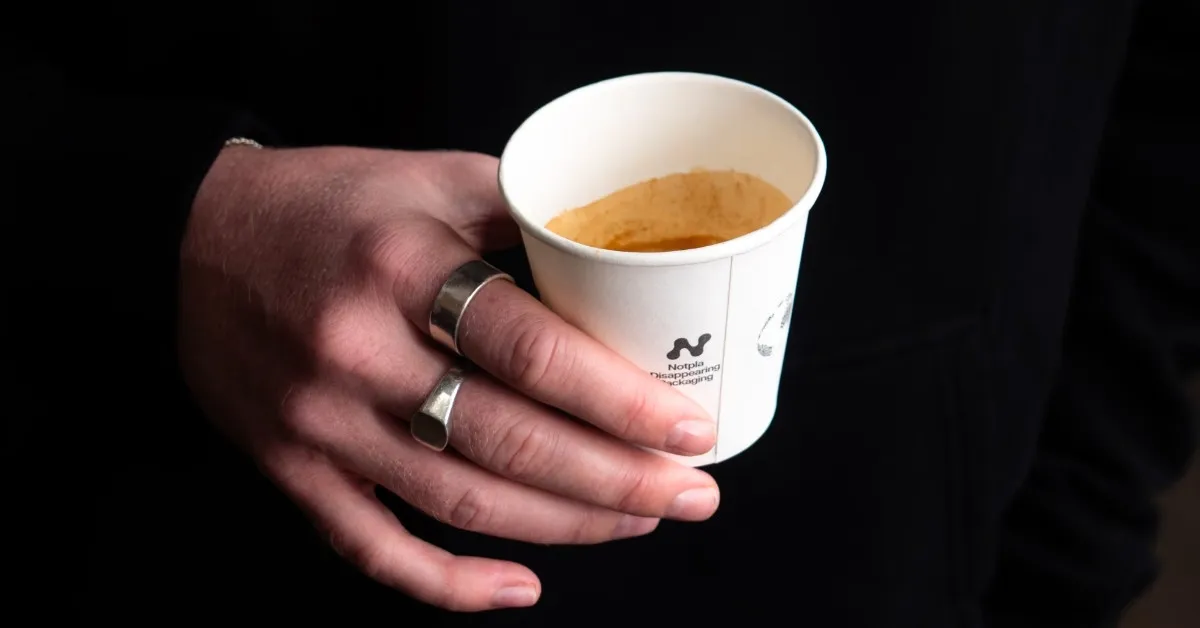
They've cooked up a "living plastic" that basically contains its own self-destruct button. Embedded within the plastic are tiny, plastic-chomping microbes, just chilling out, fast asleep. Until, that is, they get a warm bath in a "nutrient broth." Wakey wakey, plastic-eaters. Once roused, these microscopic gourmands get to work, devouring the plastic entirely in a matter of days. No microplastic crumbs left behind. Because apparently that’s where we are now: designing plastic that eats itself.
We're a new kind of news feed.
Regular news is designed to drain you. We're a non-profit built to restore you. Every story we publish is scored for impact, progress, and hope.
Start Your News DetoxThe Self-Destruct Sequence
Most plastics take up to a thousand years to break down, and even then, they just fragment into those insidious microplastics that are now in, well, everything. The core idea here? Build the breakdown process right into the material itself. As Zhuojun Dai, one of the study's authors, points out, many plastic items are used for mere minutes but last for millennia. That's a serious imbalance.
So, the scientists engineered Bacillus subtilis spores, essentially programming them to churn out plastic-degrading enzymes. These sleepy, enzyme-producing spores are then mixed directly into the plastic. When that warm nutrient broth hits, the spores wake up, release their enzymes, and those enzymes start chemically dismantling the plastic from the inside out. It's like a tiny, internal demolition crew.
This isn't the first time scientists have used microbes to tackle plastic, and the specific material, polycaprolactone (PCL), is already considered biodegradable. But this team's approach has two rather clever twists.
First, they engineered different strains of Bacillus subtilis to produce two enzymes that work in tandem. One enzyme acts like a blunt force trauma, cutting the long plastic chains into many smaller pieces, weakening the whole structure. The second enzyme then swoops in, breaking those smaller pieces into even tinier molecules, which the microbes can then completely process. This dynamic duo broke down almost all of the PCL plastic in just six days. Let that satisfying number sink in.
Second, and this is the really wild part, the microbial spores are inside the plastic. Not applied to it, not sitting on top. They're part of its very being, making the plastic itself "alive" with the potential for self-destruction. The resulting material has similar strength to regular PCL films, so it's not like you're getting a flimsy grocery bag that might spontaneously combust.
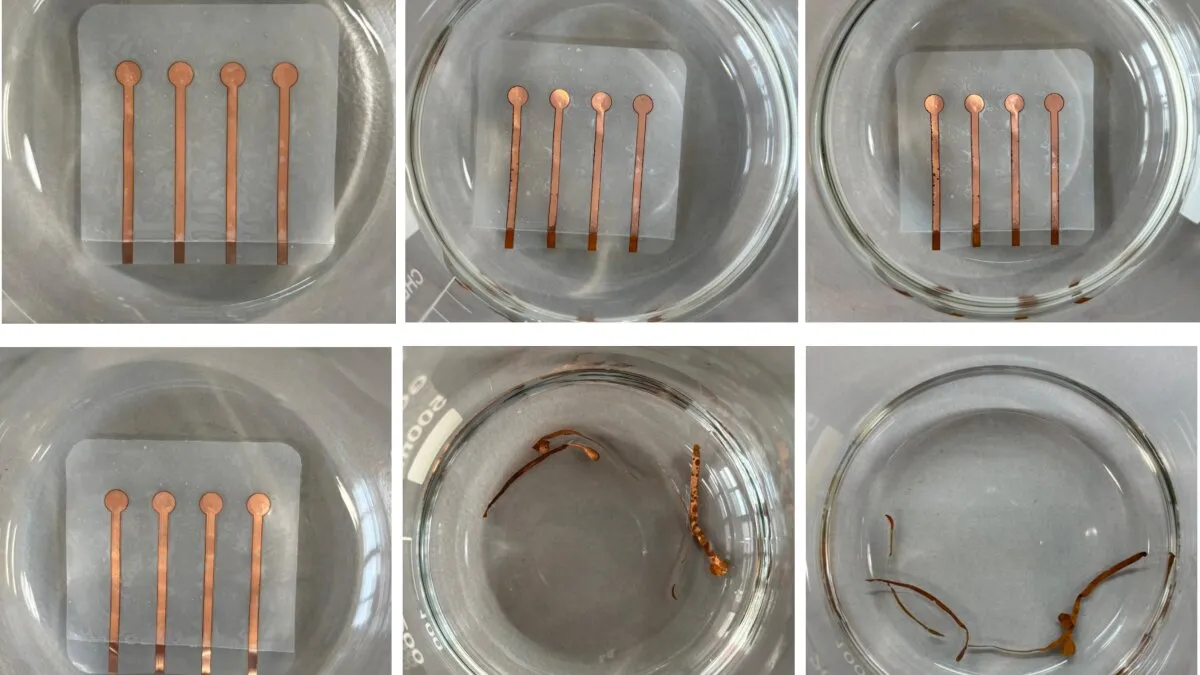
But don't worry, your new living plastic phone case won't just vanish into thin air. It needs a trigger: that nutrient broth, heated to 122°F (50°C). Splash it on, and the spores activate. To prove it, the researchers made a wearable electrode from the material. After adding the broth, the electrode completely disappeared in two weeks, leaving precisely zero microplastics. Which, if you think about it, is both impressive and slightly terrifying.
While this tech currently works with PCL, the double-enzyme method makes the breakdown faster and more efficient than previous attempts. The next steps? A water-based trigger, since so much plastic ends up in our oceans, and applying this ingenious trick to other, more common types of plastics, especially the single-use variety. Because if plastic can't live forever, it might as well learn to make a graceful exit.