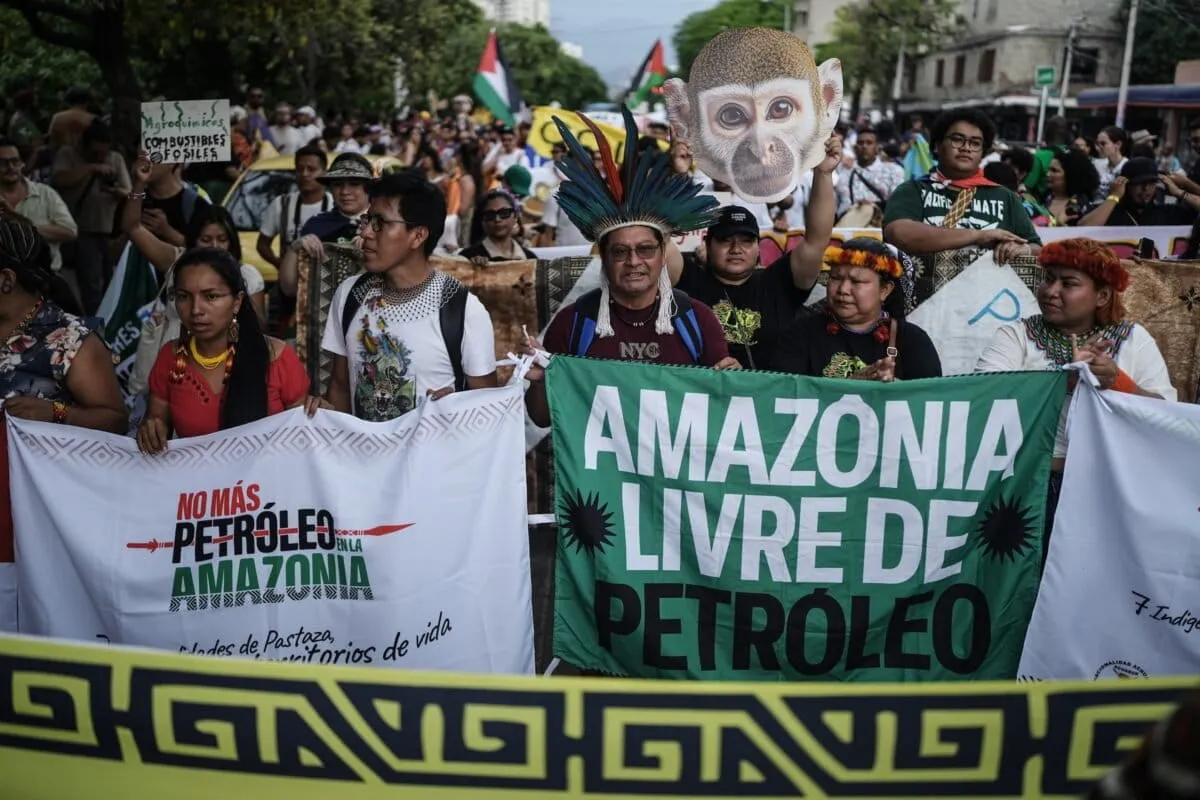
For over three decades, the big UN climate talks (COPs) have been trying — and mostly failing — to talk seriously about phasing out fossil fuels. It's usually a diplomatic traffic jam, with nations and industry lobbyists doing their best to keep the conversation vague. Meanwhile, the voices of Indigenous and Afro-descendent communities, often hit hardest by climate change, struggled to break through the noise.
But something shifted recently in Santa Marta, Colombia. The First Conference on Transitioning Away from Fossil Fuels decided to try a different approach. And by all accounts, it actually worked. Juan Carlos Jintiach of the Global Alliance of Territorial Communities called it "100% positive," noting that local communities finally got a seat — and a microphone — at the grown-up table. It’s a chance, he says, for a responsible rather than chaotic energy shift.
The Elephant in the Room: Money
While everyone was chatting, the International Institute for Sustainable Development (IISD) dropped a report that put things in stark perspective. In 2024, the world poured a cool $1.2 trillion into fossil fuel subsidies and aid. Clean energy, by comparison, got a measly $254 billion. Let that satisfyingly lopsided number sink in. It’s almost as if we’re still actively fueling the problem we’re trying to solve.
We're a new kind of news feed.
Regular news is designed to drain you. We're a non-profit built to restore you. Every story we publish is scored for impact, progress, and hope.
Start Your News DetoxBut back to the conference itself. Florencia Ortúzar Greene, climate program director at the Inter-American Association for Environmental Defense, highlighted the format as key. Ministers, experts, and community leaders all had an equal chance to speak. And in a move that might send shivers down the spine of every modern meeting-goer: attendees were asked to keep their laptops closed. Imagine that. Actual, direct human interaction. Which, if you think about it, is both impressive and slightly terrifying. Perhaps that’s why they finally made some progress.