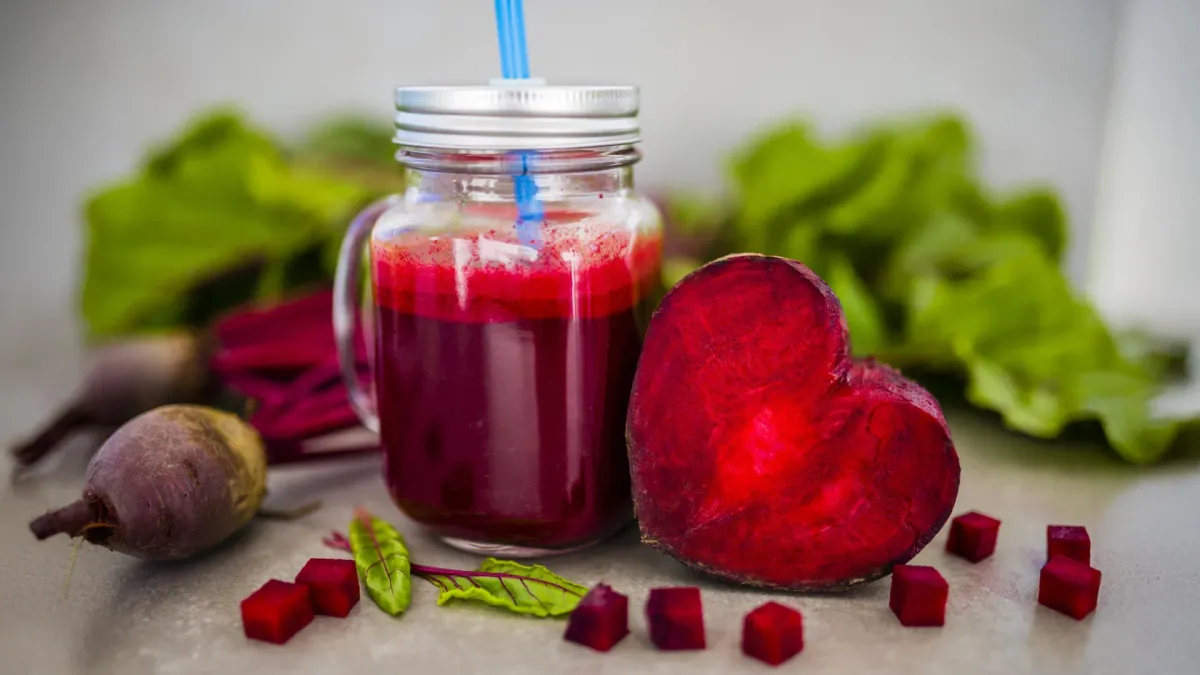
Turns out, the secret to lower blood pressure in older adults might be hiding in plain sight — or rather, in plain beet juice. And it all starts in your mouth.
New research shows that older folks who chugged concentrated beetroot juice twice a day for two weeks saw their blood pressure numbers take a dip. Younger adults? Not so much. Because apparently, the microscopic residents in your mouth have very different opinions on beets depending on your age.
Your Mouth: The Unsung Hero of Blood Pressure
Nitrate, a compound found in many veggies (beetroot is practically swimming in it, but spinach, arugula, and kale are also doing their part), needs a pit stop before it gets to work. That pit stop? Your mouth. Specifically, the bacteria living there. They're the tiny, unsung heroes who convert nitrate into compounds that help your body make nitric oxide.
We're a new kind of news feed.
Regular news is designed to drain you. We're a non-profit built to restore you. Every story we publish is scored for impact, progress, and hope.
Start Your News DetoxWhy does nitric oxide matter? It's the chill pill for your blood vessels, helping them relax and work smoothly. And smooth-working blood vessels are key to healthy blood pressure. If your oral bacteria are, shall we say, a bit off, this whole process gets sluggish. The study found that beetroot juice actually changed the mouth bacteria in older adults, seemingly kickstarting this crucial nitrate-to-nitric-oxide pathway.
For the experiment, researchers gathered 39 adults under 30 and 36 adults in their 60s and 70s. Each participant went through two two-week phases: one with nitrate-rich beetroot juice, and one with a placebo.
They then peered into the bacterial ecosystems of their mouths before and after each phase. The results were clear: both age groups saw big shifts in their mouth bacteria, but the type of shifts varied significantly. In older adults, the beetroot juice led to a decrease in potentially less-helpful Prevotella bacteria and a rise in beneficial Neisseria.
And here’s the kicker: older adults started with higher average blood pressure, and only after the nitrate-rich juice did their numbers fall. The placebo did nothing. Younger adults? Their blood pressure remained largely unimpressed.
A Strategy for Healthy Aging, Straight from the Garden
This all suggests why beetroot juice might be a secret weapon for those of us collecting more birthdays. As we age, our bodies tend to produce less nitric oxide. Less nitric oxide means less relaxed blood vessels, which often means higher blood pressure.
Professor Anni Vanhatalo from the University of Exeter points out that a nitrate-rich diet is generally a good idea, especially since older people produce less nitric oxide. So, if beets aren't your jam (and let's be honest, they're not everyone's), there's always spinach, rocket, fennel, celery, and kale to get your nitrate fix.
Professor Andy Jones, also from Exeter, believes this opens the door for larger studies to explore how lifestyle, sex, and even existing microbiome differences affect how our bodies respond to dietary nitrate.
Now, this isn't a license to ditch your blood pressure meds and subsist solely on beet juice. But it does suggest that nitrate-rich vegetables could be a powerful, surprisingly simple addition to a heart-healthy lifestyle, particularly for older adults. The research hints at a future of personalized nutrition, where your unique mouth microbes might dictate which foods benefit you most.
Ultimately, the evidence suggests a powerful idea: healthier blood vessels might just start in the mouth, not just the heart. Which, if you think about it, is both impressive and slightly terrifying. Time to give your oral microbiome a pep talk.