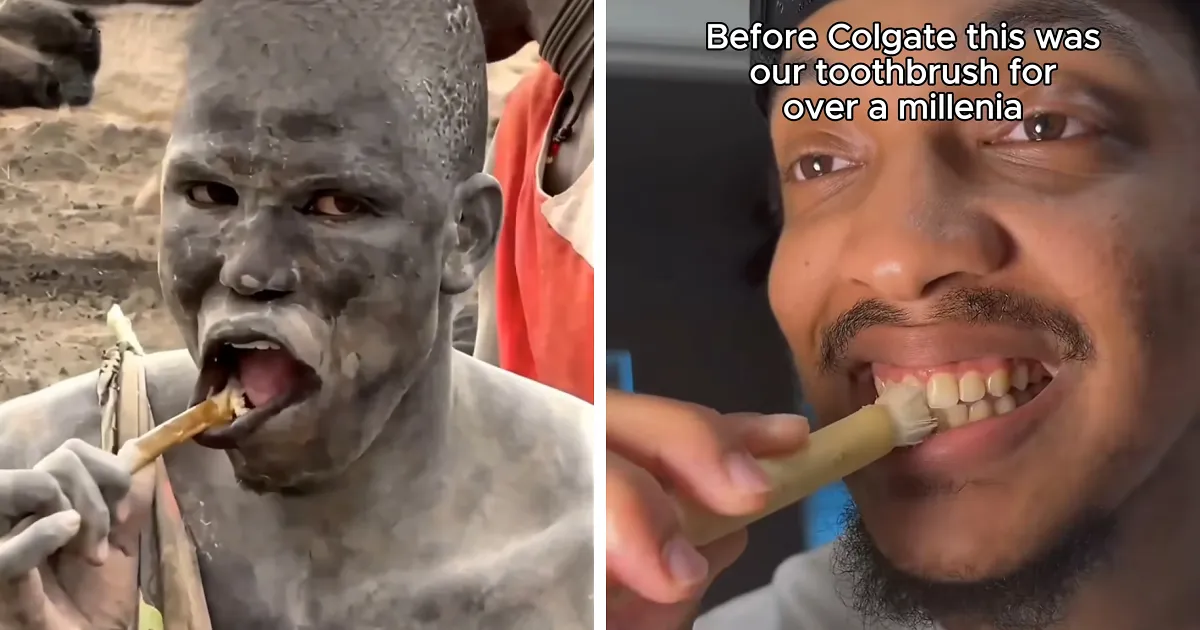
Turns out, you can teach an old stick new tricks — or, rather, remind a new generation about ancient ones. While most of us are swishing with minty foam, a growing number of people are turning to herbal "chewing sticks" for their daily dental routine. Because apparently that's where we are now: swapping plastic for plant matter in pursuit of a sparkling smile.
These aren't just any twigs, mind you. We're talking about the miswak stick, primarily from the Arak tree, known charmingly as the "toothbrush tree." People chew one end until it frays into a brush-like texture, then get to scrubbing. It's a practice that dates back thousands of years, popping up in Asia, Africa, and the Middle East, and was even a symbol of elegance and ritual purity in early Islamic periods. Ancient Arabs were apparently very into white teeth, just like, well, everyone now.

Now, these eco-friendly sticks are making a big splash on social media, with "before and after" videos racking up millions of views. One user on X (formerly Twitter) declared, "Billion-dollar budgets convinced us that chemicals were the cure," implying the miswak is the natural, superior alternative. Which, if you think about it, is both impressive and slightly terrifying.
We're a new kind of news feed.
Regular news is designed to drain you. We're a non-profit built to restore you. Every story we publish is scored for impact, progress, and hope.
Start Your News DetoxThe Truth About Twigs
But before you toss your Colgate, let's get some expert perspective. William Carlson-Jones, a lecturer in Oral Health at the University of Sydney, has a few… concerns. While the miswak might be reusable (just cut off the worn end and chew a new brush!), it turns out modern plastic brushes are, you know, actually better for your teeth.
For starters, miswak sticks can be too hard. And when your brushing tool is too hard, it can wear down your enamel — that protective, pearly white outer layer of your teeth that, once gone, is gone for good. Thinning enamel means your teeth can start looking more yellow, not whiter, because the dentin underneath (which is yellowish) becomes more visible. The irony is not lost on us.

Then there's the gum situation. Carlson-Jones warns that miswak can "push gums down," exposing sensitive root surfaces. Plus, tiny stick fragments can break off and get lodged in your gums, leading to bleeding and infection. Not exactly the spa day your mouth was hoping for.
As for those social media claims about miswak whitening teeth? "Not true," says Carlson-Jones. For actual whitening, he suggests a professionally prescribed peroxide agent. Just don't go overboard with at-home solutions above 6% hydrogen peroxide, or you might end up with chemical burns on your gums. Again, not ideal.
So, what does work? Brushing twice a day with a soft manual or oscillating electric toothbrush, using fluoride toothpaste, and flossing or using interdental brushes daily. Because while ancient practices are cool, sometimes the best innovation is simply… proper dental hygiene. And maybe, just maybe, not trusting everything you see on TikTok.
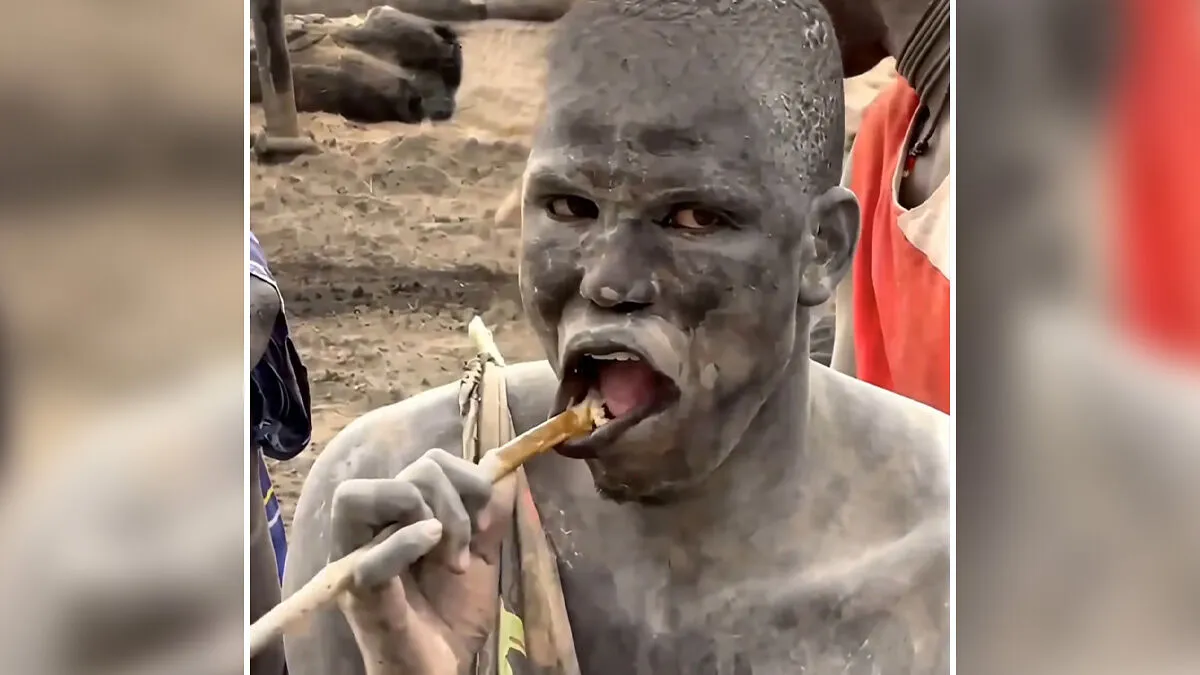
Over half of us (57%) admit to covering our mouths when we laugh because we're self-conscious about our teeth. The World Health Organization estimates nearly 3.7 billion people suffer from oral diseases that are largely preventable. So, while the miswak trend might be a fun conversation starter, perhaps stick to the tried-and-true for your actual pearly whites.