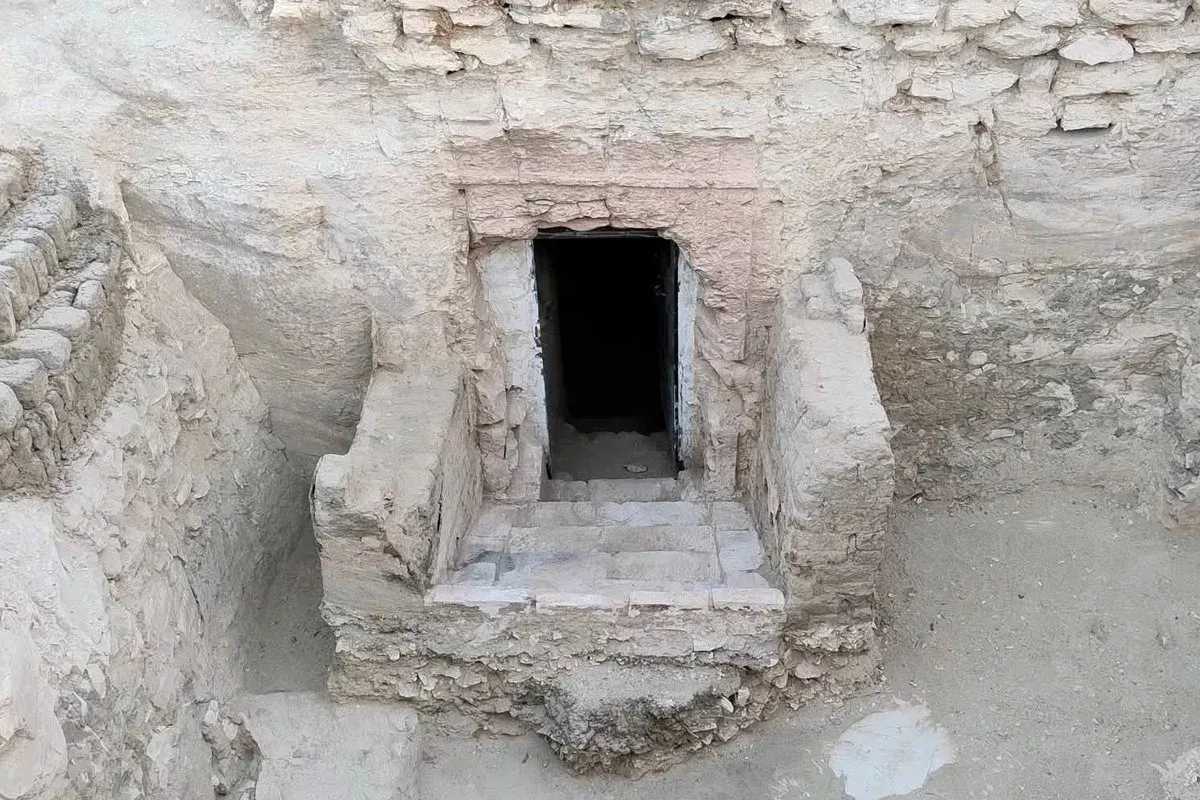
Just when you thought ancient Egypt had revealed all its secrets, a team of Dutch archaeologists decided to dig a little deeper. And what did they find? A previously unknown, 3,000-year-old tomb on Luxor’s West Bank, in the ancient burial ground of Sheikh Abd El-Qurna.
This isn't just any old hole in the ground. This tomb, dating back to the Ramesside period (roughly 1292–1069 BCE), is still sporting its original vibrant, colorful wall paintings and hieroglyphs. It’s like finding a vintage car with the original paint job still gleaming. The art inside clearly points to a high-ranking official named Paser.
Paser's Place in History
The Sheikh Abd El-Qurna cemetery is part of the legendary Theban Necropolis, a UNESCO World Heritage site known for housing the eternal resting places of priests and other bigwigs from Egypt’s New Kingdom. Paser, it seems, was quite the VIP.
We're a new kind of news feed.
Regular news is designed to drain you. We're a non-profit built to restore you. Every story we publish is scored for impact, progress, and hope.
Start Your News DetoxThe Leiden University team, led by Carina van den Hoven, has been meticulously working this site since 2018. Their persistence, in collaboration with Egypt’s Supreme Council of Antiquities (SCA), finally paid off with this rather spectacular reveal.
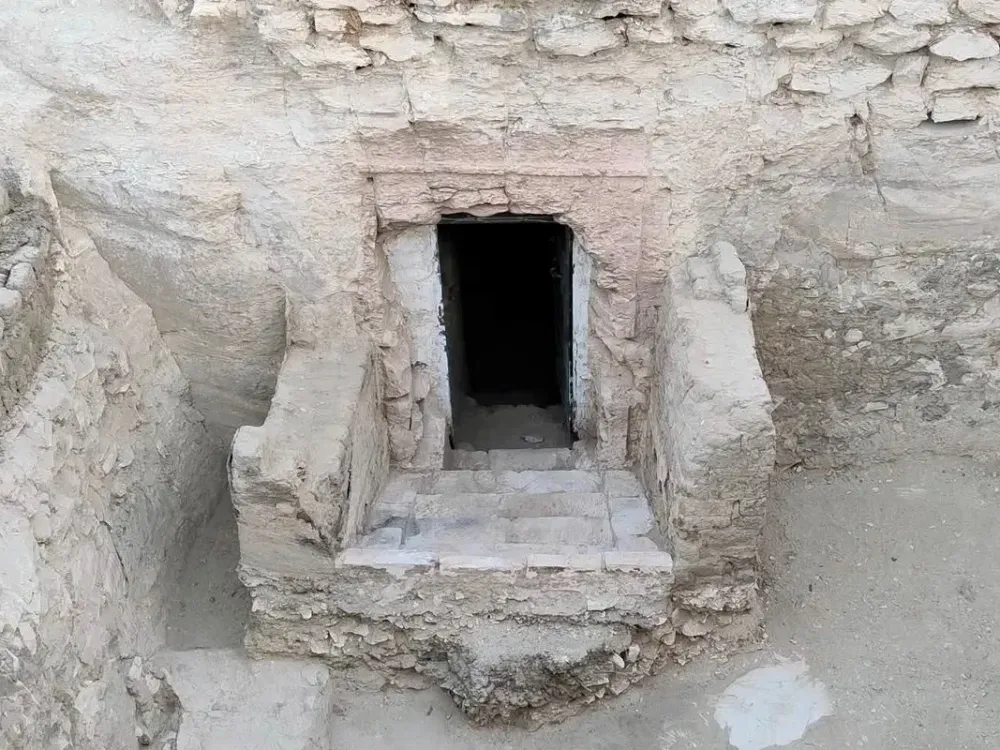
According to Mohamed Abdel Badie, head of the Egyptian Antiquities Sector, Paser’s tomb follows the tried-and-true blueprint for elite New Kingdom burials: an open courtyard, a chapel carved straight into the rock, and the requisite underground burial chambers. Because if you’re going to be an official, you might as well have a multi-room setup.
In the courtyard, archaeologists unearthed remarkably well-preserved mudbrick walls, complete with a designated spot for a funerary stone and a set of stairs leading to the tomb’s main entrance. Because even in the afterlife, you need a grand entrance.
Inside, despite some sections still being caked in dirt (archaeology isn't always clean work), visible scenes show Paser doing the usual high-official things: praying to various gods in shrines, and chilling at an offering table with his wife. These images weren't just decorative; they were ancient magic, believed to guarantee an endless supply of snacks and drinks in the afterlife. Which, if you think about it, is a pretty good perk.
Hisham Al-Leithy, secretary-general of the SCA, assures us the team isn’t done yet. They’re still digging, still studying, and still trying to figure out exactly who else was laid to rest with Paser. Because every good story has a few supporting characters.