For over 60 years, scientists thought collagen was a stiff, rod-like molecule. This protein is the main building block for skin, bones, and organs. But new research suggests this idea might only be true for collagen outside cells.
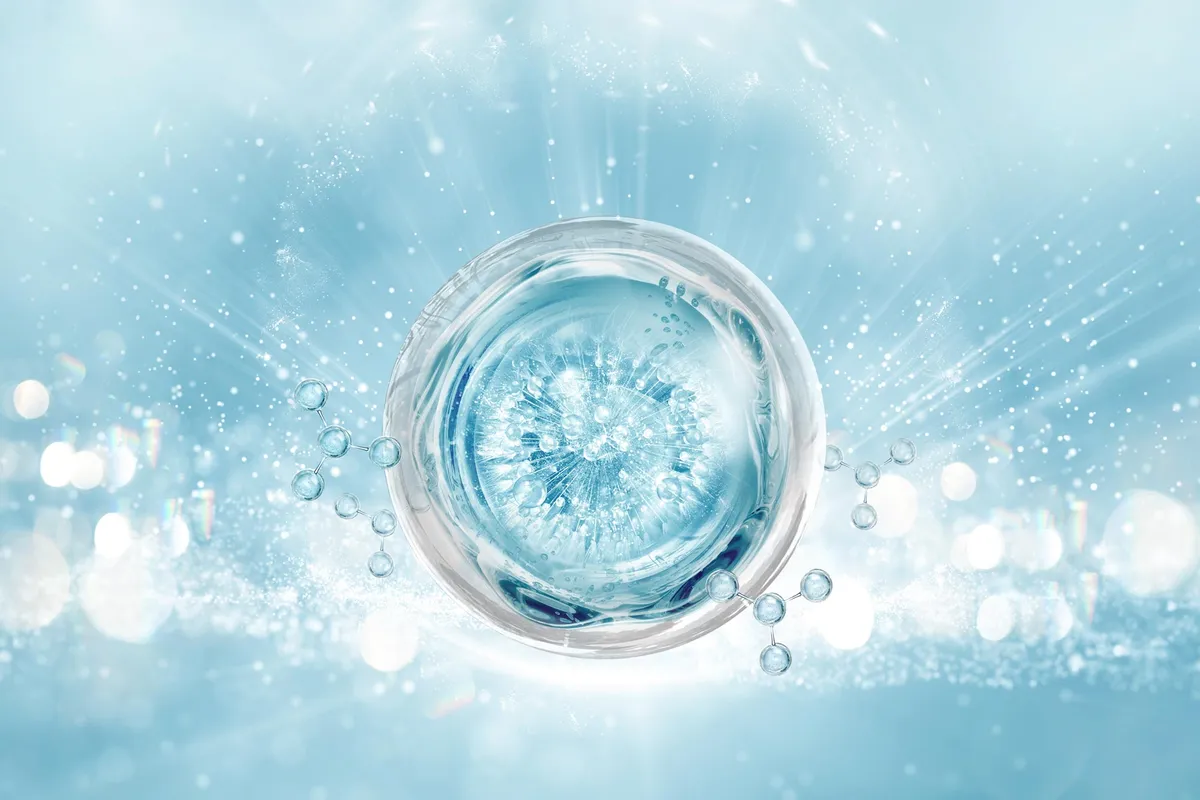
Inside living cells, collagen might actually be soft and liquid-like. This discovery could change how we understand and treat diseases like fibrosis and cancer.
Collagen's Unexpected Liquid Form
Researchers at the Center for Genomic Regulation (CRG) in Barcelona used advanced imaging to look at collagen inside living cells. They saw it as soft, liquid droplets, not rigid rods. This is the first time scientists have directly seen collagen in its natural state inside cells.
We're a new kind of news feed.
Regular news is designed to drain you. We're a non-profit built to restore you. Every story we publish is scored for impact, progress, and hope.
Start Your News DetoxCollagen makes up about one-third of the body's protein. How cells handle such a large, structural molecule has always been a mystery.
Vivek Malhotra, a professor at CRG and lead author, explained that inside a cell, collagen is very flexible. It forms liquid droplets, much like oil in water.
This liquid form might protect cells. Outside the cell, collagen needs to form stiff fibers to hold tissues together. If this happened inside the cell, it could be harmful. Malhotra noted that this liquid state prevents collagen from becoming fibrous inside the cell, which would kill it.
A New Way to Understand Collagen Transport
This discovery also suggests a new way cells might move collagen. For decades, scientists believed proteins moved through cells in small sacs called vesicles.
Malhotra and his team now propose a "liquid extrusion" idea. They think collagen moves from where it's made to other parts of the cell through a physical process, similar to how water moves up a plant. If true, this could change how we understand wound healing, fibrosis, and cancer.
Collagen is made in a part of the cell called the endoplasmic reticulum (ER). The new study looked at procollagen 1, which turns into type 1 collagen. This type makes up about 90% of all collagen in the body.
The puzzle has always been about size. A purified collagen molecule is a long, rigid rod, up to 400 nanometers. But the vesicles that usually transport proteins are only 60 to 90 nanometers wide. How could such a big molecule fit? The new study suggests collagen isn't rigid inside the cell. It only becomes rigid after it leaves the cell and forms tissue fibers.
The team used high-resolution imaging on human liver cells that produce collagen. They saw collagen gather into small droplets that merged, split, and exchanged material. These actions are typical of a "condensate," a concentrated protein area that separates from its surroundings, like oil droplets in water.
Soumya Bhattacharyya, the study's first author, noted that scientists are just starting to understand condensates inside the endoplasmic reticulum.
The Discovery and TANGO1's Role
The discovery began when Dr. Soumya Bhattacharyya saw bright, spherical structures in microscope images of liver cells. He was studying how fibrotic cells increase collagen production.
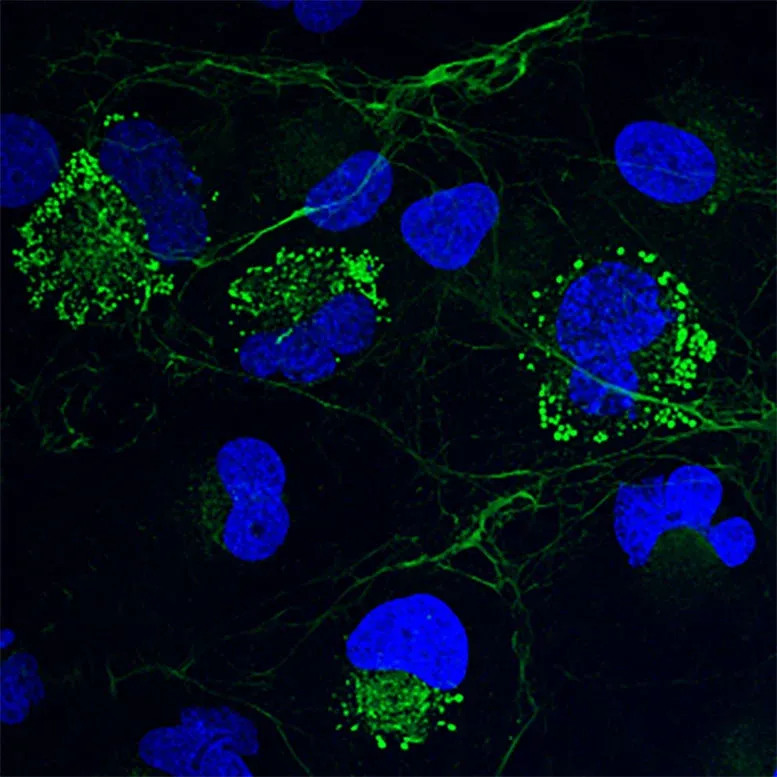
At first, the team was cautious, thinking it might be a mistake. They spent months testing if the collagen clusters were just cellular waste. But instead of finding proteins that deal with misfolded proteins, they found helper proteins that recognize properly folded collagen.
The study also looked at TANGO1, a protein known to be vital for collagen export. When TANGO1 was removed, collagen droplets still formed, but they didn't sit at the ER exit sites, and collagen secretion dropped. This suggests TANGO1 acts like a "mooring point" that holds the collagen droplet at the exit site. The authors think collagen might then leave the cell by "wetting," where the liquid droplet attaches to and flows through the exit site.
Malhotra described two possible ways this transfer could happen: either the liquid is squeezed out like from a rubber ball, or it rises by capillary action, like water in plants. The "liquid extrusion" model is still a hypothesis, and the team plans more experiments to confirm it and see if it happens in living tissue.
Hope for Fibrosis and Cancer Treatments
If this model is confirmed, it could be important for diseases where cells produce too much collagen. These include fibrosis in the liver, lungs, and skin, as well as cancers that create a dense, collagen-rich shield to protect themselves from treatments.
Malhotra explained that cancer cells often hide in a shell of collagen and other proteins, making them resistant to chemotherapy and the immune system. He believes this study could help find ways to break down this "tissue cement."
The new model points to possible new treatment strategies. One idea is to degrade TANGO1, which would prevent collagen from being held at the exit site. Another is to dissolve the collagen condensate itself, stopping it from being organized before export. These ideas are still early, but they offer new ways to control the body's most abundant structural protein.
Deep Dive & References
Procollagen 1 assembles into phase-separated condensates in the endoplasmic reticulum - Journal of Cell Biology, 2026