A rare 450-million-year-old fossil with preserved soft tissue is helping scientists understand how some of Earth's earliest reef animals lived and evolved.
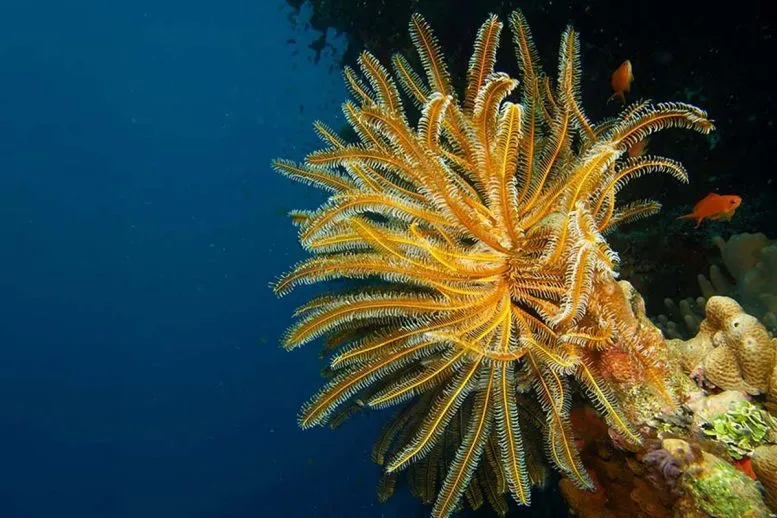
Over 450 million years ago, long before dinosaurs, Earth's shallow seas were home to complex animal communities. Crinoids, related to starfish and sea urchins, looked like flowers rooted to the ocean floor. Their branching arms caught food, helping them thrive in early reef ecosystems.
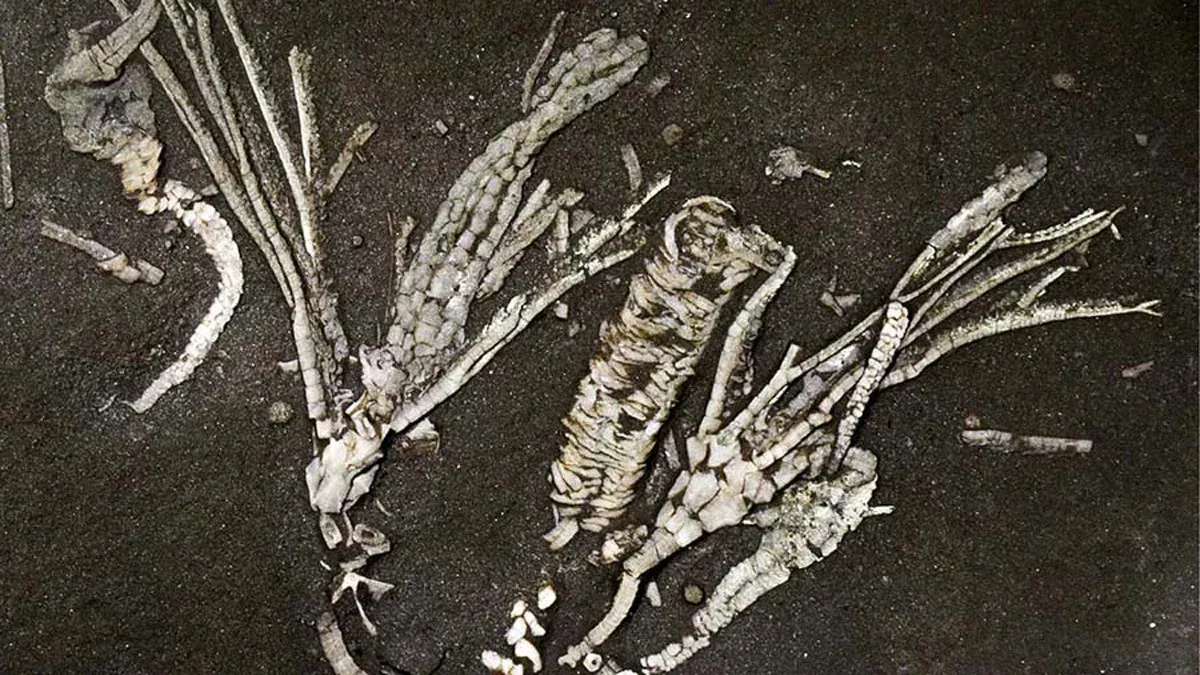
Crinoid fossils are common, but they usually only show hard skeletal plates. Delicate parts like feeding and movement structures typically decay quickly. However, an exceptionally preserved fossil now offers a rare look at these missing parts.
We're a new kind of news feed.
Regular news is designed to drain you. We're a non-profit built to restore you. Every story we publish is scored for impact, progress, and hope.
Start Your News DetoxOne-in-a-Million Soft Tissue Preservation
Researchers from the University of Oklahoma found fossilized tube feet in Dendrocrinus simcoensis. This crinoid lived over 450 million years ago. It is the oldest known example of preserved crinoid soft tissue and only the second ever found.
Dr. Lena Cole, an OU paleontologist, explained that soft tissues like skin and organs are the first to decay. Most fossils only have hard parts. Soft tissues are preserved only in rare conditions, like a natural refrigerator or vacuum-sealer.
For soft tissue to fossilize, decay must stop almost immediately. Oxygen levels, sediment chemistry, burial speed, and microbial activity all need to be just right. This prevents scavengers and bacteria from destroying the remains. Such fossils offer rare glimpses into biological features usually lost from the fossil record.
"Preservation like this is truly one in a million," Cole said. "Crinoid fossils number in the millions, and this is only the second time soft tissues have ever been found."
Dr. David Wright, another OU paleontologist, noted the age of the find. "It's incredible these soft tissues have survived more than 450 million years," he said. "These soft tissues are more than 200 million years older than the oldest dinosaur."
What Ancient Tube Feet Reveal
The tube feet are important because they show how crinoids lived. Modern crinoids use these small structures on their arms to catch food and move it to their mouths. Their arrangement can show how strong local currents were, the size of available food, and the animal's feeding method.
Wright compared tube feet to teeth in mammals. "Differences in their structure tell us about what kinds of environments a species lived in and how it fed," he explained.
When researchers compared the fossil to living crinoids, they found the ancient species had a different arrangement. This suggests early crinoids might have had different ecological roles or feeding methods than those seen today.
Cole said this gives new insight into how crinoids evolved. It also shows how their feeding strategies changed over hundreds of millions of years.
Clues to Early Reef Ecosystems
These differences are important because living species are only a small part of evolution. Extinct animals often had features that have completely disappeared. This means modern organisms cannot fully explain how ancient ecosystems worked.
Wright noted that fossilized remains can show features far outside what we see in living species. By comparing ancient and modern species, scientists can understand how evolution has changed over time. This helps explain what shaped the modern biosphere.
This discovery could reveal more than just one crinoid's anatomy. It might help scientists understand how early reef animals shared resources. It could also show how they responded to ocean currents and developed specialized feeding strategies during the early Paleozoic era.
Hidden Discoveries in Museum Collections
The fossil was not a new excavation. It had been stored at Montréal’s Musée de paléontologie et de l’évolution. Its importance became clear when Cole and Wright, both crinoid experts, examined it. Their knowledge helped them recognize structures that others might have missed.
Fieldwork finds fossils, but museum collections give scientists the time to understand them. A specimen might wait decades until new technology or the right specialist reveals its significance.
Wright said new fossil discoveries come from fieldwork, but museum collections are vital for research. "We don't always know the full significance of the specimens we collect," he said. "New technologies, ideas, or expertise often find surprising ways to utilize existing specimens to make new discoveries."
Cole added that this discovery highlights the importance of museum collections and community support. Without people caring for these collections, this research would not be possible.
Cole and Wright oversee over one million invertebrate fossils at the Oklahoma Museum of Natural History. Many of these specimens have not yet been studied in detail.
"This is why we work to make our collections accessible to researchers around the world," Wright said. "There are simply too many fossils to study over one person's career. There's more than a lifetime's worth of discoveries waiting to be found."