For more than a century, a rather striking pink-flowering shrub in northeastern New South Wales was just… doing its thing. Everyone assumed it was a species we already knew. Turns out, everyone was wrong.
Botanists at the University of New England have officially dubbed this vibrant new discovery Phebalium banyabba. It’s found exclusively in a tiny corner of NSW, and its formal identification isn't just a win for plant nerds; it's a crucial step for conservationists. After all, you can't protect what you don't even know exists.
The Case of the Mistaken Identity
The whole botanical whodunit started when rare plant expert Paul Sheringham collected a specimen north of Grafton. It was initially tossed into the 'probably Phebalium nottii' pile. But something about it just didn't quite sit right with the sharp eyes at the UNE N.C.W. Beadle Herbarium.
We're a new kind of news feed.
Regular news is designed to drain you. We're a non-profit built to restore you. Every story we publish is scored for impact, progress, and hope.
Start Your News DetoxAnd thank goodness for those sharp eyes. Because mistaking a rare species for a common one is basically the botanical equivalent of calling a diamond a particularly shiny rock. It completely skews population counts, threat assessments, and, crucially, legal protections.
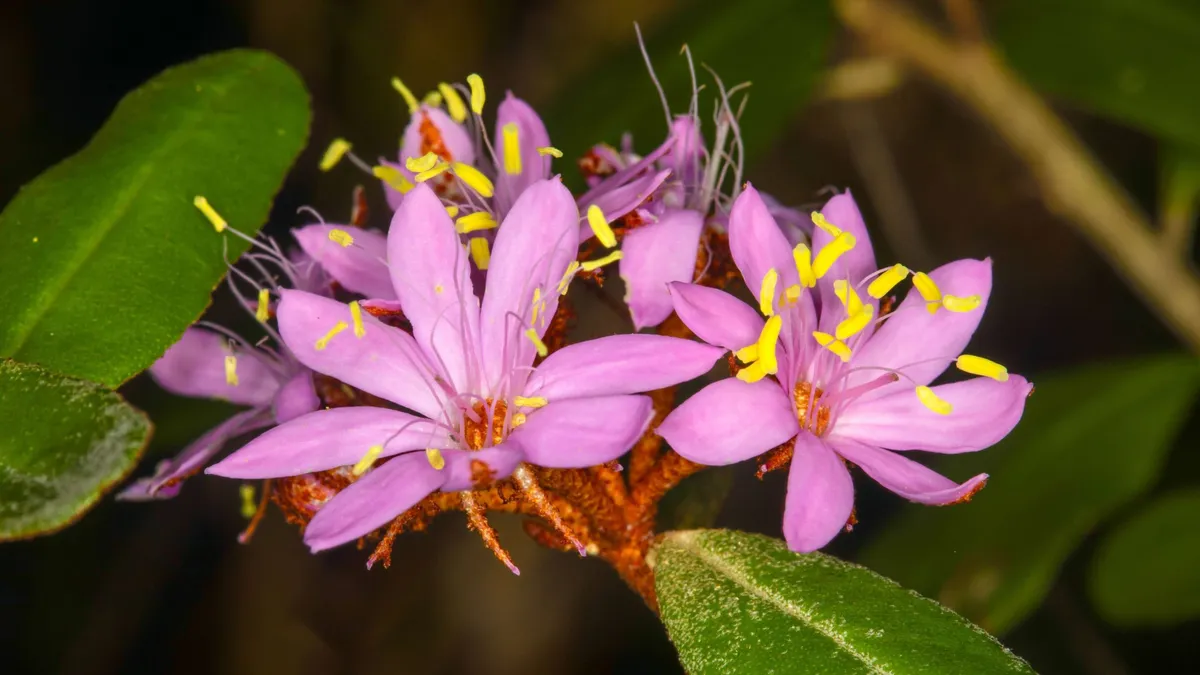
Emeritus Professor Jeremy Bruhl, who described the new species with Dr. Ian Telford, describes Phebalium banyabba as a "lovely shrub." It clocks in at under two meters tall and sports stunning pink and rusty flowers from late winter through spring. Because, why not be beautiful while you're being rediscovered?
The evidence for its distinct identity came from a tag-team effort: old-school physical examination and the modern marvel of DNA. Dr. Sangay Dema's molecular work confirmed the samples were indeed unique. The plant boasts densely hairy calyces with distinctive dendroidal hairs (yes, that's a thing), larger calyx lobes, and seeds that are just a bit bigger. Turns out, size does matter when you're trying to prove you're special.
Life on the Edge
Once identified, the next step was to figure out just how many of these unique shrubs were out there. The answer, unfortunately, is not many. Mr. Sheringham’s surveys found Phebalium banyabba in only two locations, with fewer than 1,000 individual plants in total. One spot has 466, the other 502. Let that satisfyingly precise, yet concerningly small, number sink in.
These low numbers are due to a cocktail of threats: its extremely limited range, frequent fires, drought, hungry cattle, and the fact it regenerates solely from seeds after a blaze. If fires hit too often, the plants don't get a chance to mature and produce new seeds. A tough life, indeed.
The name Phebalium banyabba is a nod to the Bandjalang First Nations people, who are the traditional custodians of the land where the plant thrives. And the official publication of its species status means it's now visible to conservation law, paving the way for its listing as a Threatened Species under NSW legislation. Because sometimes, just being seen is the first step to survival.
Conservation efforts are already underway. Professor Bruhl and the horticultural team at the Australian National Botanic Gardens (ANBG) are cultivating P. banyabba to better understand its growth. It’s now part of the ANBG’s living collection, with plans to introduce it to the horticultural trade. The hope is that giving people a chance to grow it might take some pressure off its beleaguered wild populations.
And just to keep things interesting, this might not be the last botanical surprise in this plant family. A broader study of the Phebalium nottii complex (the group this newbie was mistaken for) is currently happening. Because apparently, even plants can have a few more secrets up their sleeves.