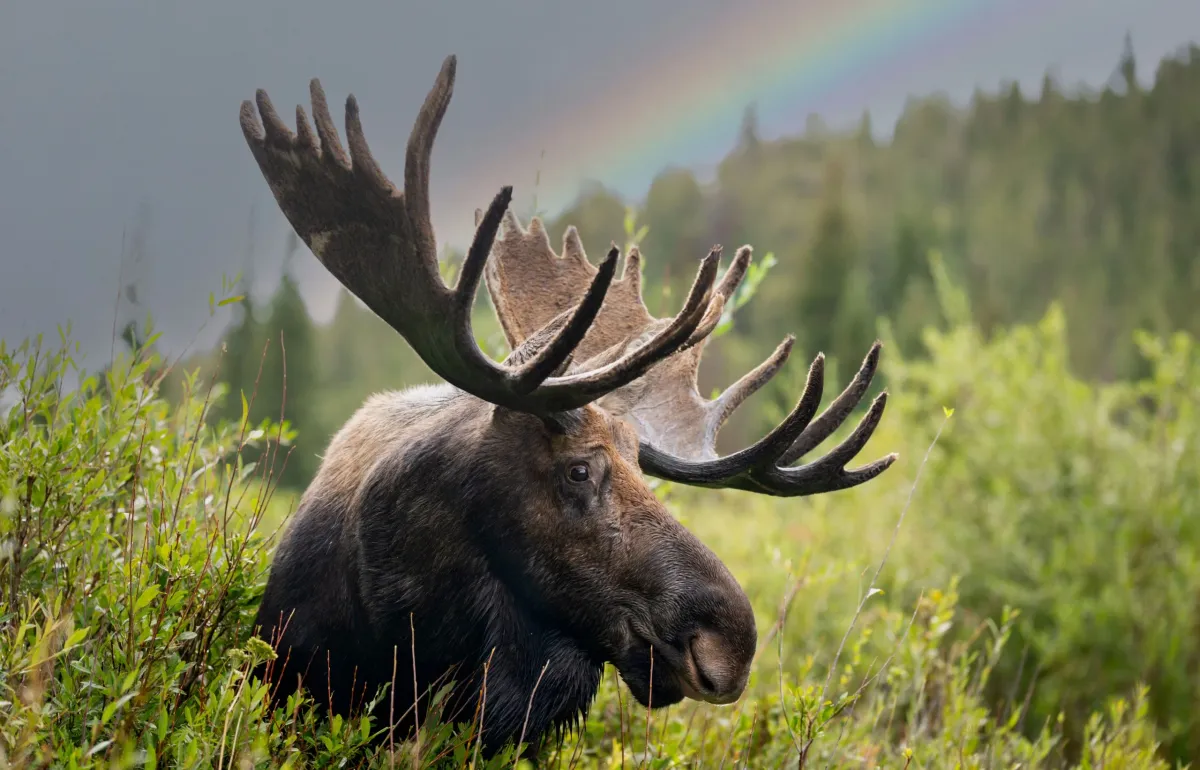
For a long time, people thought moose were new to Colorado. The common story was that wildlife officials brought them to the state in the late 1970s. But new research suggests this isn't true.
Moose might have been living in Colorado for centuries, possibly even thousands of years, before these modern reintroductions. This idea changes how we think about moose in places like Rocky Mountain National Park, where they are sometimes seen as "non-native" animals causing problems.
Uncovering a Deeper History
A new study challenges the idea that moose are recent arrivals. Researchers looked at many different types of evidence. They examined archaeological findings, old historical records, museum collections, and knowledge passed down by Indigenous people.
We're a new kind of news feed.
Regular news is designed to drain you. We're a non-profit built to restore you. Every story we publish is scored for impact, progress, and hope.
Start Your News DetoxWilliam Taylor, an anthropology professor at the University of Colorado Boulder, led the study. He stressed how important Indigenous histories were to this research. The findings show that Native people in the southern Rockies knew about moose and included them in their traditions.
Crystal C’Bearing, a Northern Arapaho Tribal historic preservation officer and co-author, explained that the moose is highly valued by her Tribe. Northern Arapaho societies use moose in their clothing and ceremonial items, a tradition that continues today.
Bringing all these different sources together made the research powerful. Archaeology helped extend the timeline of moose presence. Historical accounts showed more recent encounters. Indigenous knowledge preserved observations and relationships not always found in scientific records.
Jonathan Dombrosky, a co-author from Crow Canyon Archaeological Center, noted that combining these sources shows how strong the evidence is. It points to moose being part of southern Rocky Mountain ecosystems long before modern reintroductions. This approach helps us understand how ecosystems developed and how to make better decisions for their future.
Digging into the Past
The project started when William Taylor looked through the CU Museum’s archaeological collections in 2019. He found clues that had been overlooked for decades.
Taylor discovered that one of the oldest and most important collections, the Jurgens collection from a Colorado site, contained moose specimens. These specimens dated back thousands of years to the early Holocene period in northwest Colorado.
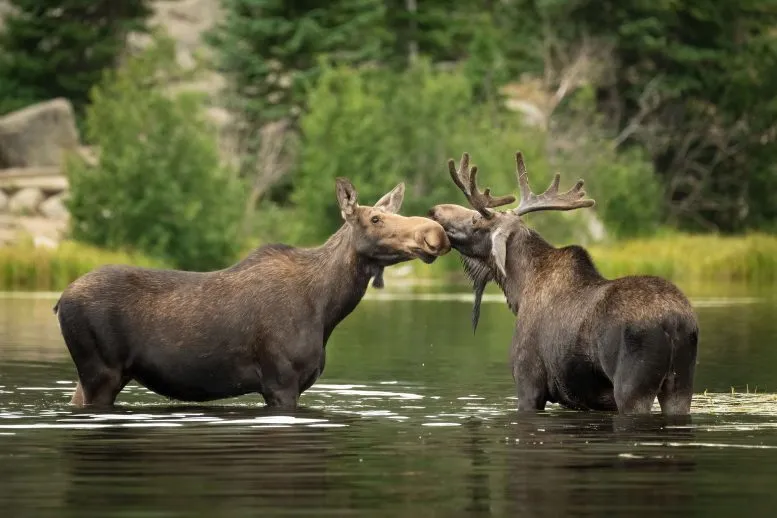 Moose Couple at Sprague Lake in Rocky Mountain National Park. Credit: Deena Sveinsson
These findings were important because they didn't fit with the public idea of moose as outsiders. When Rocky Mountain National Park officials discussed moose management, Taylor noticed that many conversations called the animals "invasive" or "non-native." This didn't match the archaeological evidence he knew.
Taylor also saw media stories suggesting that Native people in the Rockies didn't know about moose. He felt these claims were based on weak evidence and could affect future management policies. So, he decided to investigate the historical record more closely.
 CU Boulder scholar William Taylor and his research colleagues found evidence that moose have lived in the southern Rockies for centuries. Credit: University of Colorado at Boulder
Taylor reached out to Tribal partners and other researchers. He asked what they knew about moose history in the southern Rockies. This led to a wider investigation to challenge the idea that Colorado moose were just modern arrivals.
The team started with CU Museum archives and expanded their search. They looked through 160 years of digitized Colorado newspapers. By mapping moose sightings and interactions, they found evidence that moose had been present since the first colonial settlements.
The Importance of Indigenous Histories
Finding archaeological evidence was harder because it was scattered across old reports and files. It was like piecing together a fragmented map rather than checking a single database.
The researchers followed these clues through emails, library requests, old manuscripts, and professional networks. They also searched photo archives and museum databases. Each source was incomplete on its own, but together they created a detailed picture.
Taylor emphasized that connecting these records with Indigenous histories, including oral traditions, was crucial. One colleague found a 19th-century Jicarilla Apache record from northern New Mexico. It described moose in the southernmost Rockies and noted their recent disappearance from that area.
All this evidence together changed the story of moose in Colorado. They were not just newcomers. They were long-time residents whose history had become hidden.
Informing Future Management
These findings don't mean that moose impacts should be ignored. Instead, Taylor and his colleagues argue that management decisions should be based on a more accurate understanding of ecological history. In national parks, many factors that once controlled large herbivores, like predators and human hunting, have changed or been reduced.
John Wendt, a co-author from New Mexico State University, explained that treating moose as non-native changes how management responds. He noted that large mammals and their habitats are always changing. When modern park systems operate without natural regulating processes, high impacts might mean the management framework needs rethinking, not that the animal is out of place.
The research could also change how wildlife managers think about ecosystems altered over the last two centuries, including the removal of natural predators. Crystal C’Bearing believes Tribal communities can play an important role in future solutions. She noted that Tribal people were historically part of wildlife management through hunting. She suggested that co-managing moose in Colorado would benefit both the Tribes and the ecosystem.
Taylor believes this approach can be used for other species too. Many species are managed using recent data that only cover a short period. Looking further back can show if an animal is truly new, returning after an absence, or reacting to landscapes changed by humans.
Joshua Miller, a co-author from the University of Cincinnati, said that combining different historical evidence can fill knowledge gaps. This helps develop better strategies for managing and conserving plants and animals worldwide.
Deep Dive & References
Understanding Ancient Moose Populations in the Southern Rocky Mountains - Journal of Biogeography, 2026