Imagine a tiny, parasitic gene, not content to just chill in its own DNA, deciding to pack its bags and hop to a whole new species. Scientists have long suspected these genetic freeloaders existed, but actually catching one in the act? That’s like spotting Bigfoot buying groceries.
Now, a team led by Jens Harder at the Max Planck Institute for Marine Microbiology has done just that. They found a “jumping gene” making a daring leap from a predatory bacterium into the cells of its prey. And it wasn't even using a traditional ride like a virus. This thing was basically flying solo.
The Great Escape of the Genetic Parasite
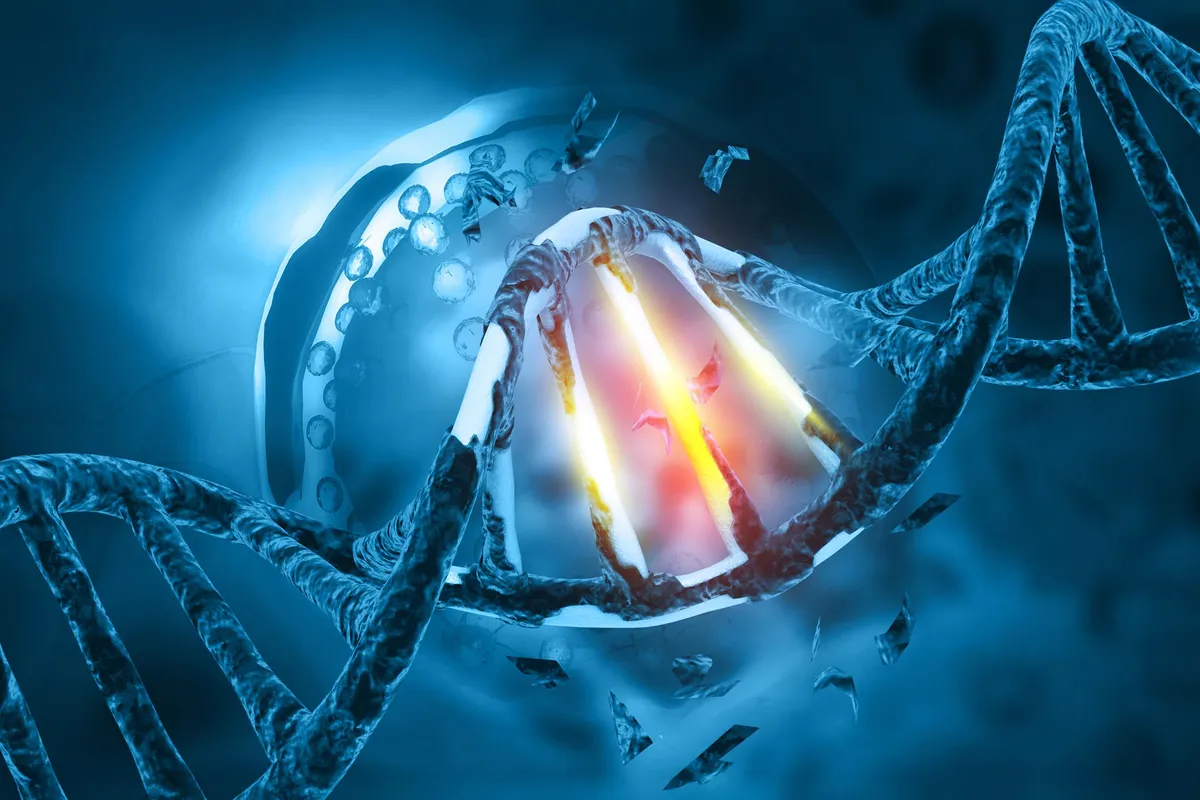
“Jumping genes” are exactly what they sound like: genetic sequences that don't stay put. They're found everywhere, from bacteria to plants to us. They can snip themselves out of one spot, form a tiny RNA molecule, and then re-insert themselves into a completely different part of the genetic code. Think of them as tiny, biological saboteurs, capable of giving cells entirely new features, which, if you think about it, is both impressive and slightly terrifying for the pace of evolution.
We're a new kind of news feed.
Regular news is designed to drain you. We're a non-profit built to restore you. Every story we publish is scored for impact, progress, and hope.
Start Your News DetoxTraditionally, scientists thought these genes needed a ride — like a plasmid (a small, circular piece of DNA) or a virus — to jump between species. But Harder's team found a different, much bolder method.
The discovery started in a slow-motion microbial drama playing out in an oxygen-free environment. A tiny predator, Candidatus Velamenicoccus archaeovorus, was feasting on microbes that break down limonene (the stuff that makes oranges smell like oranges) into methane. Among the victims was Methanothrix soehngenii, a key methane producer.
Harder’s team noticed that some of the prey cells were dead. The plot thickened: Was Ca. Velamenicoccus archaeovorus the killer? They needed proof, specifically, molecules from the predator inside the dead prey.
The Circular Clue
What they found was an intron, a type of mobile genetic element, in the form of a stable, circular RNA molecule. RNA usually breaks down faster than a New Year's resolution, especially in dead cells. But this one was different. Because it formed a perfect circle, it had no open ends for destructive enzymes to latch onto. It was basically a genetic Ouroboros, eating its own tail to survive.
Using super-sensitive techniques, the researchers peered inside the cells. And there it was: intron RNA from the predator, chilling inside the dead prey. The jumping gene had successfully made the transfer, caught in the very act of trying to copy itself. The only hitch? Its new host was already deceased. A successful jump, but perhaps a little late for a party.
This isn't just a quirky microbial anecdote. In humans, circular RNA molecules are being studied for their roles in everything from tumor growth to the development of RNA vaccines. This microbial discovery shows that these tiny genetic circles aren't just important in our own bodies; they're also a surprisingly resilient way for genes to go rogue and hop between species, accelerating evolution one unexpected leap at a time. Makes you wonder what else is out there, quietly moving house.