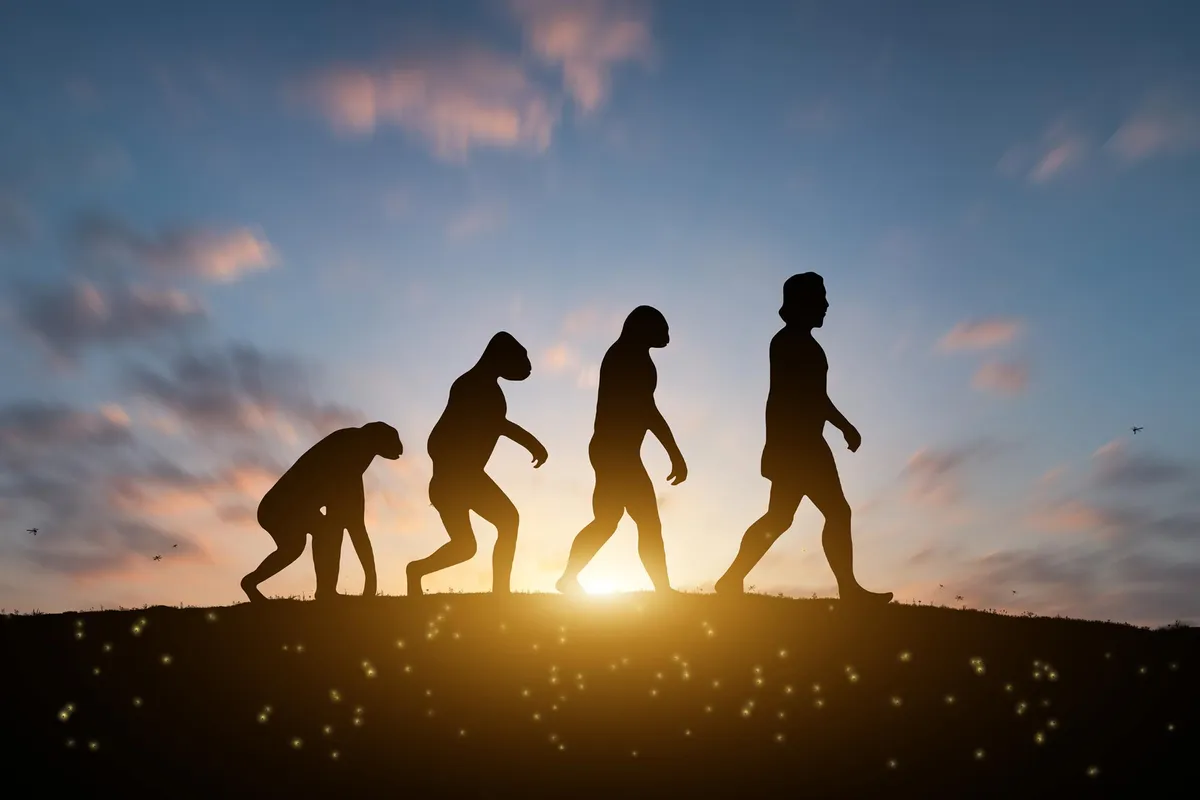
For a long time, the story of human evolution went something like this: we slowly, steadily got bigger. A nice, neat upward line on a graph. Turns out, that's not quite right. A new study suggests our ancestors had less of a gradual climb and more of a sudden, adolescent-style growth spurt about 2 to 2.5 million years ago.
That's when species like Homo rudolfensis or Homo erectus/ergaster first appeared, and suddenly, our family tree wasn't just inching along. It was stretching.
Published in PNAS, the research throws a wrench in the old, linear narrative. While some early human relatives, like the delightfully named Homo floresiensis (aka the 'hobbits') and Homo naledi, stayed on the smaller side — think 88 pounds, child-sized — others took off. Homo erectus/ergaster was the first to average a modern-human-like 132 pounds or more. Because apparently, some just wanted to be big.
We're a new kind of news feed.
Regular news is designed to drain you. We're a non-profit built to restore you. Every story we publish is scored for impact, progress, and hope.
Start Your News DetoxThe Not-So-Straight Path to Bigness
Dr. Jacob Gardner, lead author from the University of Reading, explained that previous studies often bumped heads because they were looking at different puzzle pieces. By combining all the fossil evidence, considering various theories, and, crucially, understanding how these ancient species were related, a much clearer — and more dramatic — picture emerged.
He notes that our story isn't just one of constant growth. There was a significant shift within our own genus, Homo. Other branches of the family tree, including some surprisingly petite relatives, decided to forge their own, smaller paths. Evolutionary choices, you know?
To figure this out, researchers meticulously examined estimated body weights from 386 fossils, representing 21 different hominin species. They then ran statistical models to trace these body size changes over millions of years. It’s like creating a very, very old family photo album, complete with growth charts.
Earlier studies, by focusing on isolated segments of the timeline or using different methods to guesstimate body mass, missed the larger, more complex narrative. The new model, which factored in species relationships and uncertainties in the fossil record, finally made those previous disagreements click into place. They weren’t wrong; they were just seeing different acts of the same long-running play.
The new analysis points to a steady, almost leisurely, growth among earlier hominins like Australopithecus, followed by that sharp, almost urgent, increase later within the Homo genus.
Bigger Bodies, Bigger Lives
This growth spurt wasn't just random. It coincided with other massive changes in how later Homo species lived. These ancestors started walking on two legs with much more efficiency. They diversified their diets, eating more meat, and traveled far greater distances to find food and prime real estate. A larger body, it seems, was the perfect accessory for this new, more demanding lifestyle.
Bigger bodies likely made those long-distance commutes easier and helped them survive on a varied, sometimes scarce, menu. The findings suggest that getting larger wasn't just a physical change; it was deeply intertwined with a fundamental shift in how these ancestors interacted with their entire world. Which, if you think about it, is both impressive and slightly terrifying.
Dr. Thomas Puschel, a co-author from the University of Oxford, sums it up: human body size evolution wasn't a slow burn. The biggest transformation happened later, in lockstep with our ancestors' movements and environmental strategies. So, the next time you stretch, remember you're channeling millions of years of evolutionary ambition. Just, you know, try not to actually spurt.