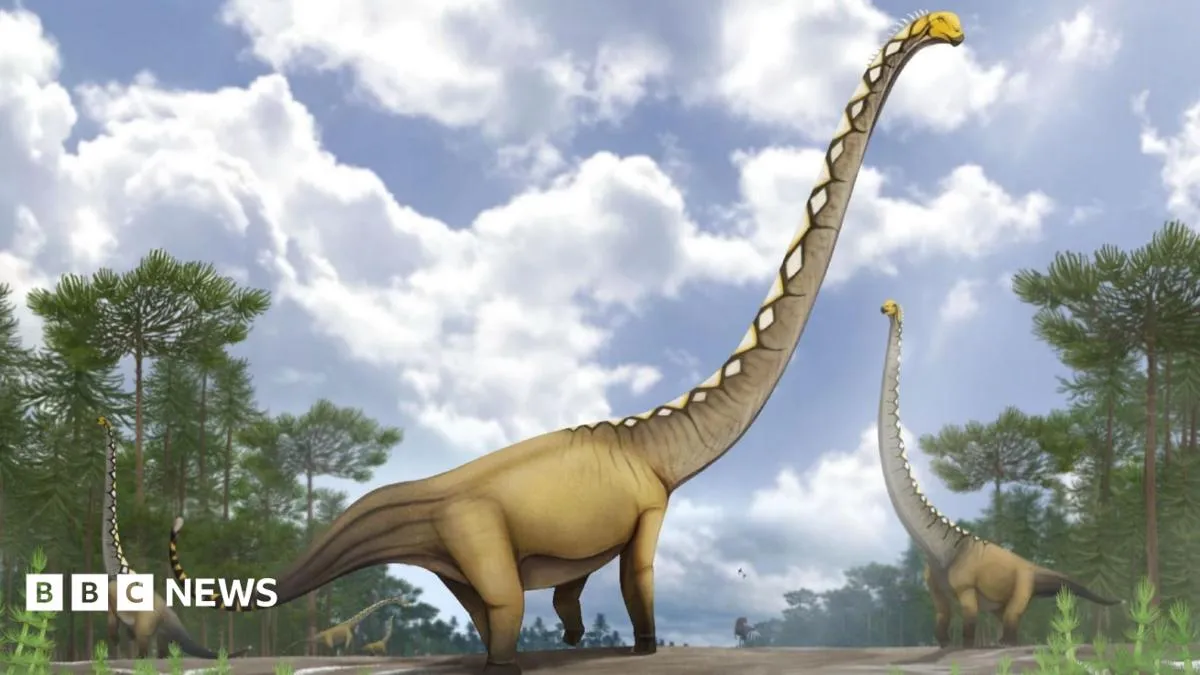
Good news for anyone who thought all the cool dinosaurs had been found: Palaeontologists in Thailand just unearthed a brand new species. And this one was basically a walking skyscraper, all neck and not much else.
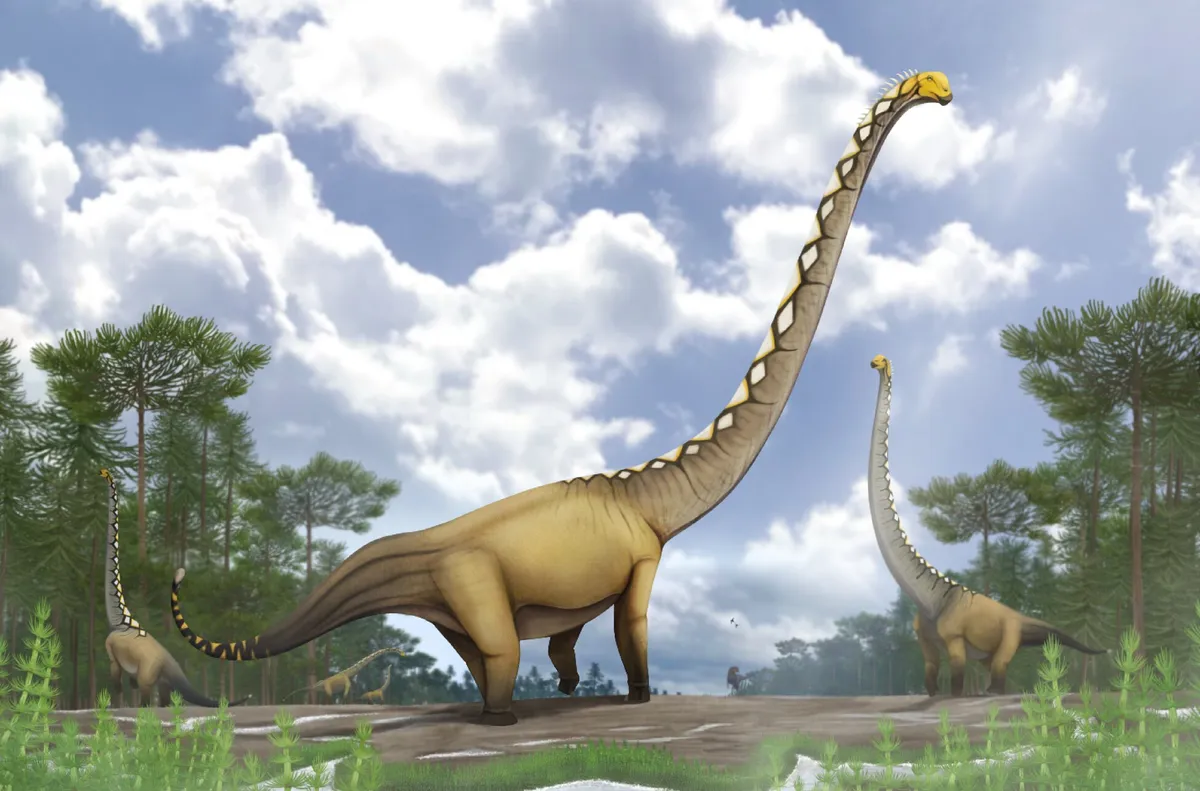
Meet Uragasaurus kalasinensis, a plant-eating giant that roamed what is now Thailand about 150 million years ago. Its most distinguishing feature? A neck that stretched up to 20 meters (66 feet) long. For context, that's roughly the length of a cricket pitch. Or, you know, just a really, really long neck.
This lanky legend was identified from a single dorsal vertebra — a bone from its middle back — found among a trove of fossils in Kalasin Province. The site, Phu Noi, has been a palaeontologist's dream since 2008, when a local spotted fragments that looked suspiciously like serpent scales. Turns out, they were just very old, very large lizard bits.
We're a new kind of news feed.
Regular news is designed to drain you. We're a non-profit built to restore you. Every story we publish is scored for impact, progress, and hope.
Start Your News DetoxThe Neck Has It
Dr. Apirat Nilphanaphan from Thailand's Mahasarakham University led the study, and his team basically put this ancient backbone through a CT scanner. What they saw confirmed it belonged to the Mamenchisauridae family of sauropods, known for their comically elongated necks. These creatures were the original high-rise diners, perfectly evolved to munch on leaves other dinosaurs couldn't even dream of reaching.
But Uragasaurus had a few extra tricks up its sleeve (or, rather, in its vertebrae). The CT scan revealed a unique Y-shaped arrangement of supporting bones and an air-cavity structure that Dr. Niphanaphan described as "unlike any other dinosaur in the world." Apparently, even among the long-necked crowd, this one was a standout. He admitted to feeling "exhilarated and relieved" upon realizing they'd found something truly new. That's a good day at the office, if you ask us.
Most of these Mamenchisauridae neck-monsters have historically been found in China, making this Thai discovery a significant first. And if you're thinking Thailand is suddenly a hotspot for ancient giants, you'd be right. Just last May, another long-necked herbivore, the nagatitan, was identified there. That one weighed 27 tonnes (nine adult Asian elephants) and was 27 meters (88 feet) long, making it the largest dinosaur ever found in Southeast Asia. Apparently, they like 'em big in Thailand.