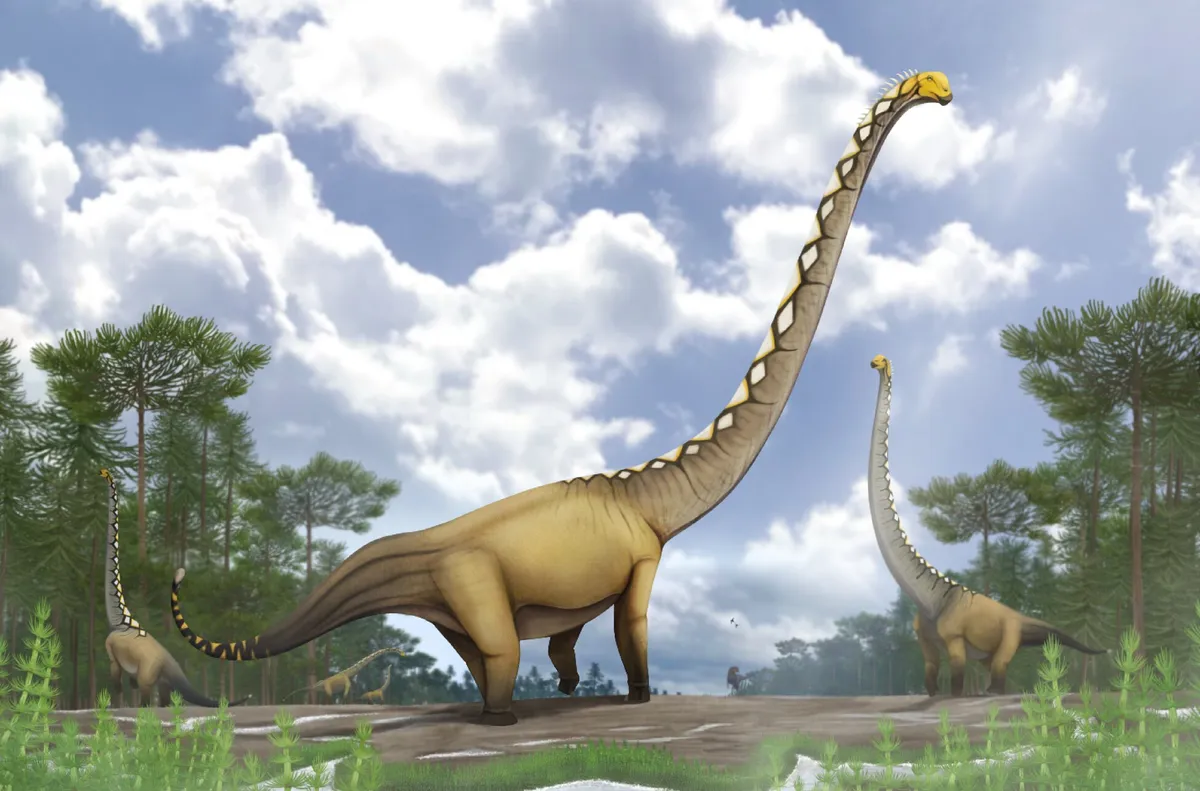
A new study has identified a new species of long-necked dinosaur in Thailand. Researchers named the dinosaur Uragasaurus kalasinensis. It is the first formally named mamenchisaurid dinosaur from Thailand.
The discovery was published in Scientific Reports.
Mamenchisaurids Across Asia
Mamenchisaurids were long-necked sauropod dinosaurs. They were common in parts of East Asia during the Middle to Late Jurassic period. Most known mamenchisaurid species come from China.
The group's spread outside China was not well understood. However, some clues suggested mamenchisaurids lived in Southeast Asia. Only a few clear fossils had been found, and no Thai species had been formally named until now.
We're a new kind of news feed.
Regular news is designed to drain you. We're a non-profit built to restore you. Every story we publish is scored for impact, progress, and hope.
Start Your News DetoxResearchers noted that recent discoveries outside China challenge the idea that mamenchisaurids were only in East Asia. For example, bone fragments from southern Thailand show the earliest evidence of mamenchisaurids in Southeast Asia. Other bones from northeastern Thailand also suggest the group was present.
The study authors also mentioned that a reassessment of bones from Tanzania showed that mamenchisaurids also lived in Africa.
A Unique Thai Discovery
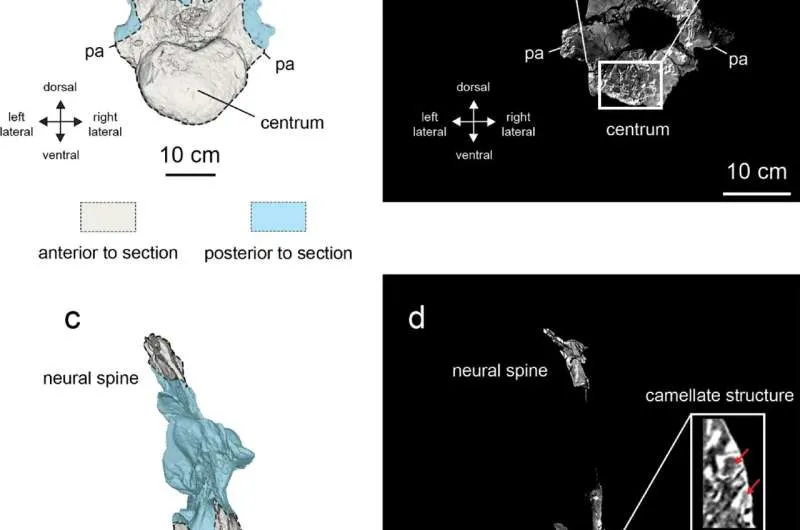
Previous mamenchisaurid remains in Thailand were only fragments. This new find, however, included a well-preserved front dorsal vertebra. This is a part of the dinosaur's spine.
The vertebra has a distinct Y-shaped pattern of bony ridges. Researchers say this feature is unique among known mamenchisaurids.
CT scans of the vertebra showed many small, oddly shaped chambers. These chambers were separated by thin bony walls. This structure is consistent with air-sac lightweighting seen in other mamenchisaurids. This feature helped them support their heavy necks.
Other sauropod bones were found nearby. However, the team could not confirm they belonged to the same species. The bones were not connected, and their shapes might differ from the new species. So, they are considered "associated sauropod materials."
The team performed an analysis to determine where Uragasaurus kalasinensis fits in the dinosaur family tree. The results showed it was an early member of the Mamenchisauridae group.
A Single Bone's Big Impact
This discovery adds a new mamenchisaurid species. It also helps paleontologists understand the evolutionary history of mamenchisaurids. It shows how they spread across the continent.
The find also provides more information about the Phu Kradung Formation. There has been debate about the age of this rock formation. The new dinosaur helps confirm the lower part of the formation dates to the Upper Jurassic age.
The study authors noted that finding Uragasaurus kalasinensis expands the known range of Mamenchisauridae into mainland Southeast Asia. It also shows that this group was widespread across eastern Asia during the Late Jurassic. The presence of similar dinosaurs in China suggests that animal populations could move across East Asia during that time.
Deep Dive & References
A new mamenchisaurid sauropod from the Lower Phu Kradung Formation, Upper Jurassic of northeastern Thailand - Scientific Reports, 2026