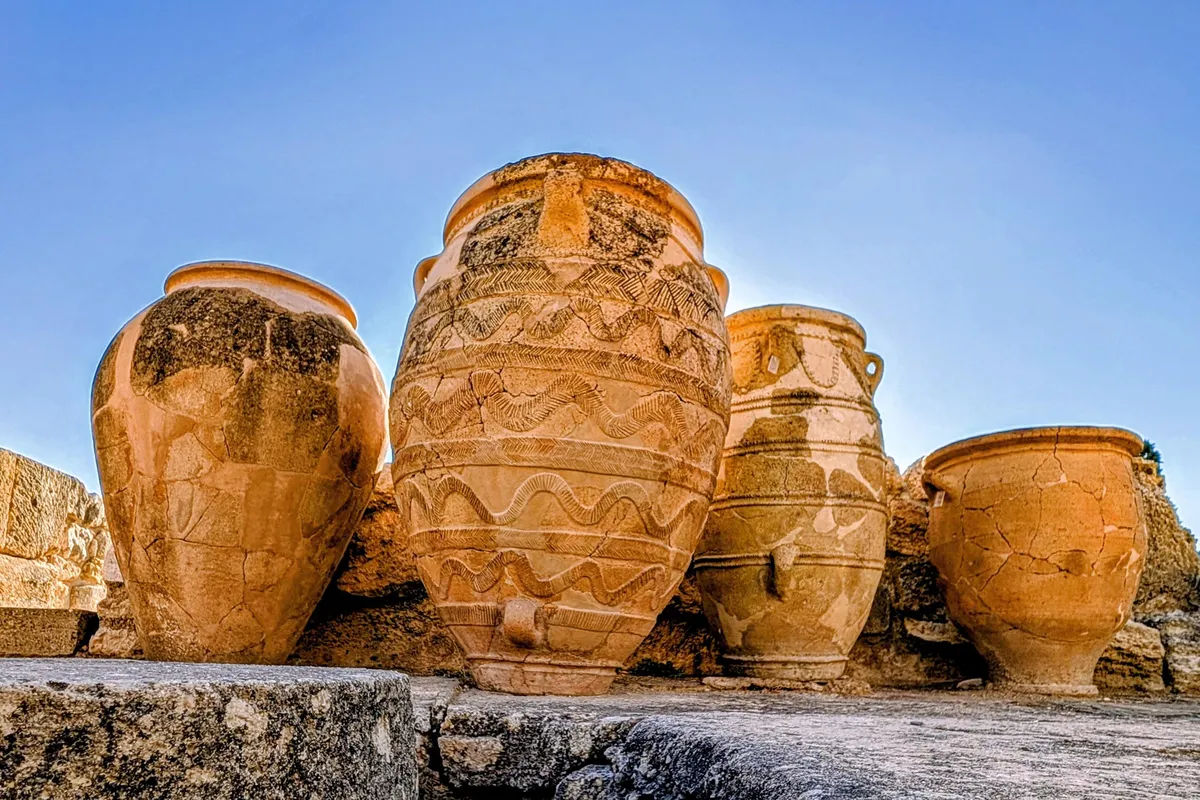
A new study suggests archaeologists might have been wrong for decades about identifying olive oil in ancient pottery. Researchers found that Mediterranean soils can change the chemical traces of old plant oils. This means some past findings of olive oil might have been incorrect.
Archaeologists often use traces of olive oil in ancient pots to learn about trade, farming, and daily life. Olive oil was a very important product in the Mediterranean.
However, a study led by Cornell University found that plant oil residues don't last well in the chalky soils common in the Mediterranean. This could mean that some residues thought to be olive oil were actually other plant oils or even animal fat.
We're a new kind of news feed.
Regular news is designed to drain you. We're a non-profit built to restore you. Every story we publish is scored for impact, progress, and hope.
Start Your News DetoxThe Journal of Archaeological Science published these findings.
Improving How We Test Ancient Residues
The project started in 2019 with Rebecca Gerdes, a doctoral student at Cornell. She wanted to combine her chemistry background with archaeological science. Gerdes explained her work as "washing ancient dirty dishes" and using the molecules in the rinse liquid to understand how pots were used.
Organic residue analysis is a common archaeological method. It helps experts study tiny molecular traces left in old containers. But Gerdes noticed that many claims about olive oil in eastern Mediterranean pottery relied on assumptions that hadn't been tested in the region's specific soils.
Her Ph.D. chair, Sturt Manning, suggested she first improve the method itself. Gerdes realized that more solid experiments were needed to support claims about findings in eastern Mediterranean pots.
This led to a wide collaboration at Cornell, involving researchers from different colleges and facilities. A key partner was Jillian Goldfarb, an associate professor of chemical and biomolecular engineering. Her lab studies how organic waste breaks down into biofuels, which provided useful tools for studying ancient food residues.
How Soil Changes Chemical Traces
Since the study began during the pandemic, Gerdes couldn't travel to Cyprus for soil samples. Instead, the soil was sent to Cornell. The Cornell Soil Health Lab sterilized the soil from Cyprus for the study.
Bob Schindelbeck, the lab's director, helped Gerdes understand how soil chemistry affects what survives on pottery. Gerdes then worked with Goldfarb's team to design an experiment. They wanted to see how different soils affect how food residues break down.
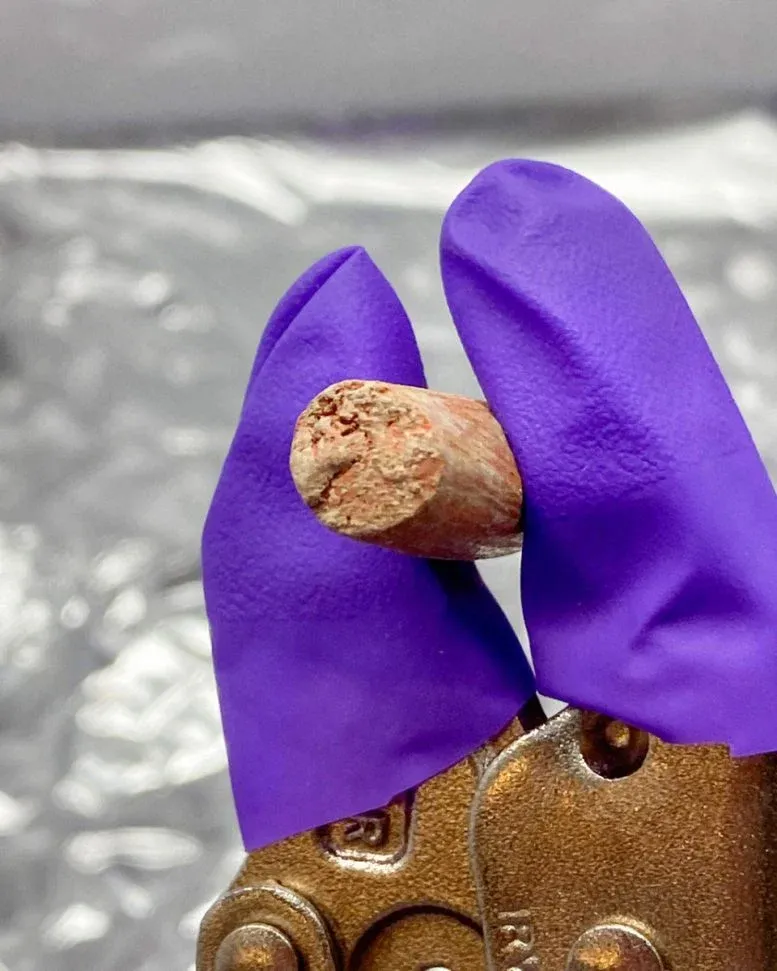
They made small ceramic pellets from terracotta clay, similar to Play-Doh. These pellets were fired, soaked in olive oil, and then buried in two types of moist soil. One soil came from a New York agricultural field. The other was from Cyprus, chosen because it matched conditions at an archaeological site.
Gerdes noted that this type of soil is very common in the eastern Mediterranean. It affects many important historical periods, especially those focused on trade and connections, like the Late Bronze Age (around 1650-1100 BC).
To speed up the aging process, the samples were kept in incubators at 50 degrees Celsius for up to a year. After "excavation," the olive oil residues were taken out and analyzed. Gerdes joked that this allowed them to finish her Ph.D. without waiting 3,000 years.
Olive Oil Can Look Like Animal Fat
The results showed that the Cyprus soil changed the residue record. In the chalky, alkaline soil, the ceramic pellets had less olive oil residue. They also lost certain chemical markers for plant oils compared to pellets buried in the mildly acidic New York soil.
This chemical loss makes it hard to interpret the findings. Olive oil naturally has a similar makeup to other plant oils. When it breaks down, its molecular profile becomes even harder to identify and can start to look like animal fat.
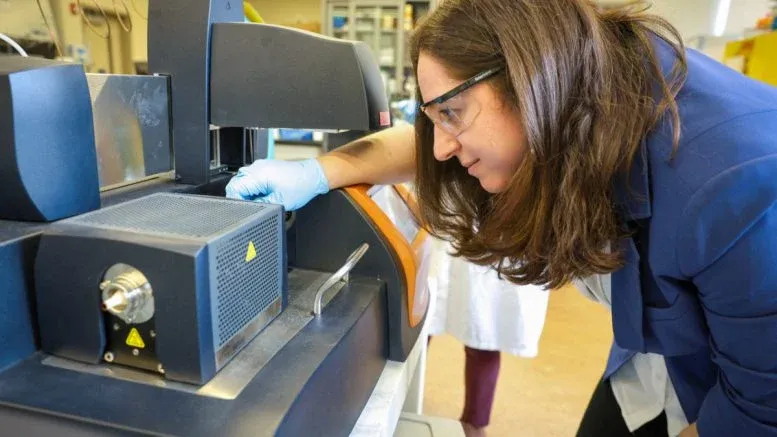
Gerdes explained that archaeologists often want to believe they found olive oil because it makes a good story. Since olive oil was so important economically in the Mediterranean, there's a common assumption that if molecules match olive oil, then it must be olive oil.
However, the problem is that olive oil's composition overlaps with many other plant oils. If it degrades, it becomes even harder to distinguish and can even resemble animal fat.
Expanding Research Through Collaboration
Gerdes found the results important, but also valued how the project came together. It relied on many Cornell collaborators with expertise beyond classical archaeology.
The team used lab space from the Schroeder Research Group. Joe Regenstein, a professor emeritus of food science, helped set up the extraction process for the organic residues. Goldfarb's group adapted chemical engineering techniques from biofuel research to measure the residues.
The Cornell Center for Materials Research helped handle powdered ceramic samples safely, and the Cornell Stable Isotope Lab cleaned the glassware.
This project also involved undergraduate co-authors Hanna Wiandt, Malak Abuhashim, and Avery Williams. Goldfarb noted that students and faculty had to work across different fields, learning to share language and goals.
This kind of teamwork shows how Cornell can become a leading center for biomolecular archaeology. Goldfarb hopes to build an analytical center for this work. She believes engineers and scientists can help create new methods and apply their skills to new areas of knowledge. This all started with one dedicated student, now a postdoc, who got the conversations going.
Deep Dive & References
Overlooking environmental context causes misidentification of ancient Mediterranean plant oil in organic residues - Journal of Archaeological Science, 2025