For decades, scientists studying brain disorders that cause involuntary movements have been relying on a kind of neurological shorthand. They'd measure the activity of one type of brain cell, the Purkinje cell, and use that as a proxy for what was happening deeper inside the brain. Seemed logical enough. Turns out, it was a bit like assuming you know what's happening in the basement by only watching the attic.
A new study from Virginia Tech just dropped, and it's basically telling the neuroscience community to hit rewind on some fundamental assumptions. This could dramatically change how we understand — and eventually treat — conditions like dystonia (painful muscle contractions), ataxia (coordination issues), and tremor (the shakes). All of which, fun fact, originate in the cerebellum, the brain's tiny but mighty movement coordinator.
The Brain's Odd Couple
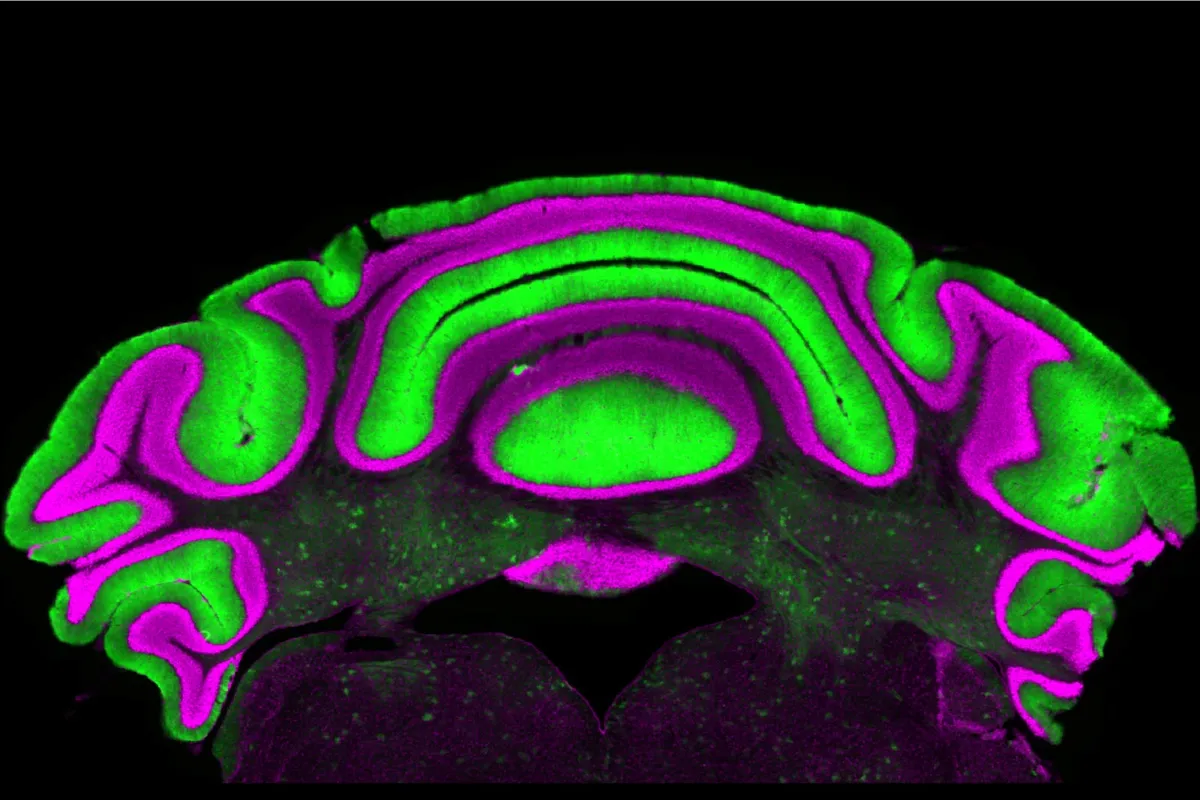
Inside that cerebellum, there's a dynamic duo: Purkinje cells and deep cerebellar nuclei neurons. The Purkinje cells are the big, showy ones on the outer layer, easy to get a read on. Their job is to inhibit (aka, slow down or stop) the deeper, harder-to-reach deep cerebellar nuclei neurons. Because they're directly connected, the prevailing wisdom was: if you know what the Purkinje cells are doing, you've got a pretty good idea what the deep ones are up to.
We're a new kind of news feed.
Regular news is designed to drain you. We're a non-profit built to restore you. Every story we publish is scored for impact, progress, and hope.
Start Your News DetoxBut Meike van der Heijden, an assistant professor and lead researcher on the study, and her team found that this isn't exactly a perfect marriage. "We see that there's not a clear linear relationship between activity in the Purkinje cells and in the deep nuclei cells," Van der Heijden noted. In plain English? Just because the Purkinje cells are doing one thing, doesn't mean the deeper cells are reliably following suit. Their activity just doesn't predict the other's.
Think of it like this: you can see the conductor waving their arms wildly, but that doesn't necessarily tell you if the tuba player is actually hitting the right notes. Or any notes at all. The connection is there, but the meaningful connection, the predictive power, just isn't.
A Cautionary Tale for Treatments
This isn't just an academic squabble. It has real-world implications for how we tackle these challenging movement disorders. If Purkinje cell activity is disrupted in a disease state, and we're designing treatments to change that activity, we might be missing the mark entirely if the deeper neurons aren't responding as expected.
The research team, after sifting through a database of recordings from pre-clinical disease models, concluded there was "no significant link" between the two neuron types' activities. So, the new directive is clear: if you want to know what the cerebellum is really doing in a disease state, you need to look at the deep nuclei neurons directly, not just their more accessible counterparts.
It's a scientific mic drop, reminding everyone that even the most logical assumptions need rigorous testing. And sometimes, what seems obvious is anything but. Which, if you think about it, is both a frustrating reset and an exciting new path forward for millions affected by these conditions.