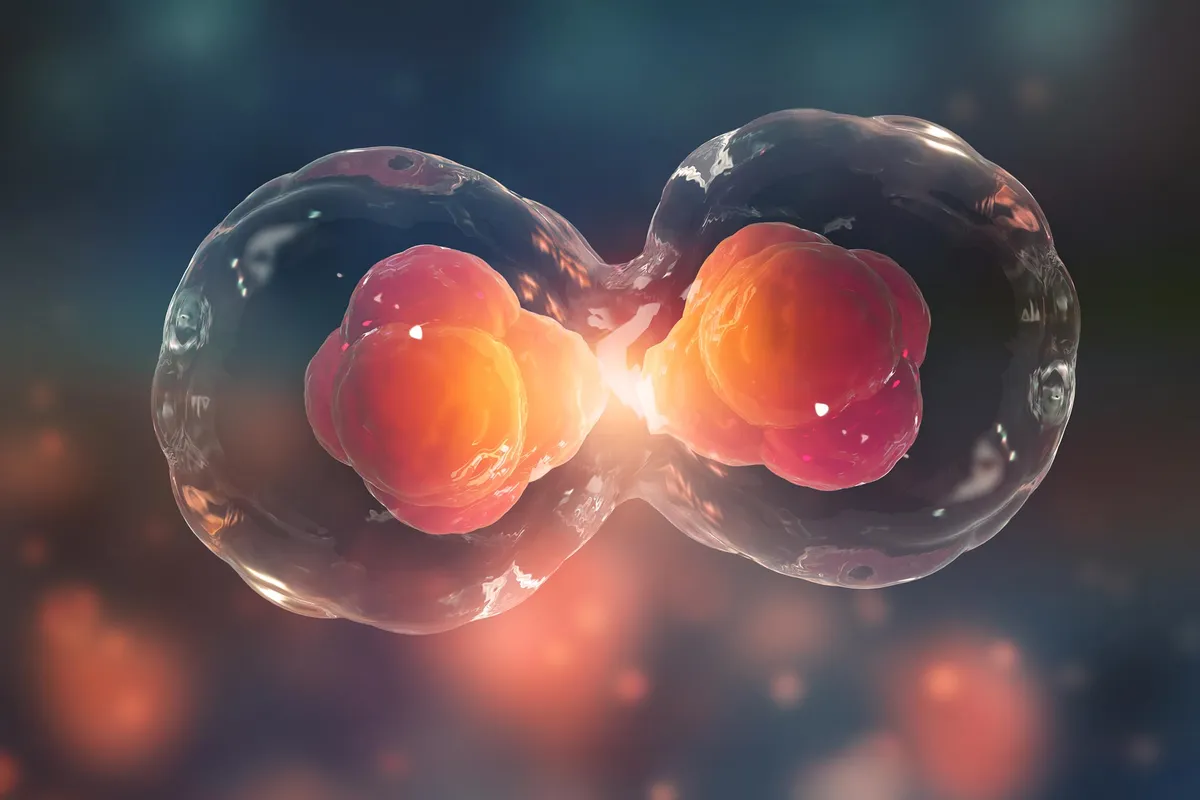
For years, scientists have watched cells age and stop dividing, a crucial defense against cancer. But how exactly they knew it was time to clock out was a bit of a head-scratcher. Now, researchers have pinpointed the molecular switch that tells these aging cells to permanently retire, and it turns out, one of the biggest culprits was right under their noses — or rather, in the air they were breathing in the lab.
The big reveal? A DNA damage sensor called ATM is the bouncer for our cells, deciding when they've had enough. And apparently, ATM gets a little too enthusiastic when there's too much oxygen around. Which, if you think about it, is both impressive and slightly terrifying for anyone running experiments.
The Cell's Retirement Plan
Our cells have these protective little caps on their chromosomes called telomeres. Think of them as the plastic tips on shoelaces, but for your DNA. Every time a cell divides, these tips get a little shorter. When they get too short, the cell freaks out, sees it as DNA damage, and decides to stop dividing for good. This cellular shutdown is called replicative senescence, and it's our body's natural way of saying, "Nope, not today, cancer."
We're a new kind of news feed.
Regular news is designed to drain you. We're a non-profit built to restore you. Every story we publish is scored for impact, progress, and hope.
Start Your News DetoxTurns out, this entire safety system relies on ATM kinase, a protein that's basically a highly vigilant security guard for your genes. Without enough of another protein called TRF2 to shield the telomeres, ATM springs into action, sounding the alarm and halting cell division.
Now, here's where it gets interesting. For ages, scientists noticed that cells grown in typical lab air (which is about 20% oxygen) aged faster and stopped dividing sooner than cells grown in lower oxygen levels (more like what's actually inside your body). The simple explanation — that high oxygen just wore down telomeres faster — had already been debunked. So, what gives?
Alexander Stuart, a former grad student in the de Lange lab, and his team basically had to become cellular ninjas, working quickly to keep cells from getting too much oxygen. Even moving a plate could mess up an experiment. His discovery? ATM alone was enforcing senescence, and high oxygen wasn't just generally aging cells faster; it was making ATM hyperactive.
At normal body oxygen levels (around 3%), cells could keep chugging along even with quite short telomeres. But move those same cells to 20% oxygen, and ATM suddenly became a strict disciplinarian, treating those short telomeres as a five-alarm fire and pushing the cells into early retirement. It’s like giving your security guard too much coffee and then wondering why they're calling the SWAT team over a loose thread.
This isn't just a fun fact for your next dinner party. Many tumors grow in low-oxygen environments, which reduces ATM activity. This might be how cancer cells manage to keep dividing even with critically short telomeres, dodging our body's natural defenses. The implication? Restoring ATM function could be a new way to force vulnerable cancer cells back into senescence, effectively telling them their shift is over.
So, while switching to low-oxygen lab conditions is a pain, it might just be the key to understanding, and ultimately fighting, some of the most tenacious cancers. Let that satisfying number sink in. These findings, published in Molecular Cell, show that telomere shortening is a hugely important cancer prevention program — and we're finally starting to understand its quirky operating manual.