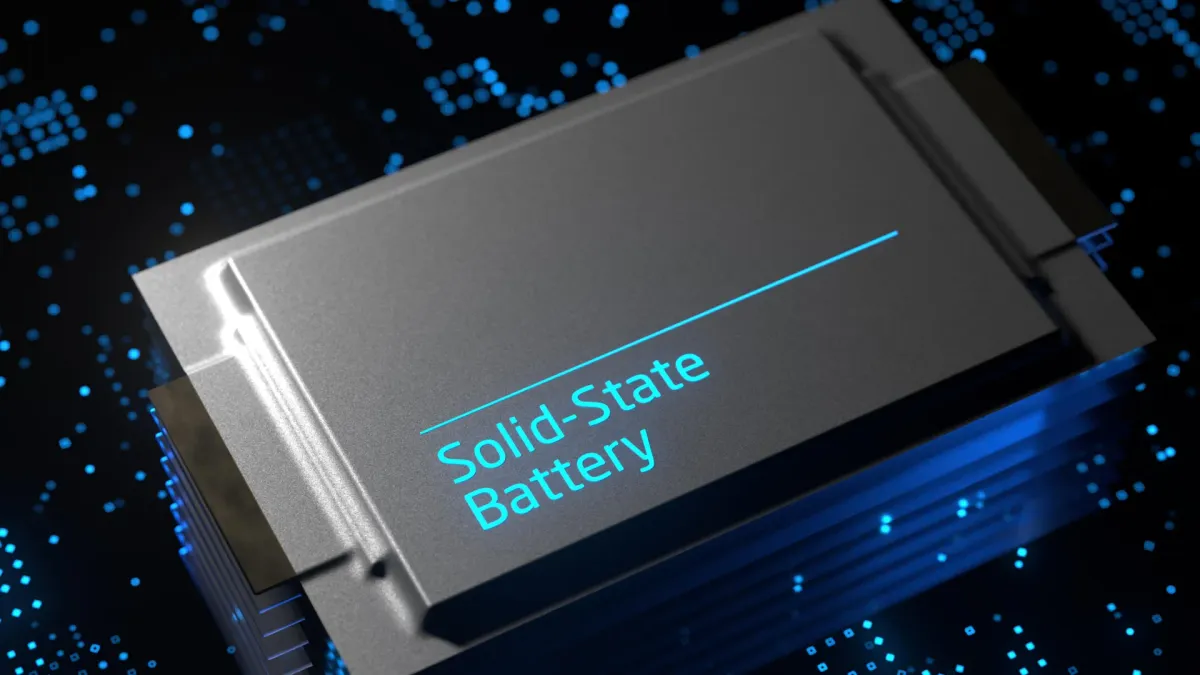
Imagine your smartphone lasting days on a single charge, or an electric car tripling its range. That's the promise of solid-state batteries, the next big thing in power. They're safer, more energy-dense, and have a longer lifespan than the liquid-filled lithium-ion cells we're all lugging around now. They sound like a dream, right?
Well, there's been a nightmare keeping them off the market: tiny, tree-like growths called dendrites. During charging, these lithium tendrils sprout and, like miniature, metallic splinters, pierce the solid electrolyte, causing short circuits. Which, if you think about it, is less than ideal for a battery.
But now, a team at the Max Planck Institute for Sustainable Materials (MPI-SusMat) seems to have cracked the code. They've figured out how these soft lithium dendrites manage to fracture hard ceramic electrolytes. Their findings, published in Nature, are a big deal.
We're a new kind of news feed.
Regular news is designed to drain you. We're a non-profit built to restore you. Every story we publish is scored for impact, progress, and hope.
Start Your News DetoxThe Tiny Trees That Break Batteries
For years, scientists have been scratching their heads, wondering how something as relatively soft as lithium could punch through a tough ceramic. Dr. Yuwei Zhang, the study's lead author, put it simply: the soft stuff was indeed breaking the hard stuff.
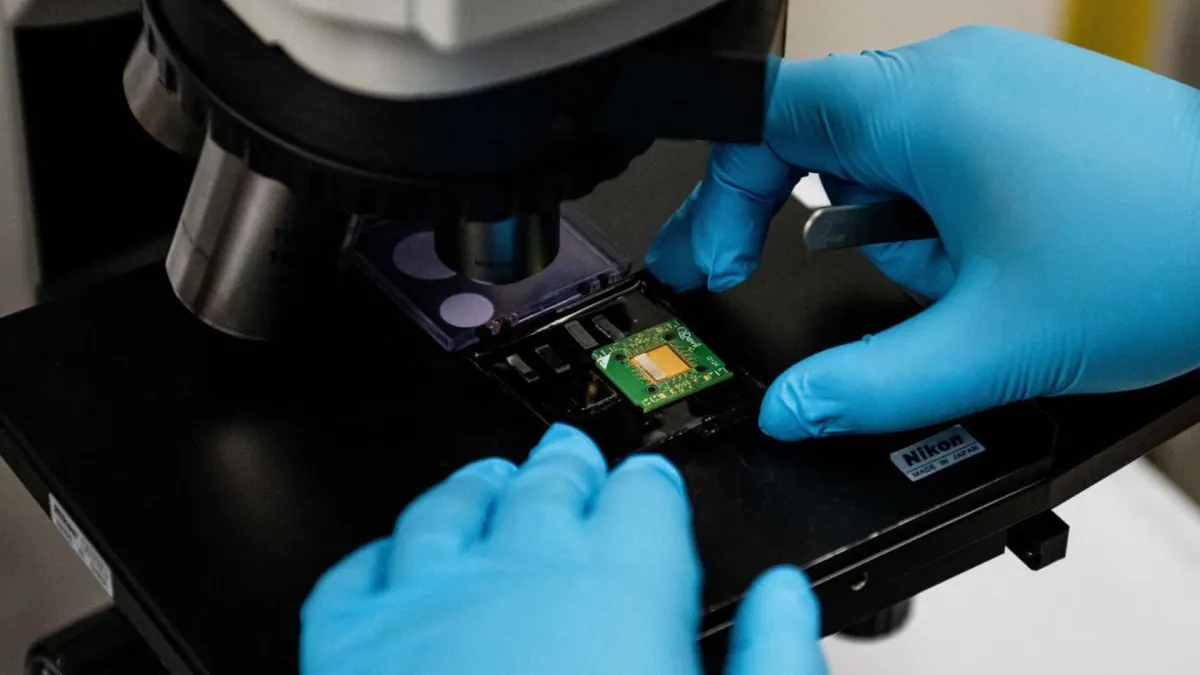
The researchers explored a couple of theories. Was it internal stress in the dendrites? Or were electrons leaking along the electrolyte's grain boundaries, creating lithium nuclei that then connected? To get to the bottom of it, they went full high-tech, studying samples in a vacuum at super cold temperatures, just to avoid any pesky interference from oxygen, water, or even the electron beams of their microscopes.
Their detailed analysis showed no lithium buildup at the dendrite tip, ruling out one of the theories. Instead, Zhang explained, the soft lithium metal acts like a continuous waterjet – think high-pressure cutting, but on a nanoscale. Their calculations confirmed that hydrostatic stress within the dendrite is the culprit, causing the solid electrolyte to fracture. Simulations and measurements backed it all up.
Armed with this new understanding, the team is already brainstorming solutions. They're looking at making the solid electrolyte tougher, or perhaps adding tiny voids to redirect dendrite growth away from vulnerable spots. Another idea is protective coatings for the lithium electrodes themselves, stopping dendrites before they even get started.
It's a prime example of how understanding the microscopic world can unlock massive potential in our everyday tech. And if it means our phones finally last through a full weekend, well, that's a breakthrough worth cheering for.