
A long drought on the Indonesian island of Flores may have caused Homo floresiensis, also known as "the hobbit," to disappear about 50,000 years ago. This small human relative, which stood only 1.1 meters tall, lived on the volcanic island for over a million years.
New research suggests a severe drought, starting around 61,000 years ago and lasting for thousands of years, played a key role. Scientists created a detailed climate record for the area where these ancient hominins lived.
A Changing Climate on Flores
The study, published in Communications Earth & Environment, shows the ecosystem shifted from being rich in resources to facing increasing stress. As rainfall dropped, H. floresiensis and its main food source, a pygmy elephant, likely moved away from their cave refuge. This movement might have led them to encounter Homo sapiens.
We're a new kind of news feed.
Regular news is designed to drain you. We're a non-profit built to restore you. Every story we publish is scored for impact, progress, and hope.
Start Your News DetoxH. floresiensis bones and stone tools were found in Liang Bua cave, located in a small valley on the island. These remains date back between 190,000 and 50,000 years ago.
Today, Flores has a monsoon climate with heavy rain in the summer (November to March) and lighter rain in the winter (May to September). However, during the last glacial period, rainfall varied greatly.
To understand past rainfall, researchers studied a stalagmite from Liang Luar cave, 700 meters upstream from Liang Bua. This stalagmite grew during the time H. floresiensis disappeared. Stalagmites grow in layers, and their chemical makeup records climate changes over time.
Scientists used two main tools to reconstruct past rainfall from the stalagmite. They looked at oxygen isotopes (d18O) to see changes in monsoon strength. The ratio of magnesium to calcium showed the total amount of rainfall. By combining these measurements, they reconstructed summer, winter, and annual rainfall.
The study found three main climate phases:
- 91,000 to 76,000 years ago: Wetter than today year-round.
- 76,000 to 61,000 years ago: Highly seasonal monsoon, with wetter summers and drier winters.
- 61,000 to 47,000 years ago: Much drier summers, similar to Southern Queensland today.
Hobbits Followed Their Prey
The team also created a precise timeline for H. floresiensis fossils at Liang Bua. They analyzed oxygen isotopes in the tooth enamel of Stegodon florensis insularis, an extinct pygmy elephant that was a key food source for the hobbits.
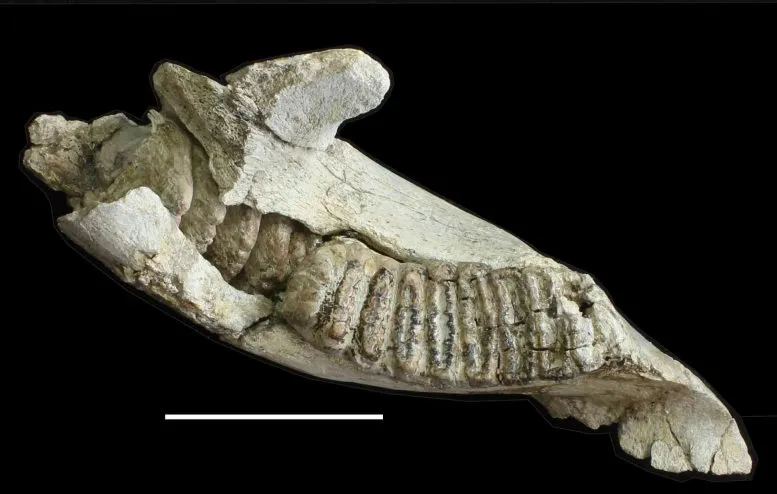
The d18O patterns from the stalagmite and the Stegodon teeth matched perfectly. This allowed researchers to accurately date the Stegodon fossils and the H. floresiensis remains.
The updated timeline showed that about 90% of pygmy elephant remains date to 76,000–61,000 years ago. This was during the "Goldilocks" climate, which was ideal for the elephants to graze and for H. floresiensis to hunt them. Both species nearly vanished as the climate became drier.
The simultaneous decline in rainfall, pygmy elephants, and hobbits suggests that dwindling resources caused H. floresiensis to gradually leave Liang Bua. As the climate dried, the Wae Racang river, a main water source, likely shrank. This would have left the Stegodon without fresh water, possibly forcing them to migrate, with H. floresiensis following.
The Role of Volcanoes and Modern Humans
The last Stegodon fossils and stone tools in Liang Bua are covered by a layer of volcanic ash, dated to about 50,000 years ago. It is unclear if a volcanic eruption was the final blow for the hobbits.
The first archaeological evidence of Homo sapiens is found above this ash layer. While it's unknown if H. sapiens and H. floresiensis ever met, new archaeological and DNA evidence suggests H. sapiens were traveling across Indonesia to Sahul by at least 60,000 years ago.
If H. floresiensis were forced by environmental pressures towards the coast, they might have encountered modern humans. Competition, disease, or even predation could have then played a role in their disappearance.
This study provides a framework for future research into the extinction of H. floresiensis in the context of major climate change. The importance of freshwater availability in the fate of this human cousin highlights how fragile human survival can be and how shifting rainfall patterns can have profound effects.
Deep Dive & References
- Onset of summer aridification and the decline of Homo floresiensis at Liang Bua 61,000 years ago - Communications Earth & Environment, 2025