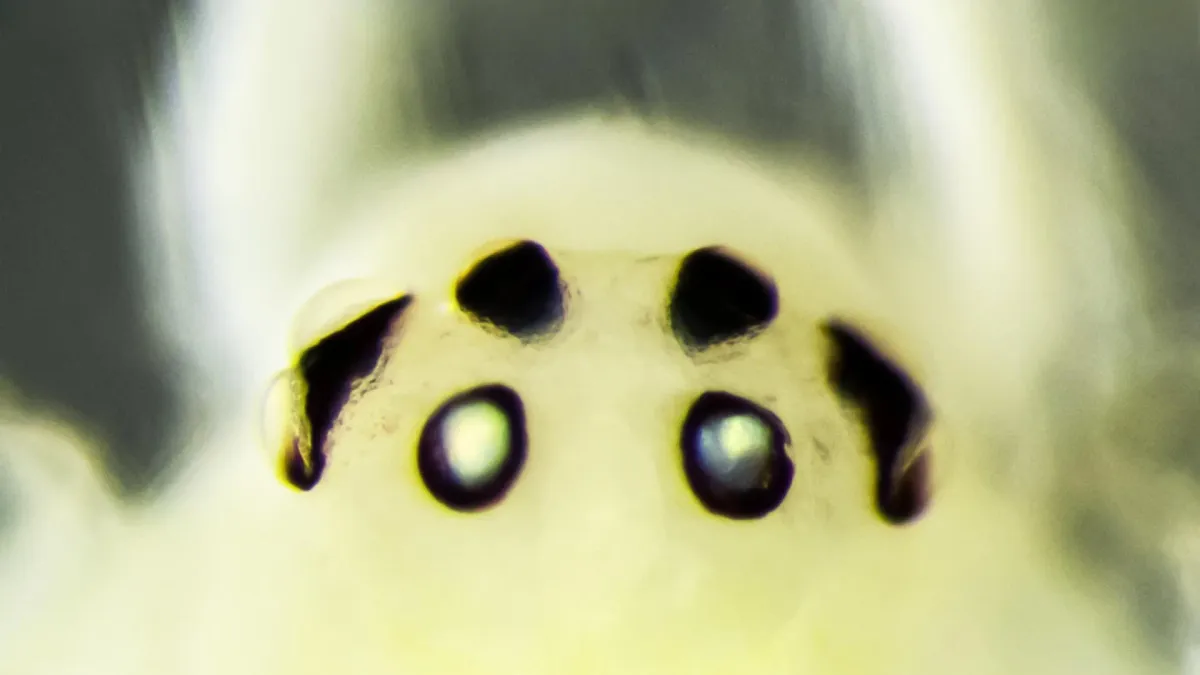
For over a century, the world believed the Happy Face spider — that tiny arachnid with a literal red smile on its back — was an exclusive Hawaiian resident. It was the kind of creature you'd see on a postcard, assuming you were into highly specific, adorable invertebrates.
Turns out, Hawaii had been keeping a secret, or rather, the Himalayas had. Scientists have just announced the discovery of a new species in Uttarakhand, India, that looks uncannily like its famous Pacific cousin. Meet Theridion himalayana, also known as the Himalayan Happy Face Spider. Because apparently, smiles are contagious across continents.
The Accidental Tourist
The whole thing was, as many great discoveries are, a happy accident. Scientist Devi Priyadarshini was actually looking for ants. (Because who isn't, really?)
We're a new kind of news feed.
Regular news is designed to drain you. We're a non-profit built to restore you. Every story we publish is scored for impact, progress, and hope.
Start Your News DetoxHer colleague, Ashirwad Tripathy, kept sending her spiders from high altitudes for identification. One day, an image of a spider from under a Daphniphyllum leaf landed in her inbox. Priyadarshini, who'd studied the Hawaiian version, immediately knew this wasn't just any spider. It was a doppelgänger. She asked him to send every variation he could find, and over the next few months, starting in October 2023, the Himalayan Happy Face Spider revealed its many faces.
Found at elevations over 2,000 meters, the new species was appropriately named for its majestic mountain home. Tripathy noted they picked Himalayana to honor the "mighty Himalaya mountains" that "guard the country and hold a lot of different life." Which, if you think about it, is a pretty epic dedication for a spider that fits on your thumbnail.
The Smile's Secret
Genetic tests confirmed it: the Himalayan spider is about 8.5% different from its Hawaiian counterpart. Enough to be its own distinct, evolutionary branch that decided to develop its charming patterns in Asia, completely independently. Let that satisfying number sink in.
But here's the kicker: scientists still don't know why these spiders evolved their iconic smile. Priyadarshini muses that the patterns "definitely help them survive better," but the exact role of a literal happy face in the cutthroat world of spider survival remains a mystery. Perhaps it's just really good camouflage for a particularly cheerful leaf? Even stranger, both the Hawaiian and Himalayan spiders share a peculiar preference: they love hanging out on ginger plants (Hedychium species). Ginger, by the way, isn't even native to Hawaii. This shared habitat raises all sorts of questions, like how two geographically isolated spiders ended up with the same taste in invasive plant real estate. Priyadarshini wonders if T. himalayana could actually be an older relative of the Hawaiian species, despite being discovered 125 years later. A bold claim, perhaps, but one that future research into those ginger plants might just solve. Because apparently, the secret to global spider migration might just be a good root.