Imagine building something that can eat, grow, copy its own DNA, and even have offspring, all from scratch. Now imagine it's not actually alive. Welcome to the slightly unsettling, utterly fascinating world of SpudCell.
Researchers at the University of Minnesota just pulled off a biological magic trick, crafting a synthetic cell from engineered, non-living parts. They affectionately — or perhaps accurately — named it SpudCell because, under a microscope, it looks suspiciously like a potato. Because, of course, it does.
This isn't just a science experiment; it's a profound step towards understanding the very definition of life. If you can replicate life's core functions with chemistry instead of biology, it turns out you don't need a "magical spark." Just really, really smart chemists.
We're a new kind of news feed.
Regular news is designed to drain you. We're a non-profit built to restore you. Every story we publish is scored for impact, progress, and hope.
Start Your News DetoxThe Potato That Could
SpudCell's genome is a compact 90,000 base pairs, which is even smaller than what was previously thought to be the bare minimum for a working cell. The team cleverly split these genes across several small, circular DNA molecules (plasmids), making the whole system easier to tinker with. Think of it as modular life.
To make proteins from those genetic instructions, SpudCell employs 36 purified enzymes, mostly borrowed from E. coli – a bacterium that, let's be honest, does a lot of the heavy lifting in synthetic biology. All of this is neatly packaged inside a liposome, which is essentially a fatty bubble mimicking a natural cell membrane. So, a chemical potato in a fat suit, if you will.
SpudCell "feeds" in two ways: small molecules slip directly through protein pores, while larger molecules arrive in tiny lipid bubbles that merge with the membrane, releasing their contents inside. It's a bit like having a tiny, self-assembling delivery service for its meals.
But here's the catch: SpudCell is high maintenance. It needs special "meals" from its creators. Kate Adamala, who led the project, describes it as a "bed-ridden Frankenstein’s monster that has to be spoon-fed." So, no need to worry about a rogue potato uprising anytime soon.
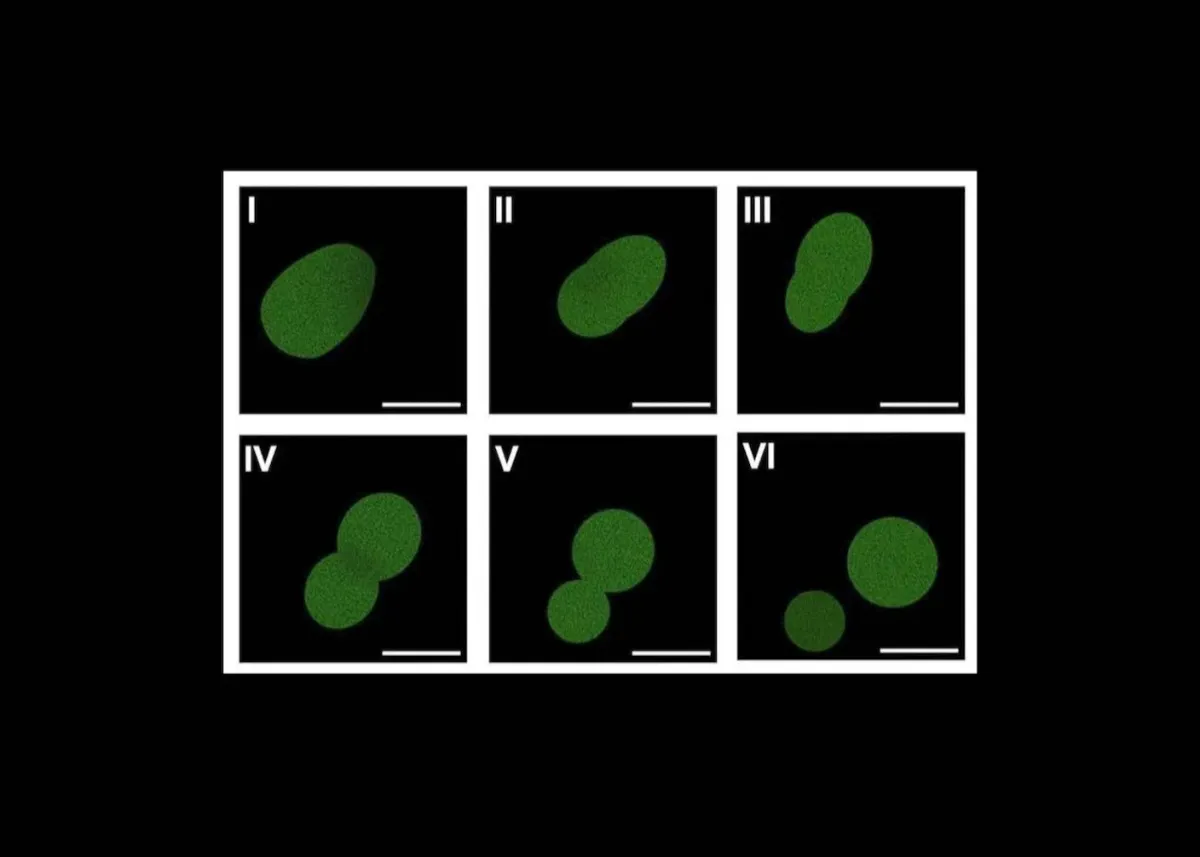
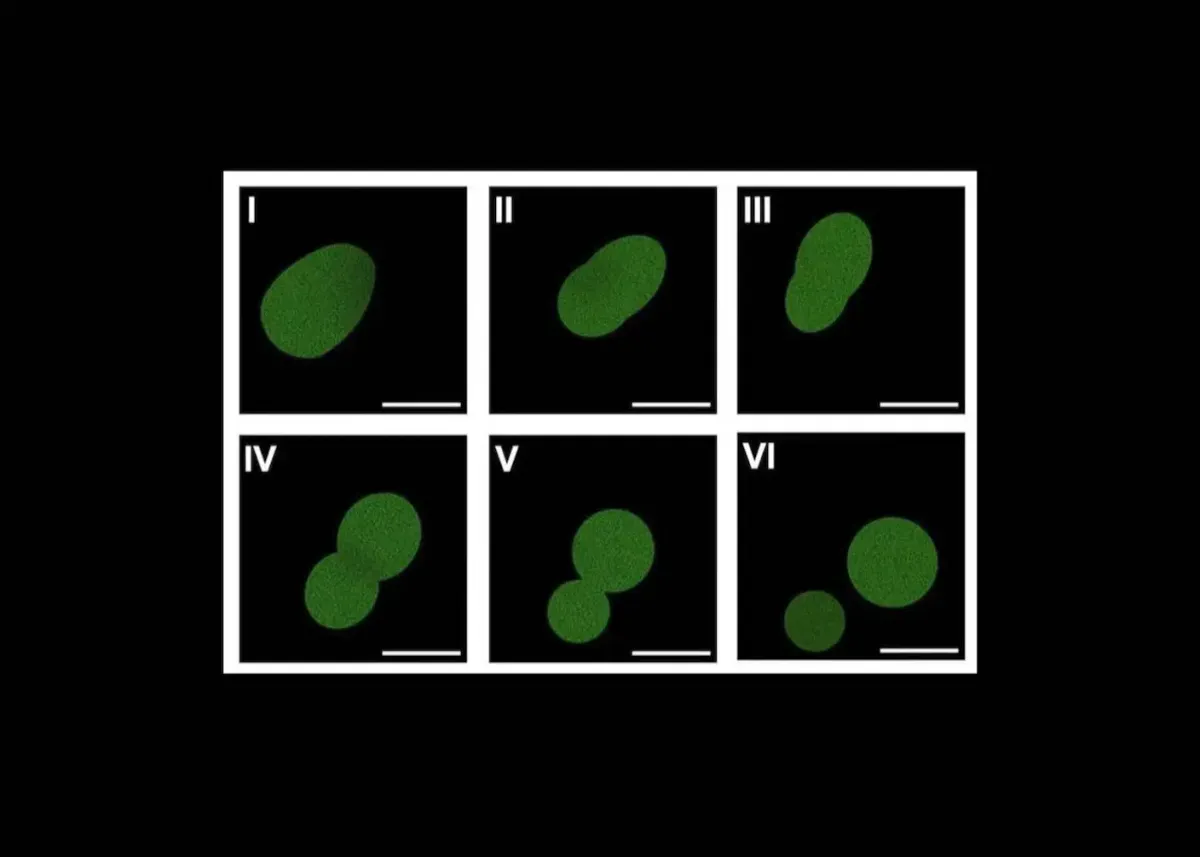
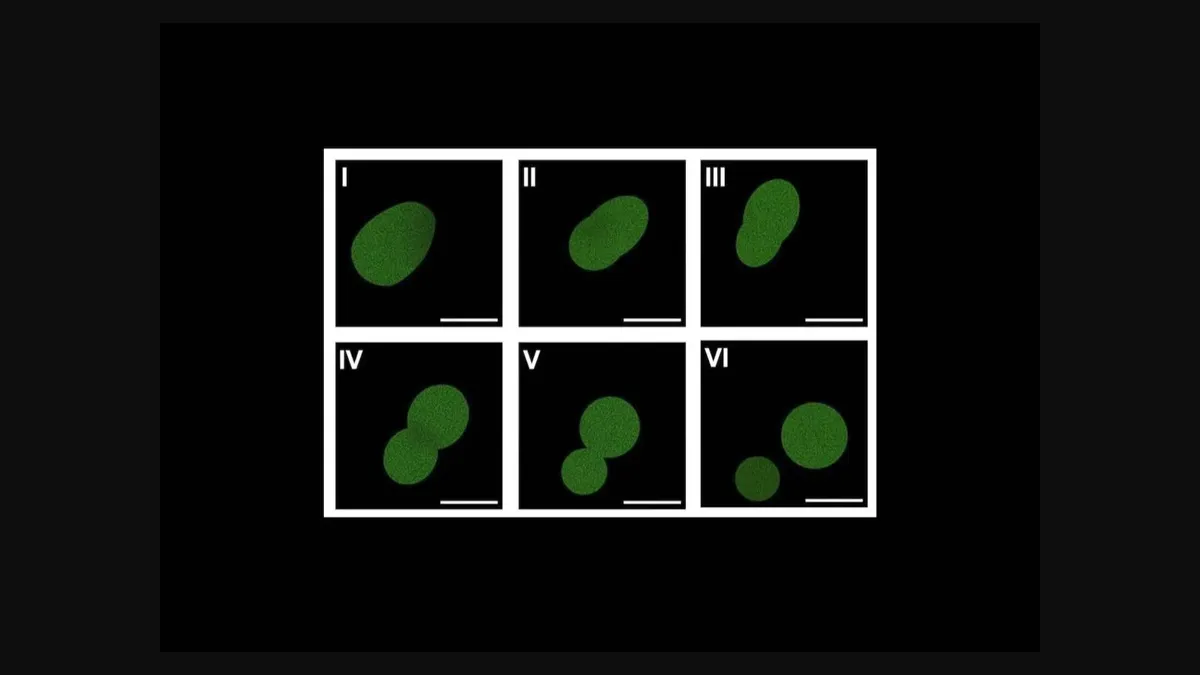
After its gourmet meal, SpudCell's genes get to work, churning out proteins and adding new lipids to its membrane. This makes the cell swell up until, within a few hours, it's big enough to divide into two smaller cells. Natural cells use a complex protein scaffold called a cytoskeleton to do this, but SpudCell found a shortcut: proteins gathering on the membrane surface create mechanical strain, pinching off a new cell. Efficient, if a little less elegant.

And just to prove it's almost, but not quite, alive, these artificial cells even show a basic form of evolution. When researchers introduced a genetic tweak that helped them feed better, those souped-up SpudCells quickly outcompeted their less-evolved brethren, especially when nutrients were scarce. Survival of the fittest, even for the not-quite-living.
Why a Potato Isn't Quite Life
So, if it grows, copies its DNA, and divides, why isn't SpudCell considered alive? The key limitation is that it can't make its own ribosomes. Ribosomes are the cellular factories that build proteins from genetic instructions. The ones SpudCell uses are supplied externally and break down over time, limiting the cells to a mere five to ten divisions. It's like having a car that can drive, but can't make its own gas.
Jack Szostak from the University of Chicago called the work an "impressive step" but noted this ribosome limitation seriously caps its sustained growth. If it could self-produce, he argues, it'd be much closer to existing biological cells.
Still, the implications are vast. These artificial cells could become tiny, self-replicating factories for drugs, fuels, and materials, potentially replacing some of the toxic, energy-intensive industrial chemistry we rely on today. The team even created a nonprofit, Biotic, to share their tools. Because apparently, building life from scratch is just the first step; sharing the recipe is the next.