For years, scientists assumed pigeons were basically flying statues when it came to their eyeballs. You know, eyes fixed on the sides of their heads, rigid gaze, no fancy movements mid-flight. Just... staring.
Turns out, we've been underestimating our feathered friends. A new study, published in Current Biology, reveals that pigeons are actually performing subtle, slow eye drifts while soaring. Because apparently, even birds need to fine-tune their perspective.
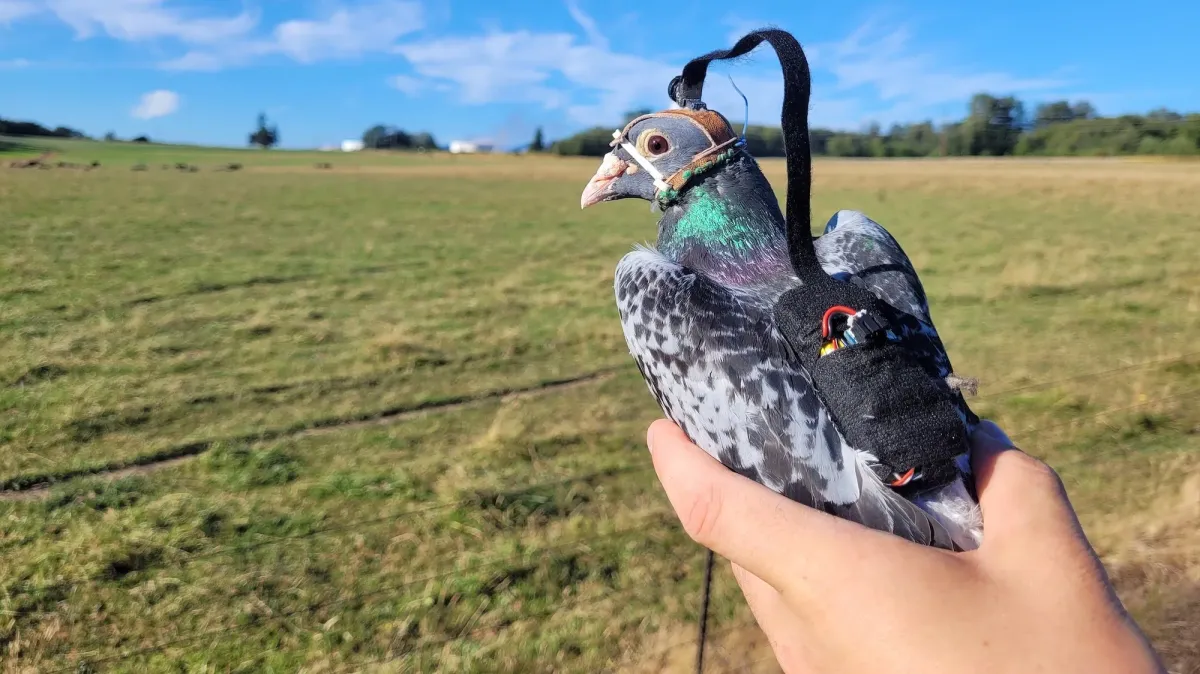
The Pigeon's High-Tech Backpack
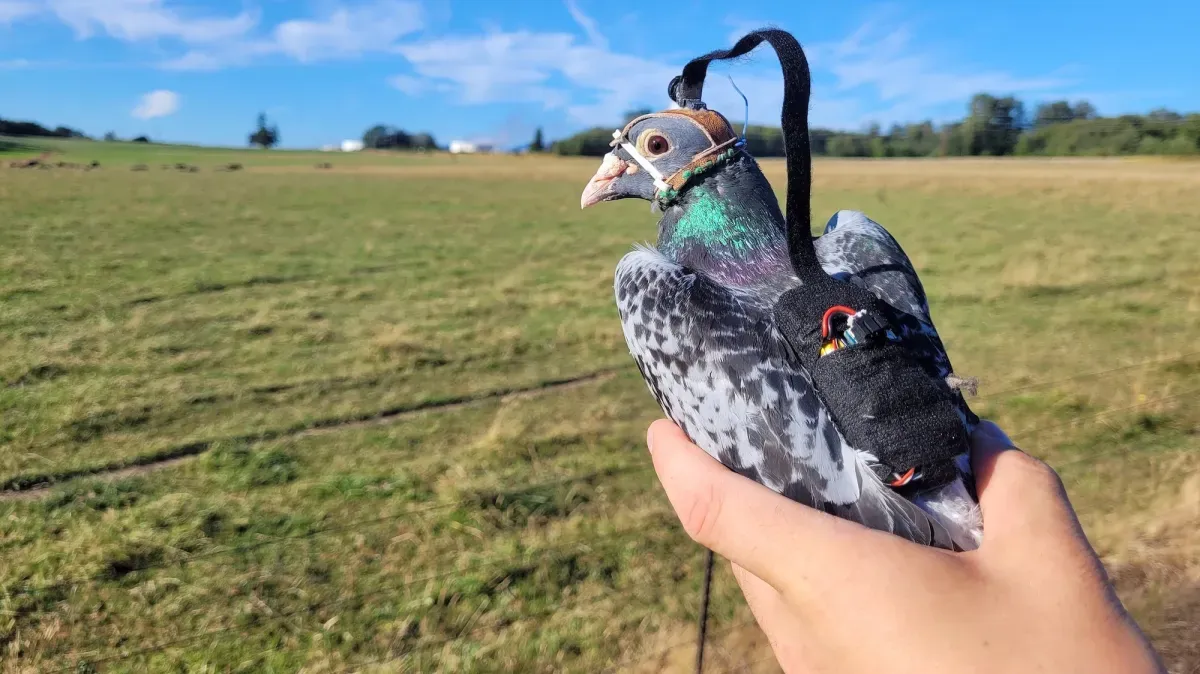
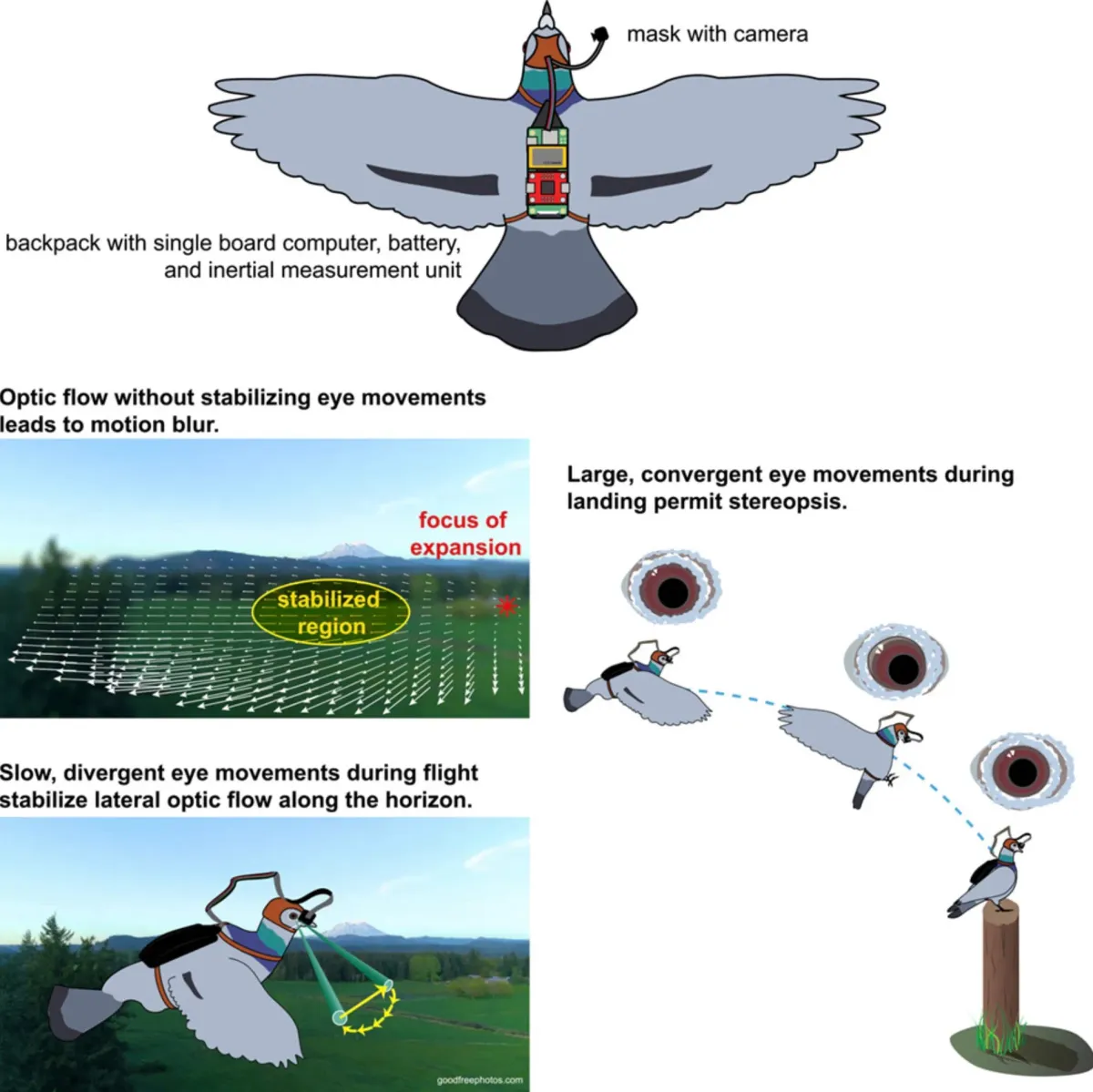
To uncover this visual secret, researchers strapped some serious tech onto over a dozen unsuspecting pigeons. We're talking tiny cameras mounted on a hood, plus a backpack containing a motion sensor and a miniature computer. The entire ensemble? A mere 27 grams. Just imagine trying to explain that to the pigeon's union representative.
We're a new kind of news feed.
Regular news is designed to drain you. We're a non-profit built to restore you. Every story we publish is scored for impact, progress, and hope.
Start Your News DetoxAnthony Lapsansky, an organismal biologist and co-lead author, put it plainly: "Instead, we found really subtle, slow drifting eye movements as pigeons fly forward." This isn't just a random twitch; it's a deliberate adjustment to visual motion, helping them snag finer details for navigation. Which, if you think about it, is both impressive and slightly terrifying for anyone who's ever had a pigeon stare them down for a dropped crumb.
And it gets better. When these winged navigators are coming in for a landing, they actually cross their eyes. Yes, you read that right. They're achieving stereopsis — judging depth by comparing the view from each eye. A trick previously thought to be exclusive to birds of prey. So, next time you see a pigeon eyeing a window ledge, know it's probably calculating the precise angle of approach with laser-like precision.
A Lesson for Our Robot Overlords
Beyond just making pigeons seem a lot cooler, this research has some surprisingly profound implications for robotics. Most drones are basically flying boxes with fixed cameras. They use visual motion to figure out speed, direction, and how not to crash into a tree. Pigeons, meanwhile, are out here gathering extra information by dynamically moving their "cameras" (their eyes).
Lapsansky suggests that understanding these shared visual strategies between birds and humans could lead to truly autonomous flying robots. Drones that could navigate complex environments with the grace and, dare we say, cunning of a city pigeon. So, the next time a drone delivers your package, it might just be giving you the side-eye.