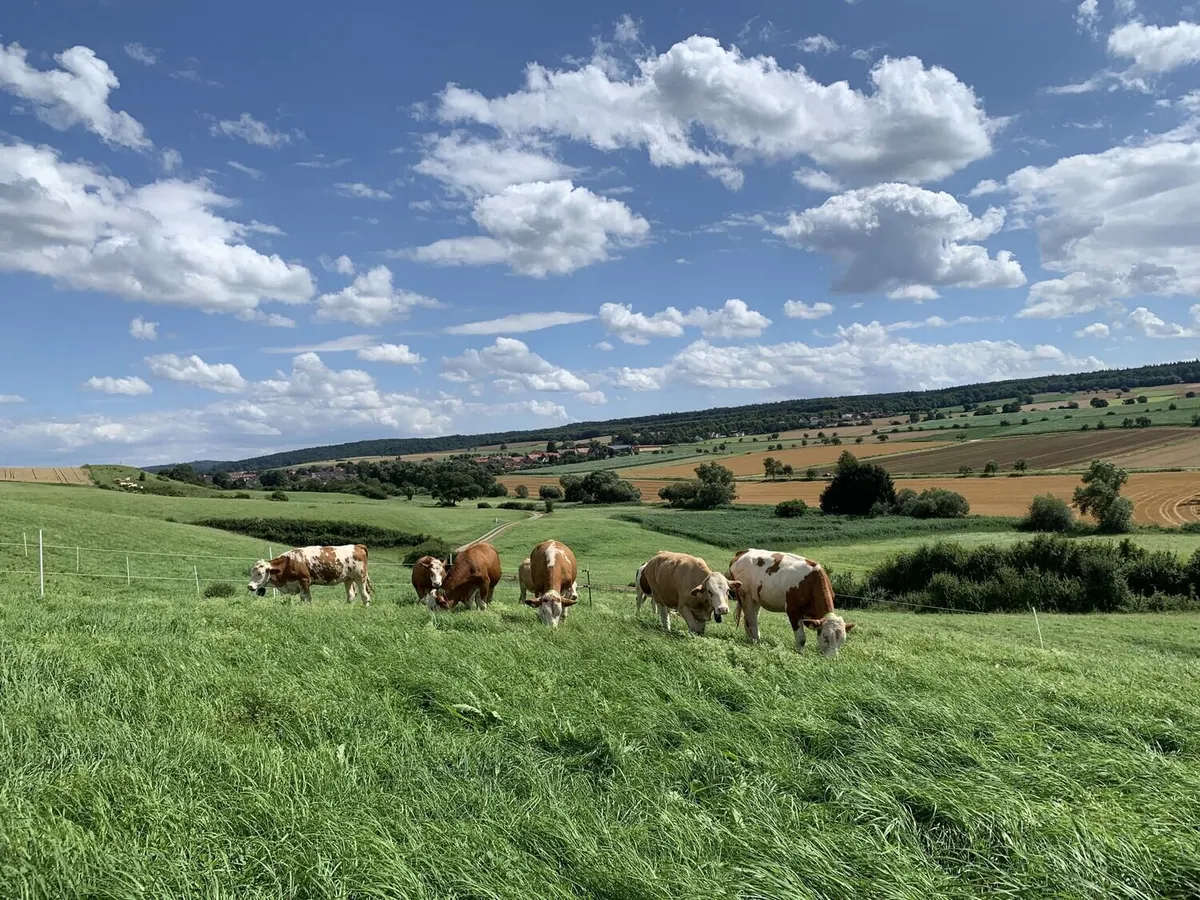
Good news for anyone who thought cows might be too clever for their own good: turns out, a virtual fence is just as good as a physical one at keeping them in line. A new study from the University of Göttingen found that cattle react to invisible boundaries the same way they do to the traditional, sometimes-zappy kind. Which, if you think about it, is both impressive and slightly terrifying.
Because apparently, that's where we are now. Farmers can now equip their livestock with collars that play a little tune. If a cow wanders too close to a pre-defined virtual boundary, the tune gets louder. And if she still ignores the warning, a small electric pulse reminds her where the property line is. The cows, being surprisingly quick learners, soon associate the sound with the zap and tend to stay put.
Now, you might be thinking, "But what about the cows' feelings?" Fair question. Researchers, being researchers, wondered the same thing. So, they kitted out 31 cows with GPS trackers, split a pasture into a 'danger zone' near the fence and a 'safe zone' in the middle, and watched what happened.
We're a new kind of news feed.
Regular news is designed to drain you. We're a non-profit built to restore you. Every story we publish is scored for impact, progress, and hope.
Start Your News DetoxThe Invisible Line in the Sand (or Grass)
Their big discovery? The type of fence didn't matter one bit. Whether it was a physical barrier or an invisible line in the digital sand, the cows behaved identically. They spent less time dawdling at the edges of the field, moved slower when they were there, and generally preferred the cozy, central part of the pasture.
Dr. Natascha Grinnell, the lead author, put it plainly: it's not the fence type, but the perception of a boundary that matters. Cows respect virtual fences just as much as electric ones. So, no added stress for the bovines.
This isn't just about making cows behave; it's about making grazing management more flexible. Farmers can now move their "fences" with a few taps on a screen, allowing for more even grazing and healthier pastures. Less physical labor, happier cows, and fewer arguments about who's supposed to fix the broken fence post. Everyone wins. Especially the cows, who now apparently live in a real-life video game.