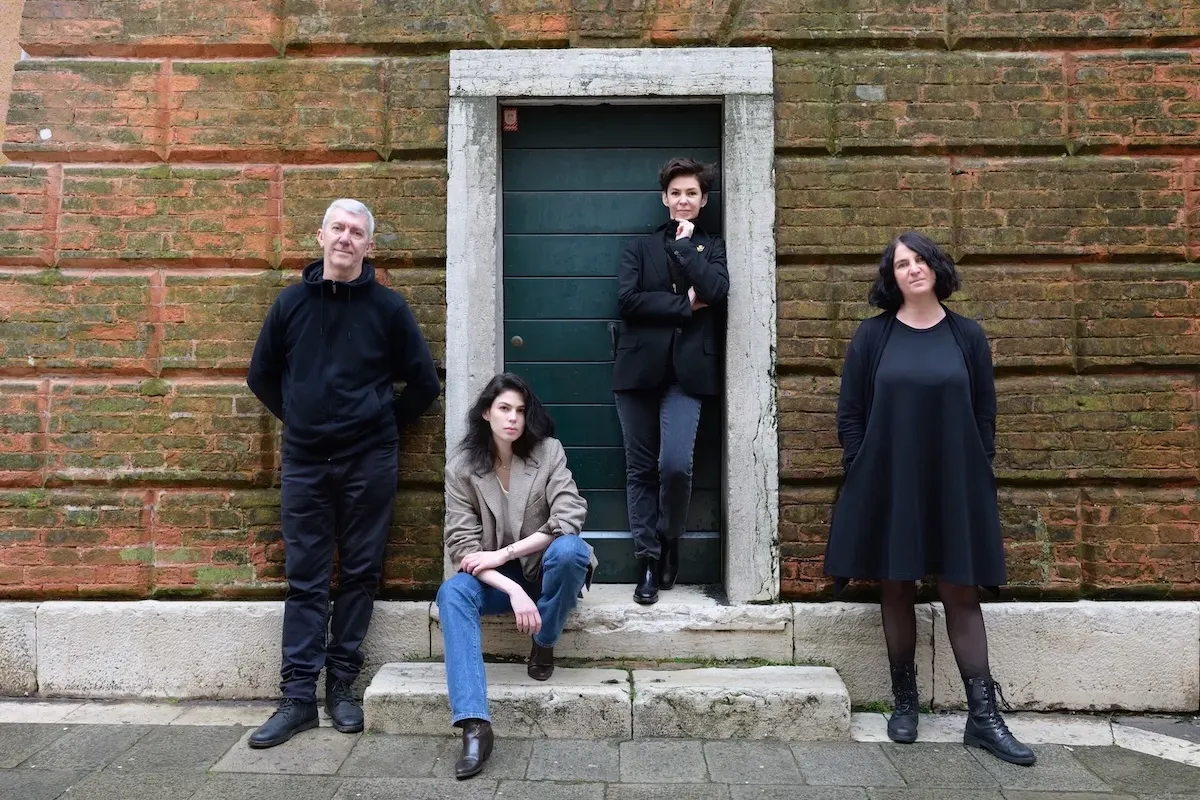
A theater company forced into exile is reclaiming its voice on one of the world's most visible platforms. The Belarus Free Theatre, which fled their home country after the 2020 protests against President Alexander Lukashenko's disputed election, will present "Official. Unofficial. Belarus." as an official collateral exhibition at the 61st Venice Biennale this May—a recognition that their work matters, and that art made under repression deserves to be seen.
The exhibition opens May 9 inside La Chiesa di San Giovanni Evangelista di Venezia, a church that has stood for over 1,000 years. It's a deliberate choice. The sacred space becomes a container for works that explore what happens to creativity when a state tries to control it. A nine-foot sphere made from books banned in Belarus, compressed by a bulldozer claw, sits where visitors might expect an altar. An organ soundscape titled "Sounds of Silence" fills the air. Paintings function as altar panels. Outside, a cross made entirely of CCTV cameras questions who watches whom.
The Belarus Free Theatre didn't start here. Founded in 2005, the group performed in secret—unadvertised shows in private apartments across Minsk, using art as quiet resistance. When founders Natalia Kaliada and Nikolai Khalezin sought asylum in the UK in 2011, they kept the theater alive through Skype rehearsals with actors still in Belarus. By 2020, after the disputed election and the crackdown that followed, the entire troupe was forced out. Some fled to Ukraine first, others scattered to Warsaw and London.
We're a new kind of news feed.
Regular news is designed to drain you. We're a non-profit built to restore you. Every story we publish is scored for impact, progress, and hope.
Start Your News DetoxWhat's striking about this Venice moment is what it signals: that art made under censorship—art born from surveillance and repression—has something the state's sanctioned culture never will. Authentic witness. Kaliada's statement captures this: "Belarusian independent culture, not the regime, holds cultural authority." The exhibition runs through November 22, which means this conversation about what happens to art under authoritarianism will occupy a major international stage for six months. That matters not just for Belarusian artists, but for anyone watching how culture survives when power tries to silence it.
The exhibition also includes large-scale sculptures made from prison bars by Vladimir Tsesler, reimagining traditional Belarusian folk art as monuments of resistance. An adjacent cemetery features recorded testimonies from recently released political prisoners—voices that were meant to stay silent, now echoing in a Venetian churchyard.
This isn't the first time exiled artists have claimed space on the world stage, but it's a reminder that the Venice Biennale's decision to platform this work is a choice. A choice that says: your story matters. Your art matters. The work continues.