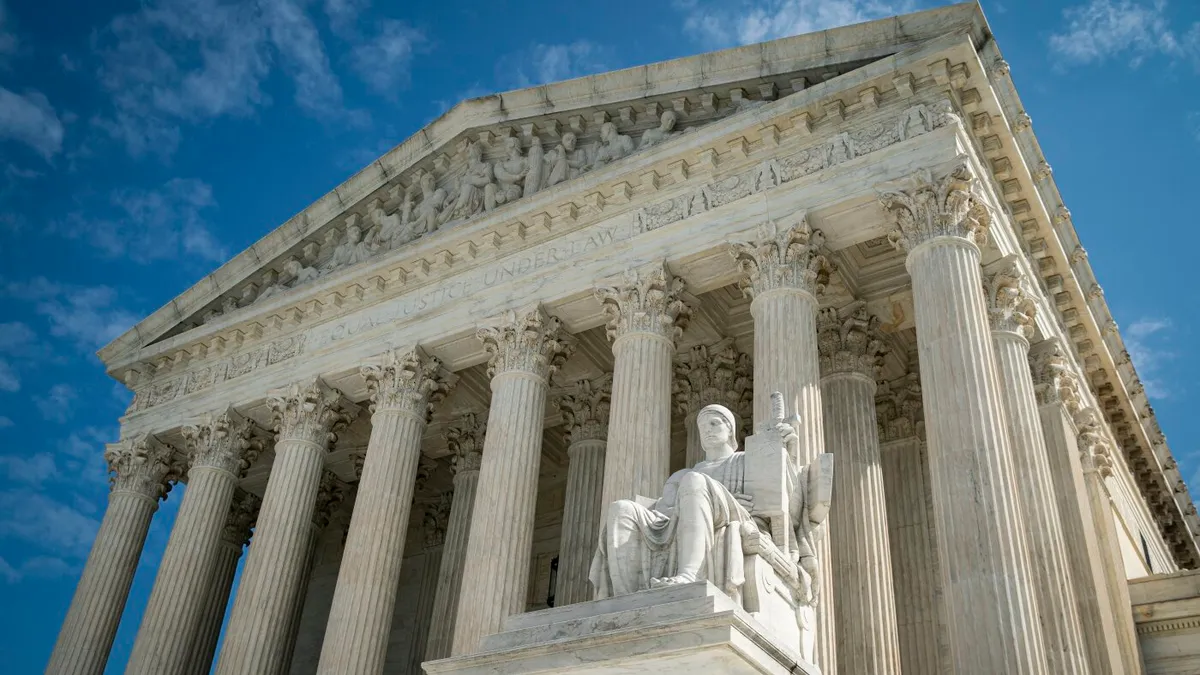
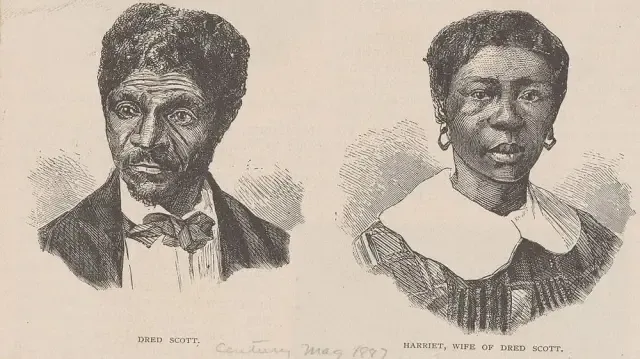
On March 6, 1857, the U.S. Supreme Court handed down a decision so fundamentally cruel that it would help push the nation toward civil war. Chief Justice Roger Taney, writing for the 7-2 majority, declared that Dred Scott and Harriet Scott—an enslaved couple who had sued for their freedom—had no right to even be in court. According to Taney's logic, no person of African descent, enslaved or free, could be a U.S. citizen. Therefore, the Scotts had no standing to petition for anything.
The Scotts' case should have been straightforward. They had lived and worked in free states and territories where, under the Missouri Compromise, enslaved people who crossed into those jurisdictions were entitled to freedom. It was a legal pathway that had worked before. But Taney didn't just rule against them—he used the decision to strike down the Missouri Compromise itself, declaring it unconstitutional. He invalidated the Kansas-Nebraska Act too. In one ruling, he had tried to settle the nation's deepest conflict by declaring that slavery could expand anywhere, that Black people had no citizenship rights, and that the law itself couldn't stop him.
The decision detonated across the country. Northern politicians and abolitionists erupted in fury. Southern politicians and slavery advocates celebrated. The ruling didn't resolve anything—it crystallized the impossibility of compromise. Both sides began to believe that only war or secession could settle what the Court had just declared unsettleable.
We're a new kind of news feed.
Regular news is designed to drain you. We're a non-profit built to restore you. Every story we publish is scored for impact, progress, and hope.
Start Your News DetoxBut the Scotts' story didn't end in that courtroom.
Just two months after the ruling, in May 1857, a sympathetic buyer purchased the couple and freed them. Dred found work as a porter at a St. Louis hotel, though tuberculosis would claim him by September 1858. Harriet, though, endured. She worked as a washerwoman in St. Louis, supporting herself and their daughters. She lived to see the Civil War, watched slavery finally abolished, and died on June 20, 1876—nearly two decades after her husband, nearly two decades after the decision that tried to erase her humanity.
A nation reckons, slowly
Memory of the Scotts faded for generations. Then, in 1997, Dred Scott and Harriet Robinson Scott were inducted into the St. Louis Walk of Fame—a public acknowledgment that they had mattered, that their fight had meant something.
In 2017, 160 years to the day after Taney's ruling, something unexpected happened. Charlie Taney, the great-great-grandnephew of Chief Justice Taney, stood outside the Maryland State House and apologized to Lynne M. Jackson, the great-great-granddaughter of the Scotts. He apologized on behalf of his family. That same year, Maryland removed Roger Taney's statue from the State House entrance. In 2023, St. Louis dedicated a nine-foot granite memorial to Dred Scott at Calvary Cemetery.
These gestures don't undo 1857. They don't restore what was taken. But they mark something: a nation slowly, imperfectly, deciding to remember not just the worst of itself, but the people who refused to accept it.