Most oil cleanup robots sit and wait. This one hunts.
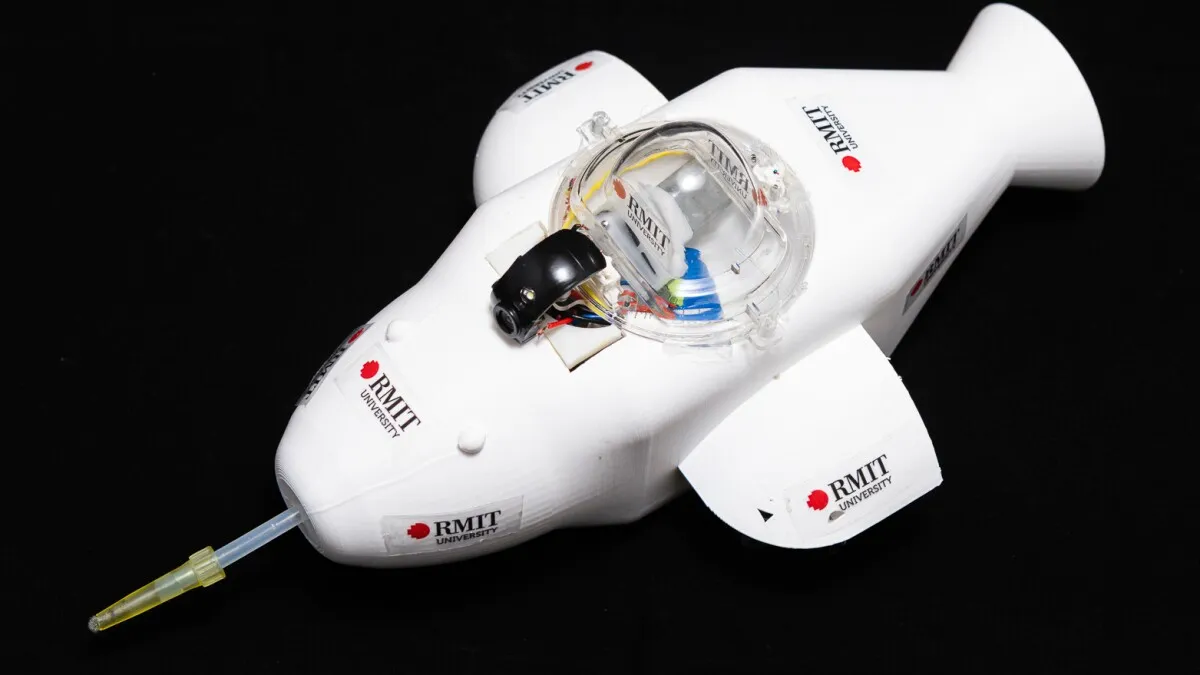
Scientists at Australia's RMIT University have built a prototype they call the Electronic Dolphin—a sneaker-sized robot that actively moves through oil slicks and sucks them up. The clever part isn't the dolphin shape. It's the filter, which borrows a trick from sea urchins.
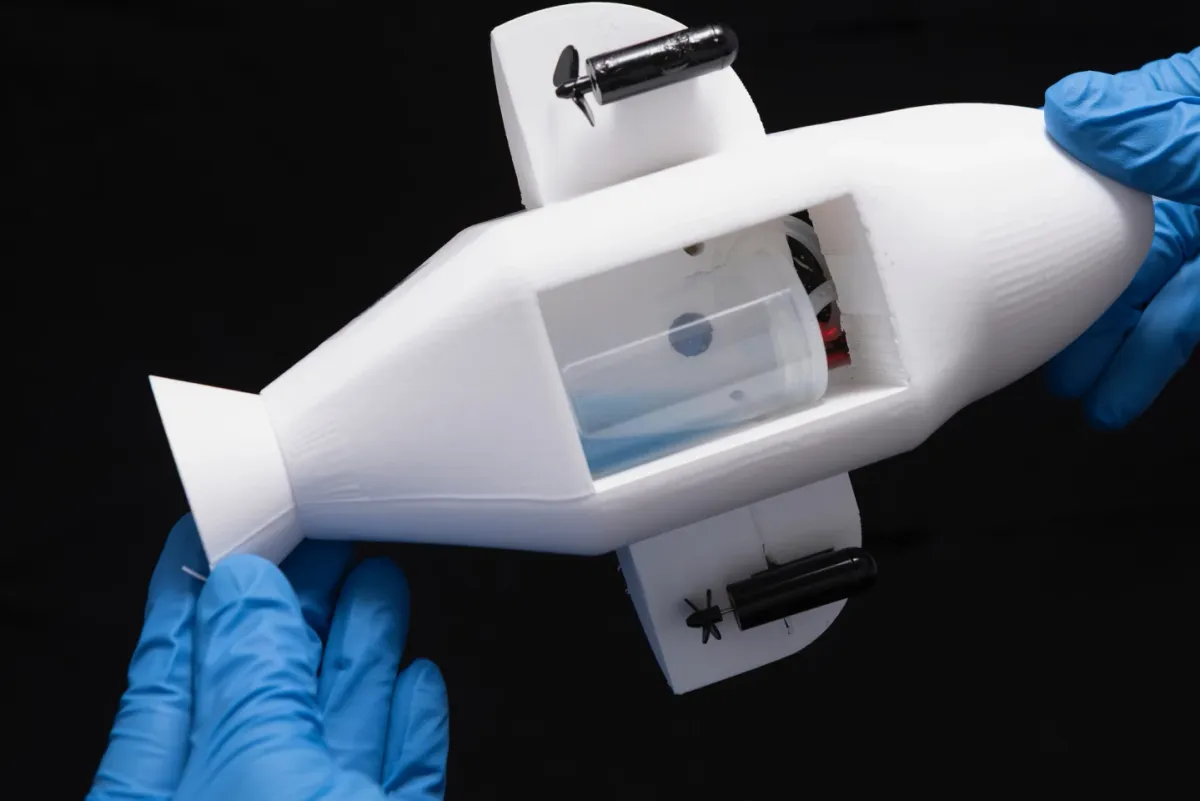
Here's how it works: as the robot cruises through oily water, an onboard pump pulls the water-oil mixture into a sponge-like filter coated with microscopic spikes (the technical name is oleic acid-functionalized barium carbonate with reduced graphene oxide nanosheets, but the important part is that they're really small). These spikes trap tiny air pockets that make water bead up and roll right off—while oil sticks around. The result: the filter absorbs oil without getting waterlogged. Once it's full, you swap it out and reuse it.
In early tests, the Wi-Fi-controlled prototype recovered oil at about two milliliters per minute—at over 95% purity—on a single 15-minute battery charge. That's the lab version. The production model will be scaled up to actual dolphin size, with a bigger pump and a larger onboard tank to store recovered oil.
We're a new kind of news feed.
Regular news is designed to drain you. We're a non-profit built to restore you. Every story we publish is scored for impact, progress, and hope.
Start Your News DetoxThe vision is a fully autonomous system that works on its own: it moves to the spill, vacuums up oil, returns to a base station to dump its catch, then heads back out to do it again. Repeat until the spill is gone. Lead researcher Dr. Ataur Rahman says the final size will depend on how much oil the pump and storage tank can handle—basically, bigger container means bigger robot.
Why this matters: traditional spill-response equipment mostly floats in place, relying on currents to bring oil to it. A robot that actively seeks out and collects oil could cover more area faster, especially in situations where currents are unpredictable or weak. The research was published in the journal Small and represents a shift toward more proactive marine cleanup.
The next phase is scaling up and testing in real-world conditions—moving from lab success to actual ocean deployment.