Half a billion people installed Pokémon Go in 60 days back in 2016. Most of them were chasing digital creatures through city streets. What they didn't know: they were also feeding one of the most detailed maps of the physical world ever built.
Niantic Spatial, the AI company spun out from Pokémon Go's creator, is now using that crowdsourced data—30 billion geotagged images from players' phones—to solve a problem that's been nagging delivery robot companies: how to navigate cities when GPS barely works.
Take a dense urban neighborhood with tall buildings and underpasses. GPS signals bounce off concrete and steel, drifting 50 meters or more. That's enough to put a robot on the wrong block entirely. But if a robot can recognize the buildings, streetlights, and landmarks it sees through its cameras, it can pinpoint its exact location to within a few centimeters—no satellites required.
We're a new kind of news feed.
Regular news is designed to drain you. We're a non-profit built to restore you. Every story we publish is scored for impact, progress, and hope.
Start Your News DetoxFrom Game Data to Robot Navigation
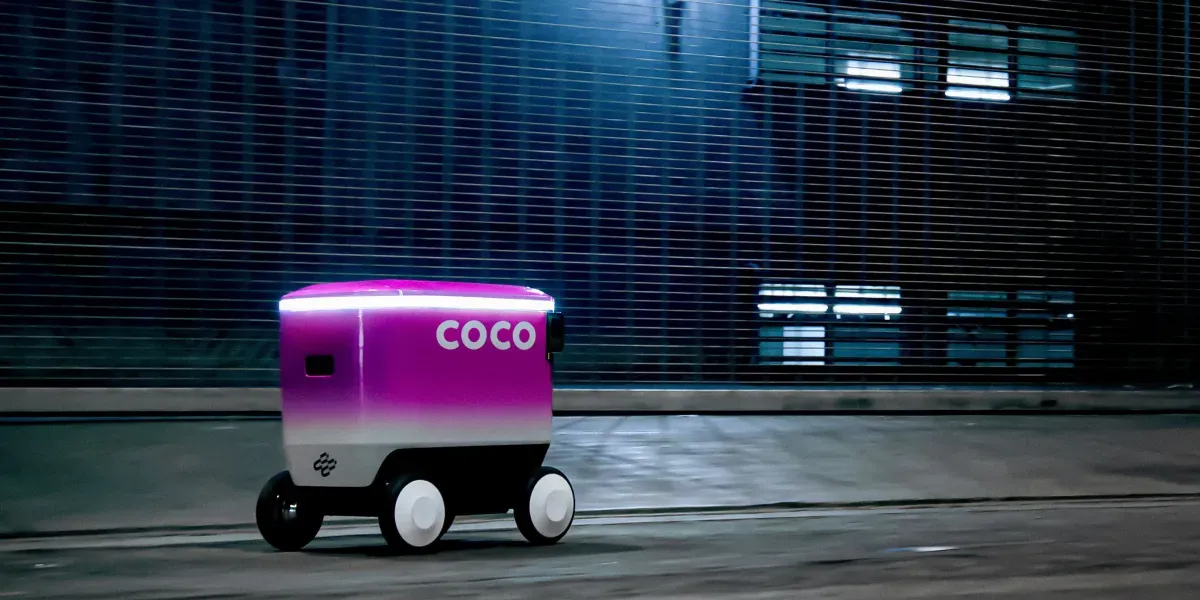
Coco Robotics, which deploys around 1,000 small delivery robots across Los Angeles, Chicago, Jersey City, Miami, and Helsinki, is the first major test case. The company's robots have already made over half a million deliveries, but they've been limited by GPS failures. "The best way we can do our job is by arriving exactly when we told you we were going to arrive," CEO Zach Rash said. "And that means not getting lost."
Here's where Pokémon Go's legacy becomes practical: Niantic Spatial trained its system on images from over a million locations worldwide—mostly the "hot spots" where Pokémon Go players gathered to battle or catch rare creatures. For each spot, the company has thousands of images taken from different angles, at different times of day, in different weather. Every image comes tagged with precise metadata: where the phone was, which direction it faced, how fast it was moving.
That's the kind of training data most companies dream about. It's so specific that the system can work even in places it's never seen before, by understanding the visual patterns of urban environments. Coco's robots, fitted with four hip-height cameras, can now use this model to navigate alongside GPS as a backup—or replace it entirely when signals fail.
Rival robot companies like Starship Technologies use visual positioning too, building 3D maps of their surroundings as they move. But Rash believes Niantic's advantage is the sheer scale of its training data and the precision it delivers. The robots can now stop exactly outside a restaurant's pickup spot without blocking the sidewalk, or position themselves right at a customer's door instead of a few steps away.
Maps Built for Machines, Not Just People
What's interesting is how this shifts what maps are actually for. For centuries, maps helped humans locate themselves. Now, as robots become more common in cities, maps are becoming instruction manuals for machines.
Niantic Spatial's CEO John Hanke calls it a "living map"—a constantly updating digital replica of the world that gets more detailed as more robots move through it and feed back new data. But the real ambition goes deeper. Rather than just showing where things are, future maps will describe what things are: every object tagged with properties that help AI systems understand and interact with the real world.
This matters because large language models, for all their sophistication, struggle with basic spatial reasoning. They can tell you about the world in theory but can't reliably navigate it in practice. World models—detailed, machine-readable descriptions of how environments actually work—aim to fix that gap.
Niantic Spatial isn't trying to build fantasy worlds for AI training like some competitors. It's going the opposite direction: recreating the real world with enough precision that machines can understand it the way humans do. "We're not there yet," McClendon said, "but we want to be there."
For now, that means better pizza deliveries. But the infrastructure being built—a hyper-detailed map of urban environments, constantly refined by thousands of robots moving through them—could become the foundation for how AI systems understand and operate in the physical world.