An AI system called Gauss just completed something mathematicians thought would take months or years: it formalized a proof about how spheres pack in 24-dimensional space—all 200,000+ lines of code—in fourteen days.
This isn't a story about AI replacing mathematicians. It's the opposite. The breakthrough emerged from human mathematicians at CERN and elsewhere developing FLASH radiotherapy, a technique that uses particle physics to treat cancer with millisecond-precision radiation. But the real shift happened in how the work got done: humans posed the hard problems, AI handled the grinding formal verification, and the collaboration unlocked solutions that neither could reach alone.
The pattern is starting to repeat across specialized fields. As AI systems grow more capable at complex formal reasoning, they're opening new possibilities for human experts to tackle problems previously considered intractable. Think of it like a mathematician finally getting an assistant who never gets tired, never makes arithmetic errors, and can hold entire proof structures in working memory. The human still asks the questions that matter. The AI handles the tedious part of proving them.
We're a new kind of news feed.
Regular news is designed to drain you. We're a non-profit built to restore you. Every story we publish is scored for impact, progress, and hope.
Start Your News DetoxTechnology reshaping how data moves
Three separate advances are quietly rewiring how information flows through cities and computing systems. Google's spinoff Taara has deployed a system that beams internet between buildings using shaped light—no cables needed. The device, called Beam, is roughly shoebox-sized and can deliver fiber-speed connections (25 Gbps) across up to 6.2 miles with ultra-low latency. Cities like Nairobi are already using it to connect neighborhoods where running fiber would be prohibitively expensive.
Meanwhile, the race to move beyond traditional electronics is accelerating. Nvidia just committed $4 billion to photonics research—essentially betting that the future of AI computing runs on light instead of electrons. DARPA agrees; the agency recently called for research proposals on photonic computing for AI. AMD acquired a photonics startup last year for the same reason. What was fringe physics five years ago is now a competitive necessity.
On the quantum side, a startup called Qunnect is moving quantum entanglement from laboratory curiosity to practical infrastructure. After nearly a decade of development, founder Mehdi Namazi is building devices that make unhackable quantum-secured communication feasible for real-world networks. We're still years away from quantum-encrypted banking or government systems, but the infrastructure is being built now.
The AI employment narrative is getting more honest
When Block announced layoffs attributed to "AI," industry analysts immediately pushed back. Dan Dolev of Mizuho Americas noted that most of the cuts stemmed from years of organizational bloat, not automation. A former Block employee put it plainly on X: "This isn't an AI story. It's a workforce correction wearing an AI costume."
The broader employment picture is more nuanced than "robots take jobs." Evidence suggests AI is more likely to reshape titles and organizational structures than eliminate roles wholesale. As old hierarchies dissolve, new positions are emerging that require judgment, creativity, and human adaptability—particularly at nimble companies positioned to capitalize on organizational flexibility. A marketing manager might become an AI prompt strategist. An analyst role might split into three new specialties. The work changes; the need for people doesn't disappear.
Market research is one place this is already visible. Companies like Simile have created digital clones of real individuals—AI agents trained on preferences and personality traits—that businesses can query instead of hiring expensive consultants. What previously took months now takes days. The cost is steep ($150,000 to millions annually), but the speed represents a genuine shift in how insights get gathered. The work didn't vanish; the method changed.
NASA is trying to move faster to the Moon
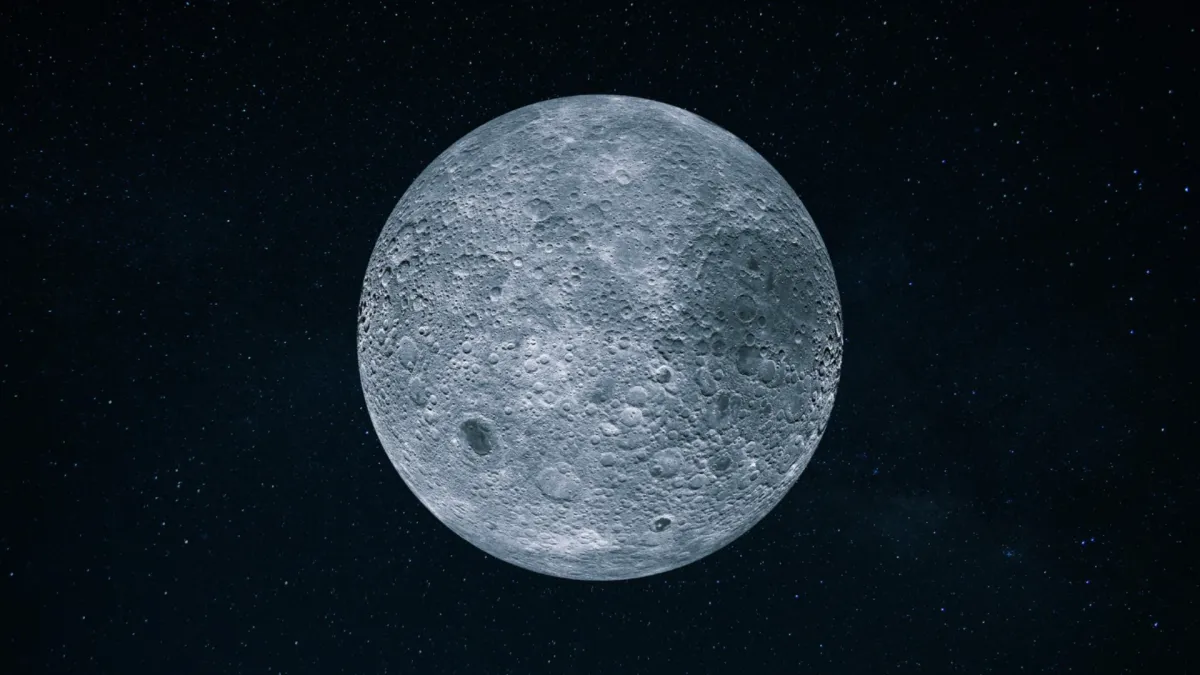
NASA is restructuring its Artemis program because the current pace is unsustainable. The Space Launch System rocket hasn't flown humans in 3.5 years. During Apollo, NASA launched human missions roughly once every three months. The gap between historical cadence and current capability is stark.
The agency's goal is straightforward: increase launch frequency and move the timeline for human lunar return closer. It's a recognition that deep-space exploration requires the kind of iterative speed that modern aerospace—SpaceX's reusable rockets, commercial lunar landers—has proven possible. The restructuring signals renewed urgency in returning humans to the Moon, but it also signals something deeper: even government agencies are learning that exploration moves faster when you launch often and learn from each attempt.