For over ten years, physicists knew what they were looking for—a two-dimensional topological crystalline insulator—but couldn't make one. Last month, researchers at Finnish universities finally did, and in doing so, they've opened a door to materials that behave in ways classical physics says shouldn't be possible.
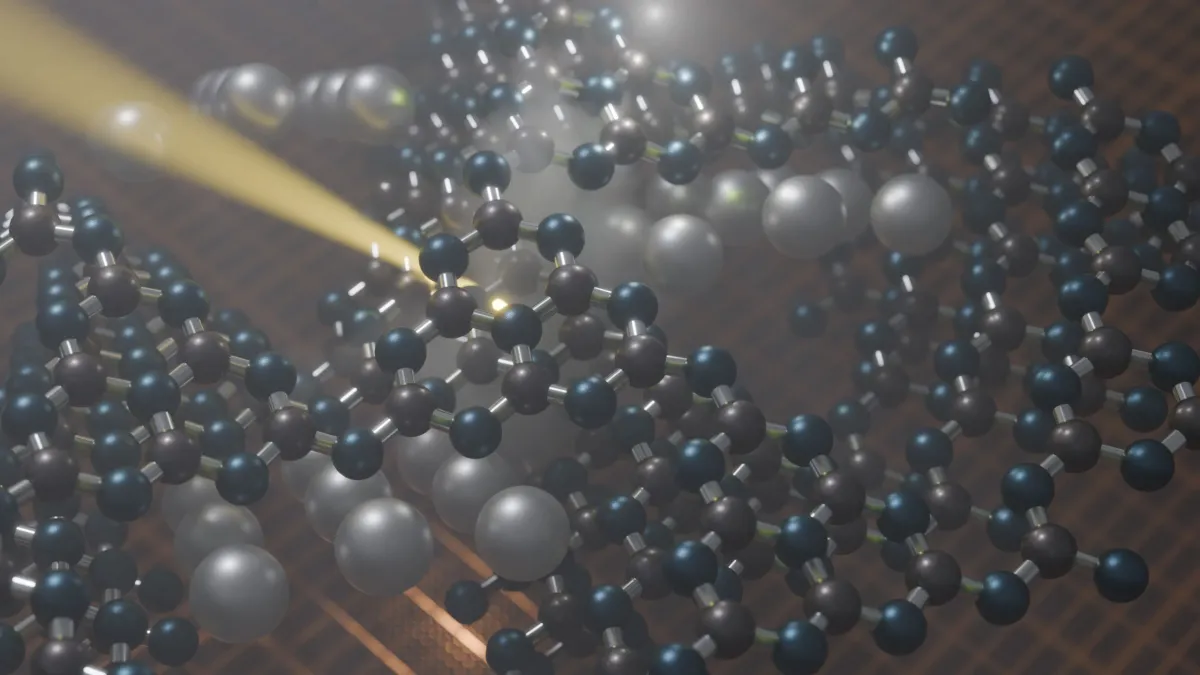
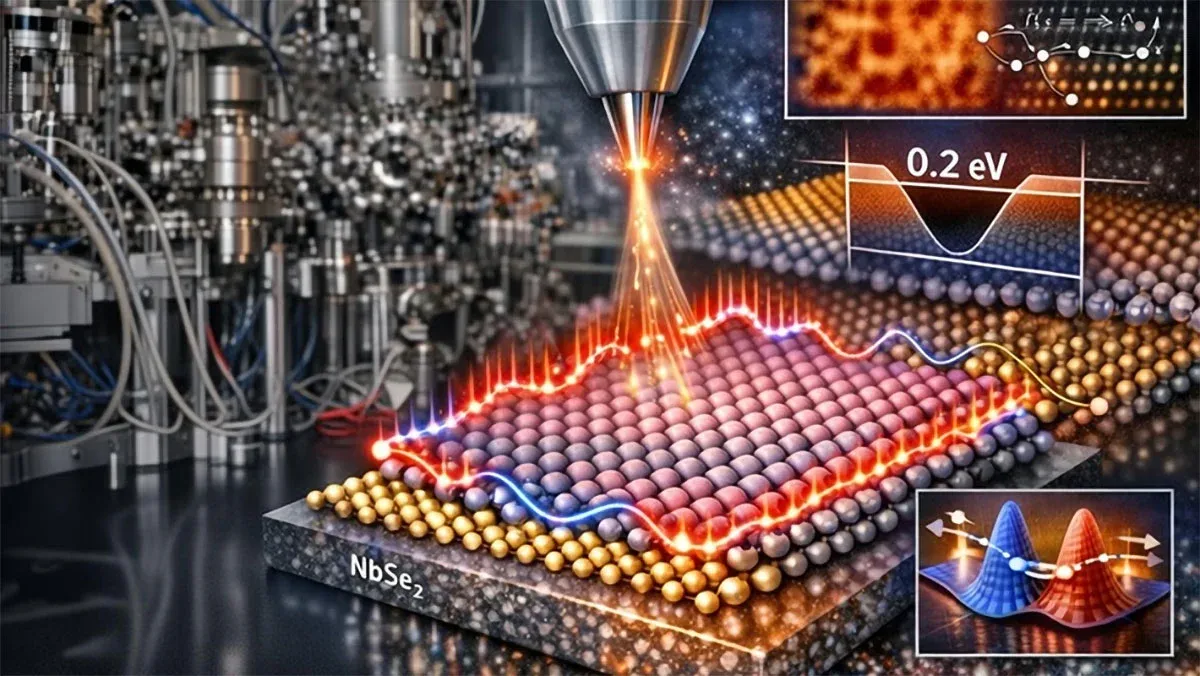
The team at the University of Jyväskylä and Aalto University created the material by stacking two ultra-thin layers of tin telluride (SnTe)—just two atoms thick—onto a substrate of niobium diselenide. Using molecular beam epitaxy (essentially vaporizing atoms and letting them settle into precise arrangements) and scanning tunneling microscopy (which can see individual atoms), they watched the material's electrons arrange themselves into a pattern that had only existed in theory.
What they found was elegant: electrons flowing along the edges of the material in conducting pathways, protected by the crystal's symmetry in a way that makes them remarkably stable. These edge states are the signature of a topological material—a class of substances where the global structure of the material protects certain properties from disruption. It's like having a highway that exists only at the boundary, and no amount of local turbulence can close it down.
We're a new kind of news feed.
Regular news is designed to drain you. We're a non-profit built to restore you. Every story we publish is scored for impact, progress, and hope.
Start Your News Detox
The Strain Advantage
The breakthrough hinges on something counterintuitive: the material works because it's under strain. The substrate beneath the SnTe layer compresses it slightly, and this compression is what allows the topological phase to emerge. More importantly, the researchers discovered they can tune this strain—adjusting how much compression the material experiences—to control its electronic behavior. It's like having a dial that tunes quantum properties in real time.
This matters because it suggests a path toward practical control. Previous topological materials often required extreme conditions—near absolute zero temperatures, or exotic materials difficult to work with. This one maintains its topological properties across a band gap (an energy range where electrons can't normally flow) of 0.2 eV or more, which means the quantum weirdness should survive even at room temperature. That's the difference between a laboratory curiosity and something that might actually work in a device.

The deeper insight here is about what this system reveals. Topological materials are still poorly understood in many ways. By creating a tunable platform where researchers can watch how edge states respond to strain, interact with each other, and shift energy levels through both electrostatic effects and quantum tunneling, they've built something like a laboratory for quantum mechanics. Every measurement teaches us how these exotic states actually behave.
This is the kind of foundational work that rarely makes headlines outside physics departments, but it's how new technologies emerge. Spin-based electronics—computers that use the spin of electrons rather than just their charge—could eventually benefit from this research. So could quantum sensors and other nanoscale devices that exploit topological protection. None of that is imminent. But the material now exists, it can be controlled, and physicists can finally stop theorizing and start experimenting.
The next phase is already underway: understanding how to use this platform to explore questions that theory alone couldn't answer.