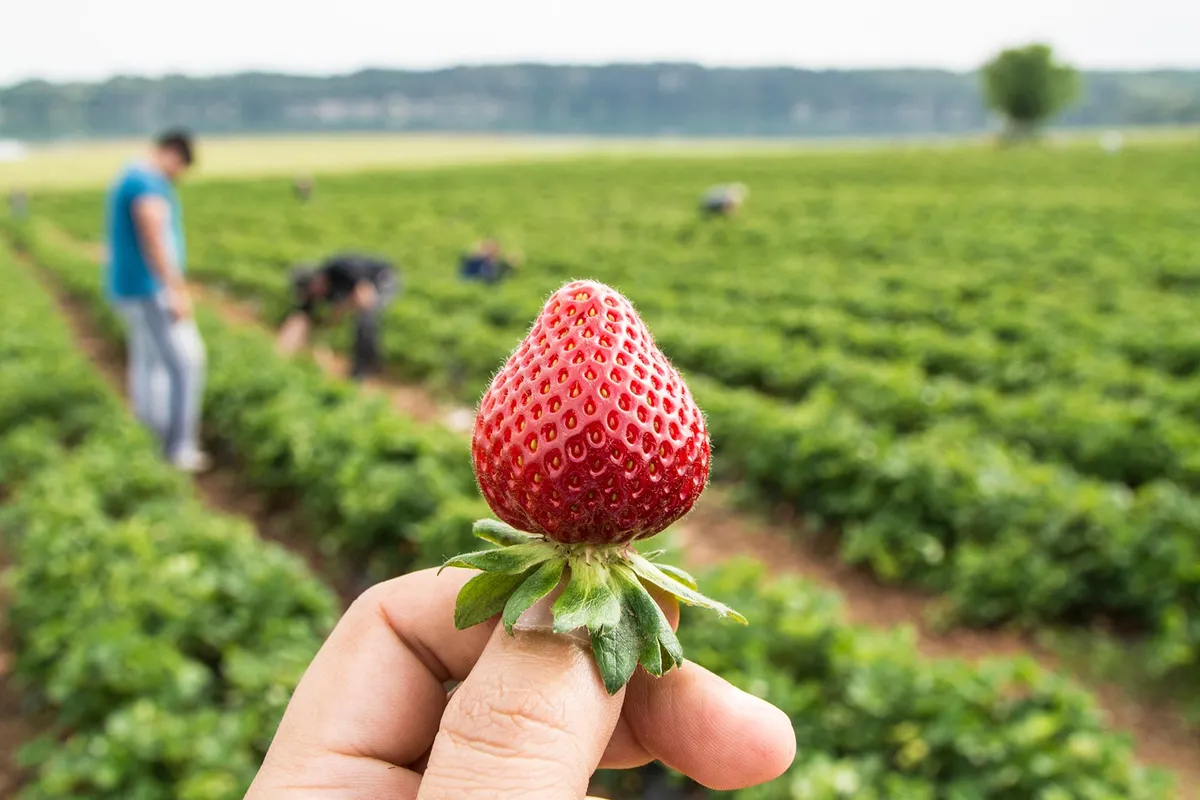
Your strawberry came from a collision of ancient genomes. Not one, not two, but at least four distinct ancestral genomes merged together over millions of years to create the fruit you buy at the market. Until now, scientists couldn't see the evidence of these collisions clearly enough to reconstruct what actually happened.
That's changed. Researchers from the U.S. Department of Agriculture have developed a new method to read the hidden history written into strawberry DNA—and it works without needing the original ancestral species, many of which are extinct or simply haven't been discovered yet.
How the Past Gets Preserved in DNA
The key insight is surprisingly elegant: transposable elements—stretches of DNA that can move around the genome—act like evolutionary time stamps. Different lineages accumulate these elements in distinct patterns over time, like tree rings marking years of growth. By analyzing these patterns, scientists can reconstruct which genomes merged together and roughly when it happened, even if they've never seen the parent species.
We're a new kind of news feed.
Regular news is designed to drain you. We're a non-profit built to restore you. Every story we publish is scored for impact, progress, and hope.
Start Your News DetoxThe team applied this approach to the modern strawberry (Fragaria × ananassa), the cultivated variety with eight sets of chromosomes. The analysis revealed three major genome-merging events that likely occurred between 3.1–4.2 million years ago, then again 1.9–3.1 million years ago, and most recently 0.8–1.9 million years ago. Two of the four subgenomes appear closely related to known wild strawberry species (Fragaria vesca and Fragaria iinumae), but the other two ancestors remain mysterious—possibly extinct, possibly just undiscovered.
Before applying the method to strawberries, the researchers tested it on well-understood crops like cotton and teff, where they could verify the results against what scientists already knew. The method worked. It correctly identified known subgenomes and separated old evolutionary events from newer ones. Even when the team created artificial polyploid genomes in the lab, the method predicted exactly how it should respond to different ages and different amounts of transposable elements.
Why This Matters Beyond Berries
Strawberries are just the beginning. Wheat, cotton, sugarcane, and many other crucial crops are polyploids with similarly complicated evolutionary histories. For plant breeders trying to improve crops, understanding which genes come from which ancestral lineage is essential—it helps them map traits, predict how plants will respond to crossing, and identify hidden genetic variation. This method makes that work possible without needing complete fossil records or living ancestors.
The broader implication is that evolutionary biology just got a more objective tool. Instead of relying on incomplete guesses about missing progenitors, scientists can now reconstruct genome history from the molecular evidence preserved in the DNA itself. It's the difference between trying to understand a family tree from faded photos versus reading the genealogy written in the family's genetics.
As the research moves forward, this approach will likely unlock the evolutionary stories of dozens of crop species that have been difficult to study. Each one carries clues about how plants adapt, diversify, and thrive—clues that could inform everything from breeding more resilient crops to understanding how speciation actually works in nature.