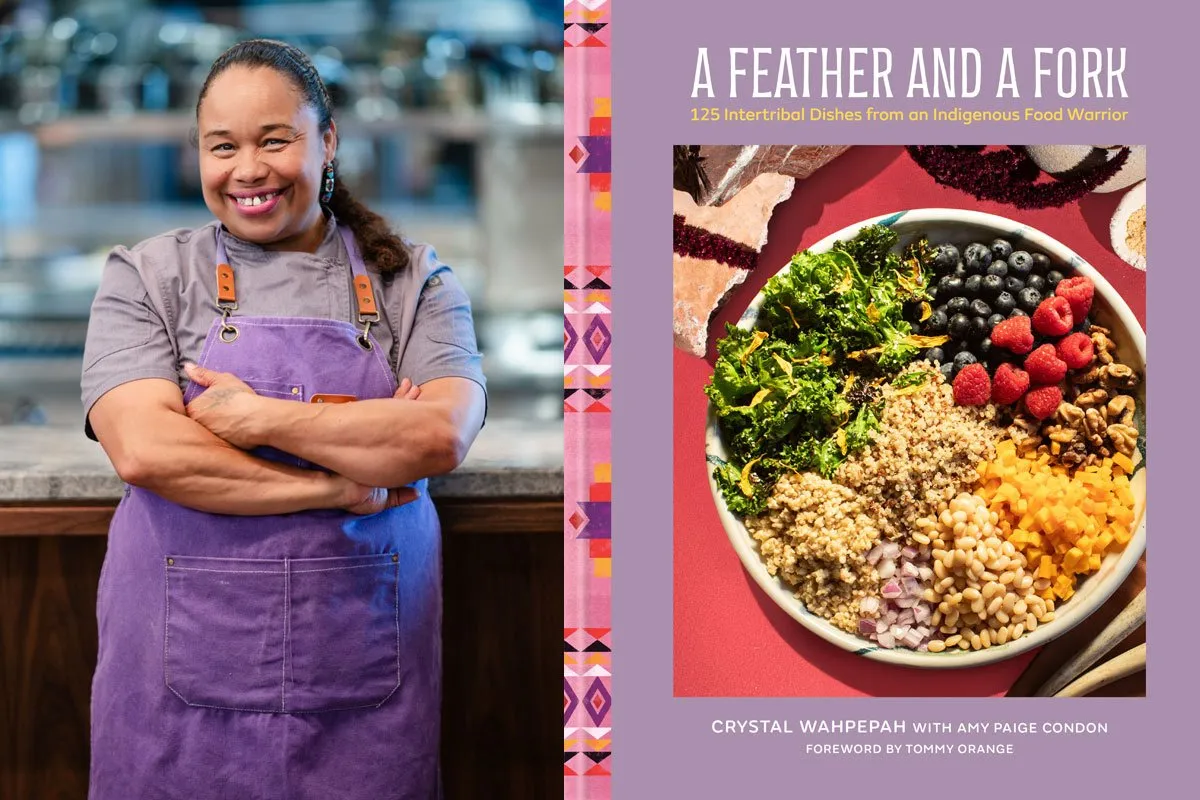
Crystal Wahpepah didn't set out to be a food activist. She was just hungry—for connection, for healing, for the tastes that tied her to her grandmother's kitchen in Oklahoma and her own life in the Bay Area. Now, as the chef behind Wahpepah's Kitchen in Oakland's Fruitvale neighborhood, she's become one of the most visible voices in a quiet but deliberate movement to bring Indigenous foodways back from the margins of American cooking.
Her story is woven into her dishes. Wild rice fritters carry the memory of her Kickapoo heritage. Three-bean bison chili bridges her San Francisco Bay Area home with Shawnee, Oklahoma, where her ancestors were forcibly relocated in the 1800s. Blue corn mush can be breakfast or dessert, depending on what the day needs. Each plate is a small act of reclamation—a refusal to let her family's culinary knowledge disappear into history.

This March, Wahpepah releases A Feather and a Fork, her first cookbook, with 125 recipes rooted in Kickapoo tradition but reaching across intertribal communities, including the Ohlone people who stewarded the Oakland area for millennia before European arrival. The book itself is bilingual—English and Kickapoo—a deliberate choice to center her language alongside the recipes. What makes it different from other Indigenous cookbooks isn't just the recipes. Each one comes with sourcing guidance and storytelling: tribal history, cultural context, family memory. This is food writing that refuses to be decorative.
We're a new kind of news feed.
Regular news is designed to drain you. We're a non-profit built to restore you. Every story we publish is scored for impact, progress, and hope.
Start Your News DetoxWahpepah calls herself an Indigenous food warrior, a term she coined while doing catering work with her niece, driving between Oakland and Los Angeles. "We were like, 'We're Indigenous food warriors,'" she recalled. The concept stuck because it captures something beyond cooking: it's about keeping ancestral knowledge alive, whether you're a farmer, a seed keeper, a gatherer, or someone who simply chooses to eat these foods and understand their story.
The infrastructure of survival and healing
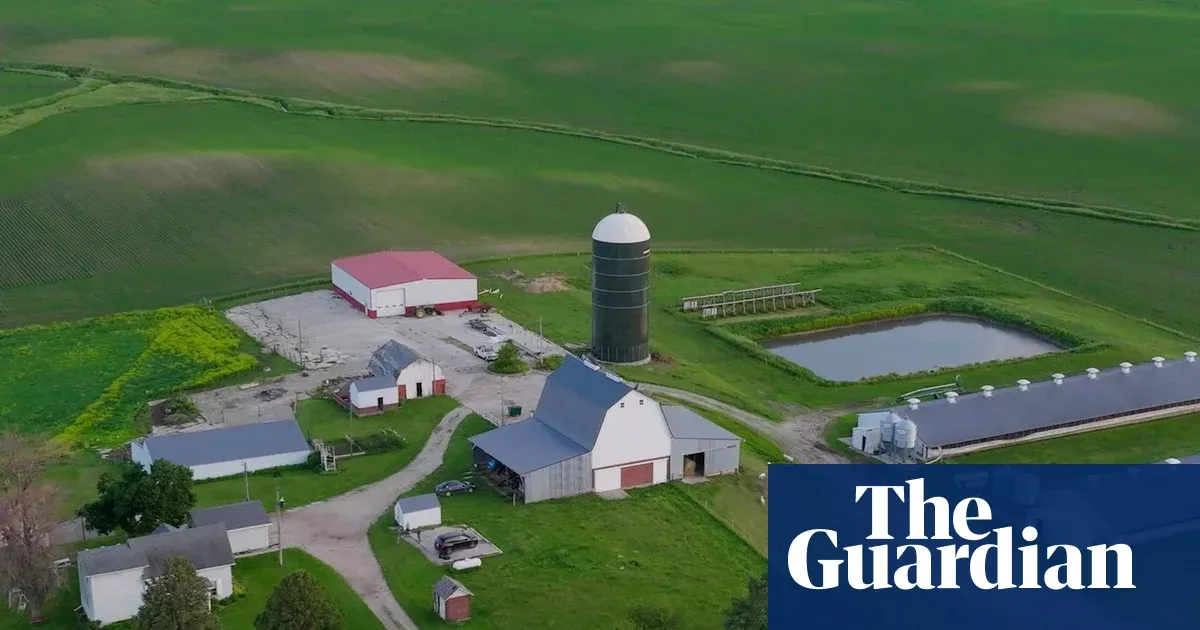
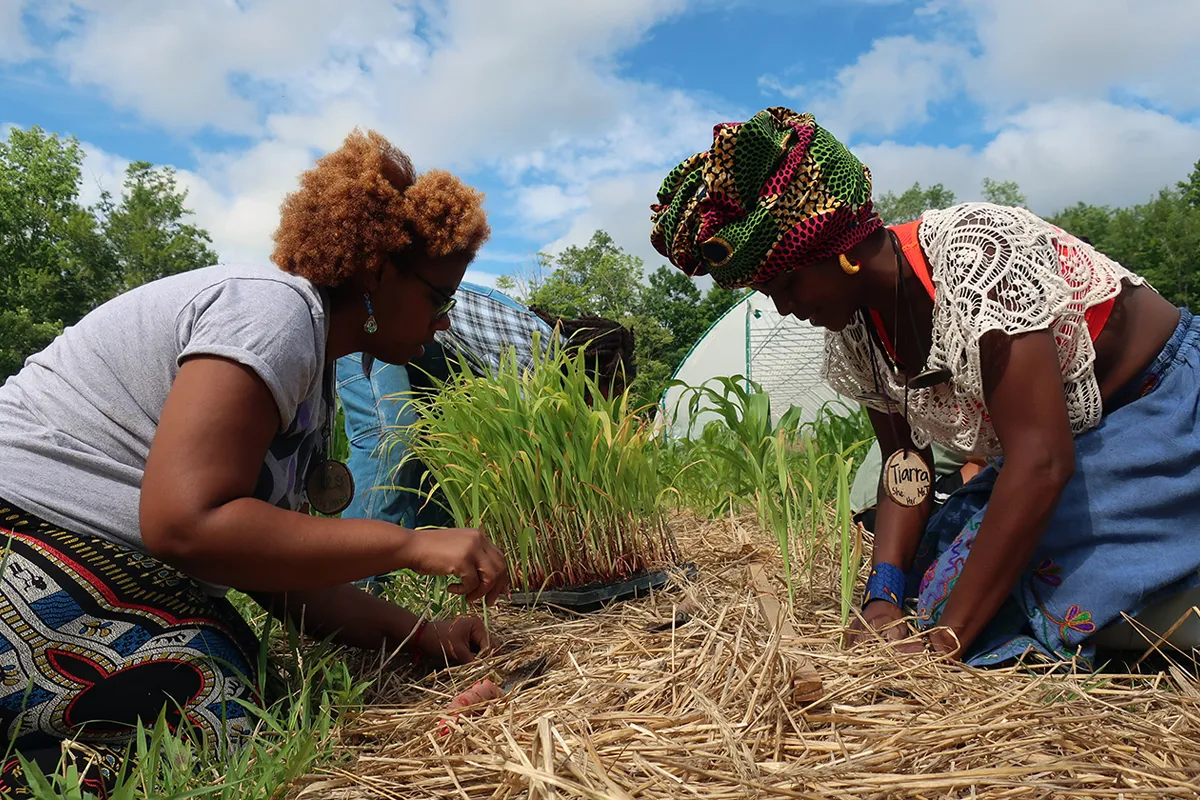
What's striking about Wahpepah's work is that it's never just about her restaurant. For twelve years, she's collaborated with the Culture Conservancy, a Native-led nonprofit that runs Heron Shadow, a farm in Sonoma growing Hopi black beans, Quapaw red corn, Buffalo Creek squash, and amaranth. Most of that produce doesn't end up on her menu. It goes directly to community members—a deliberate choice to prioritize food access for Native people over restaurant prestige.
This matters because Oakland has one of the nation's largest urban Native populations, concentrated in neighborhoods like Fruitvale. Yet that community is often invisible in conversations about the city's food scene. Wahpepah teaches at Cal Poly Humboldt's Food Sovereignty Lab, volunteers with the Intertribal Friendship House (one of the oldest urban Indian centers in the country), and works with Sogorea Te' Land Trust, which helps return Indigenous land to Indigenous people. She's not just cooking. She's building infrastructure.
The Three Sisters—corn, beans, and squash, or neowi ototeemetiaki in Kickapoo—anchor both her restaurant menu and her book. These crops have fed Native communities for centuries, and they're foundational to Indigenous agriculture across North America. Wahpepah uses them everywhere: at tribal events, at home, at family dinners. When you understand their healing properties—the nutrients, the resilience of the plants themselves—you begin to see why they were never just food. They were survival.
One dish connects her most directly to home: dried sweet corn. She brings it from Oklahoma to Oakland, uses it for birthdays and special moments, lets it carry the memory of her grandmother and aunties preserving corn in the August heat. It's a bridge between her two homes, a tangible reminder that identity isn't about geography. It's about what you eat, where it comes from, and who taught you to honor it.
Fry bread occupies a complicated space in this story. It's often treated as the quintessential Native American food, when in reality it emerged as a survival food during forced relocation and poverty. Wahpepah didn't serve it at her restaurant for three years. When she finally added it, pairing it with dried corn soup and stews, it became one of her staples. In her cookbook, she wrestled with whether to include it at all—worried it would overshadow the broader story of Indigenous foodways. But she realized that leaving it out would mean ignoring her own childhood, when fry bread kept her family fed every day. Her mother, a single parent of three, relied on it. Her grandmother before her. The aunties still do. Fry bread is resilience. It's a reminder to never forget where you come from.
Wahpepah's core message is simple but radical: Native people are still here. We have beautiful stories, passed down through generations, mostly through women. We have foods that heal. And at the end of the day, we're all trying to be healthy. Why not eat the foods from this land?
As more people wake up to where their food comes from and whose land they're on, Wahpepah's work—in her kitchen, on the farm, in the classroom—becomes a template for what food sovereignty actually looks like. It's not abstract. It's a plate of blue corn mush. It's dried sweet corn bringing two homes together. It's a community that remembers.