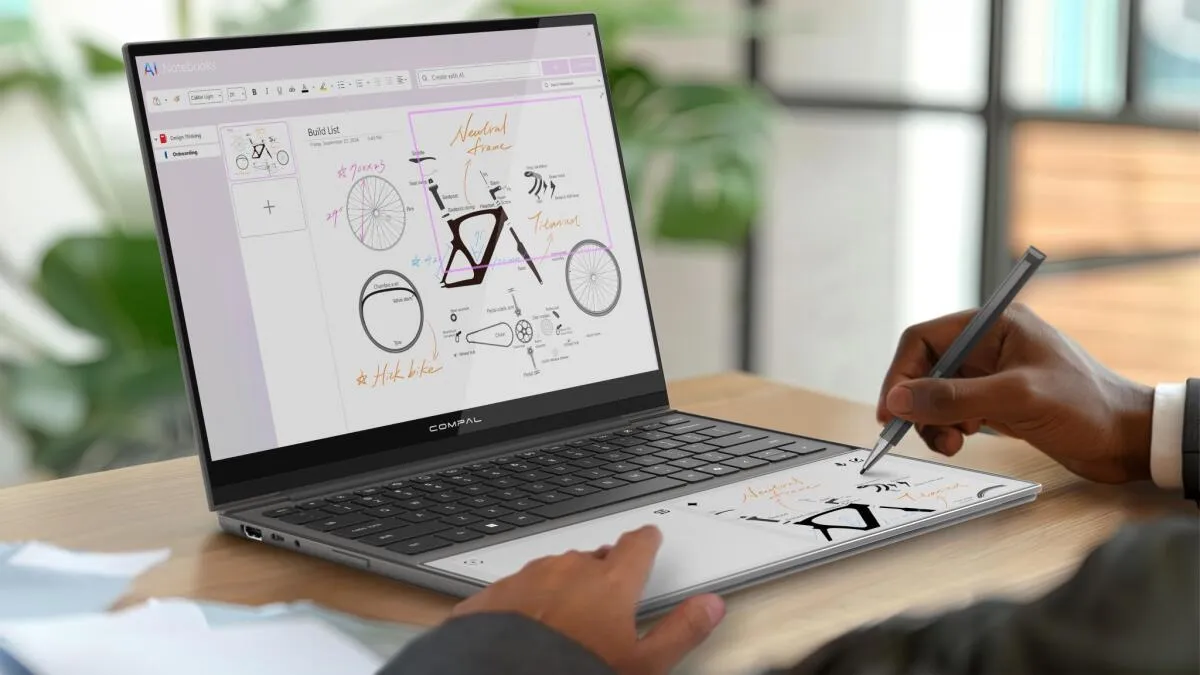
Compal Electronics has designed a laptop that turns dead space into something useful. The AI Book concept wraps a color E Ink display across the entire palm rest area—where your wrists normally rest—turning it into an interactive surface that works even when you're not typing.
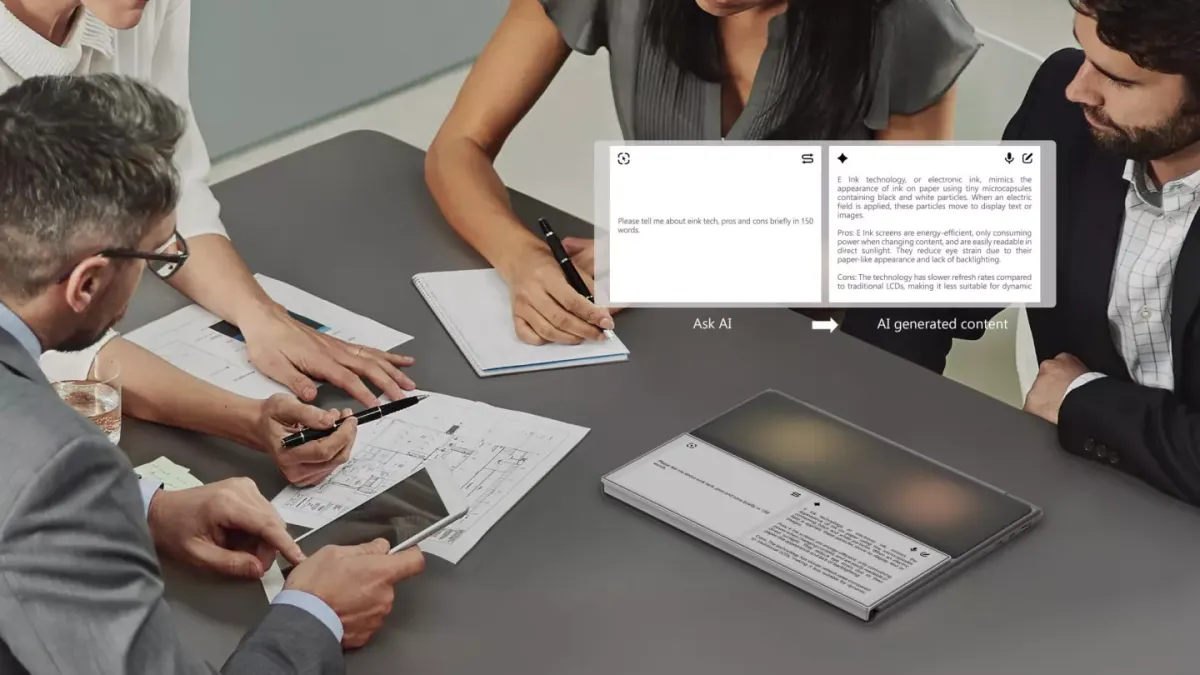
It's a simple idea with real potential. The E Ink panel supports both touch and stylus input, so you can sketch notes, annotate documents, or jot reminders without switching windows or reaching for another device. When you close the laptop lid, a thin strip of the display stays visible for notifications and quick updates. Flip the lid further, and the panel rotates to become an AI assistant interface—answering team questions or helping with tasks via voice input while ambient lighting cues signal status changes.
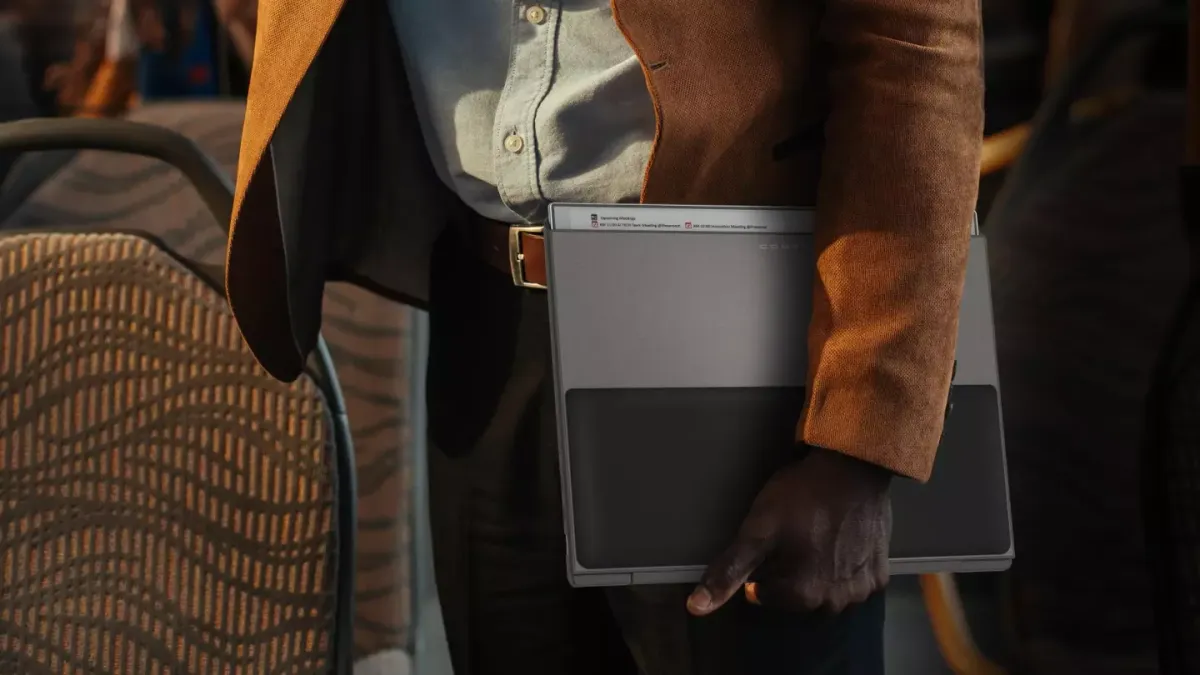
What makes this work is the technology underneath. E Ink displays—the same tech in e-readers—use almost no power, generate minimal heat, and can hold static images without constantly refreshing. That means the extra screen won't drain your battery the way a traditional LCD would. The concept is likely using Kaleido 3 color e-paper technology, which can display millions of colors while staying power-efficient.
We're a new kind of news feed.
Regular news is designed to drain you. We're a non-profit built to restore you. Every story we publish is scored for impact, progress, and hope.
Start Your News Detox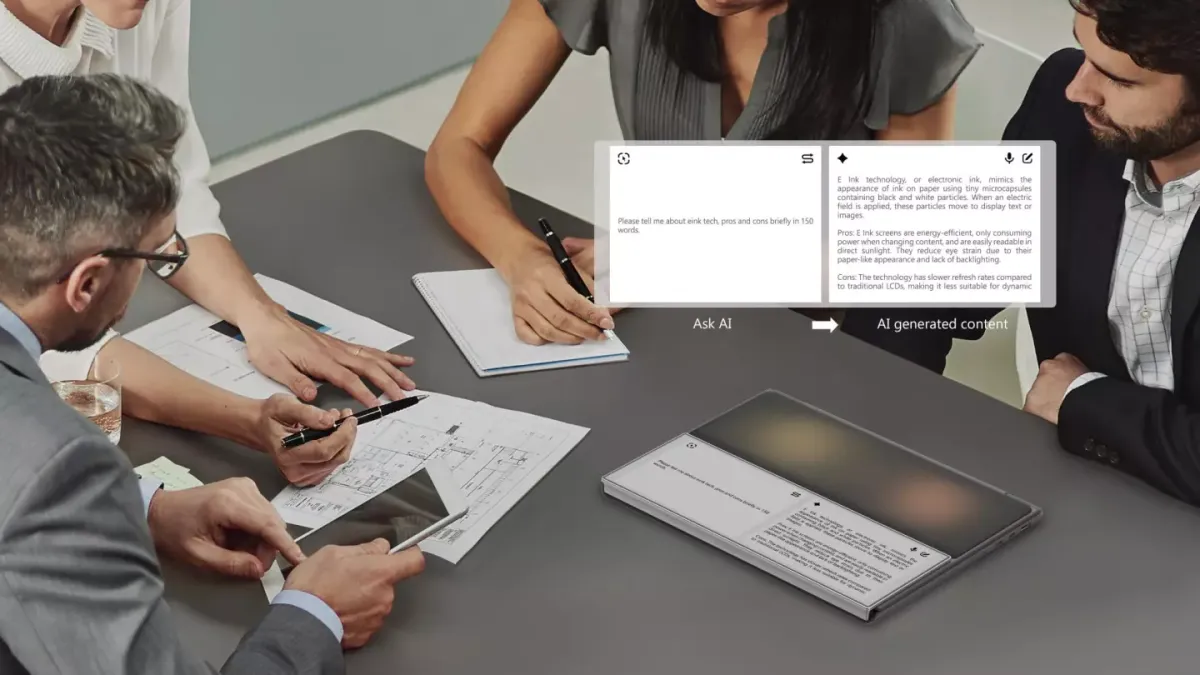
Compal won this month's iF Design Award for the concept, which signals that hardware manufacturers see something worth exploring here. But here's the gap between concept and reality: secondary displays on laptops have been attempted for years—dual-screen notebooks, above-keyboard sketch pads, even E Ink trackpads. Most never made it past the prototype stage. The real question isn't whether the technology works, but whether people will actually use it enough to justify the added cost and complexity.
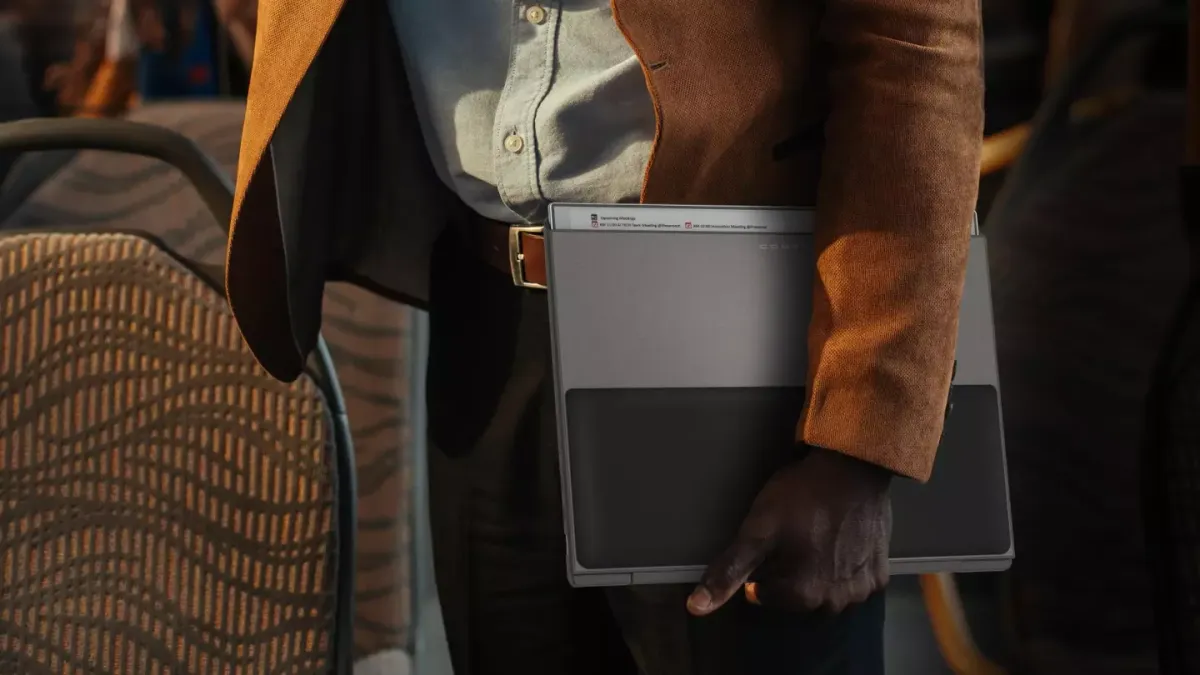
There's a deeper shift happening though. Laptops are moving toward what designers call "ambient computing"—devices that remain useful even when you're not actively working. A palm rest display that shows notifications, accepts voice commands, and lets you sketch without opening the lid suggests a future where your laptop adapts to different kinds of work rather than forcing you to adapt to it. Whether Compal moves this from design award to actual product remains unclear, but the concept hints at how manufacturers might finally make use of all that empty space on a laptop's chassis.