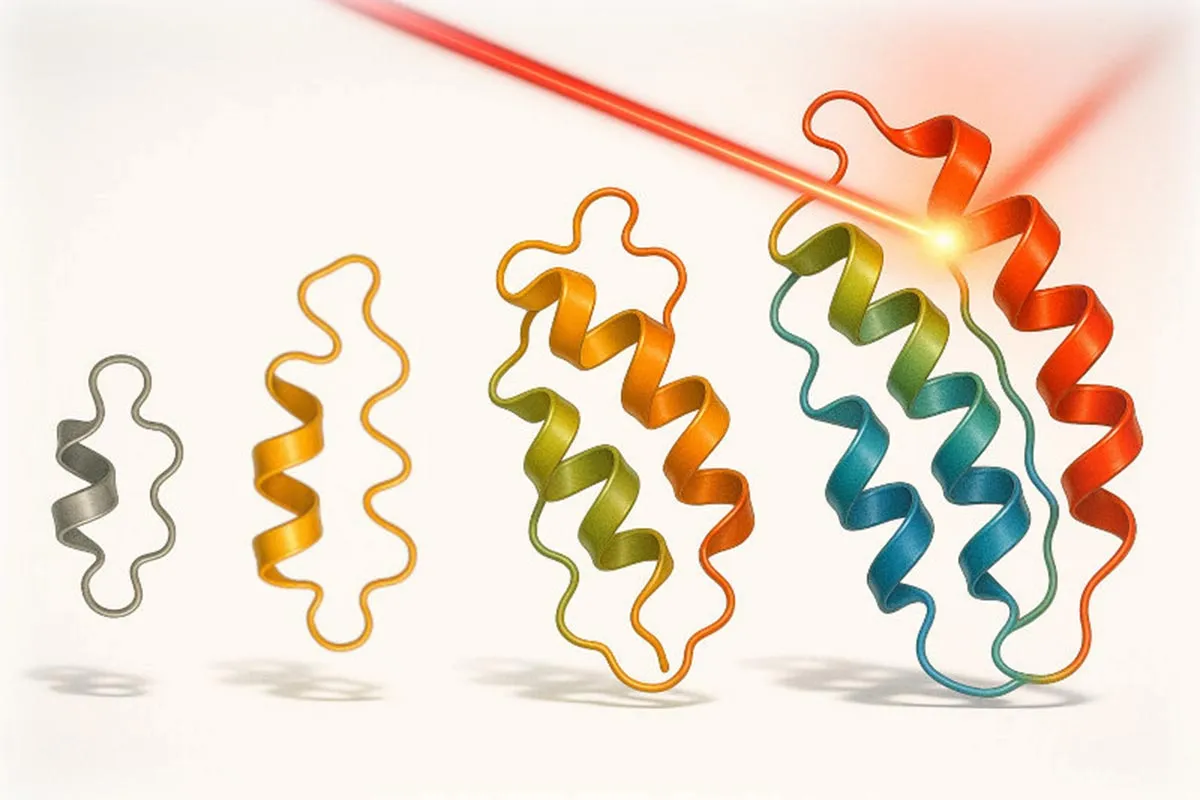
Biologists have cracked a problem that's stumped protein engineers for years: how to create proteins that don't just stay active, but switch on and off on command. The technique, called optovolution, uses light to guide proteins toward the kind of dynamic behavior that real cells actually need.
The breakthrough matters because evolution—the tool that shaped crops and antibiotics—has always had a blind spot. When scientists use directed evolution to improve proteins in the lab, they're essentially running a relay race where only the strongest runners survive. The problem: that favors proteins that stay switched on all the time. But most cellular proteins aren't meant to work that way. A signal protein might need to activate briefly, shut down, then turn on again hours later. A logic gate protein needs to combine multiple inputs and make yes-or-no decisions. Traditional evolution methods punish these behaviors. Proteins designed to switch end up losing that ability, which can damage or kill cells.
How light rewires the rules
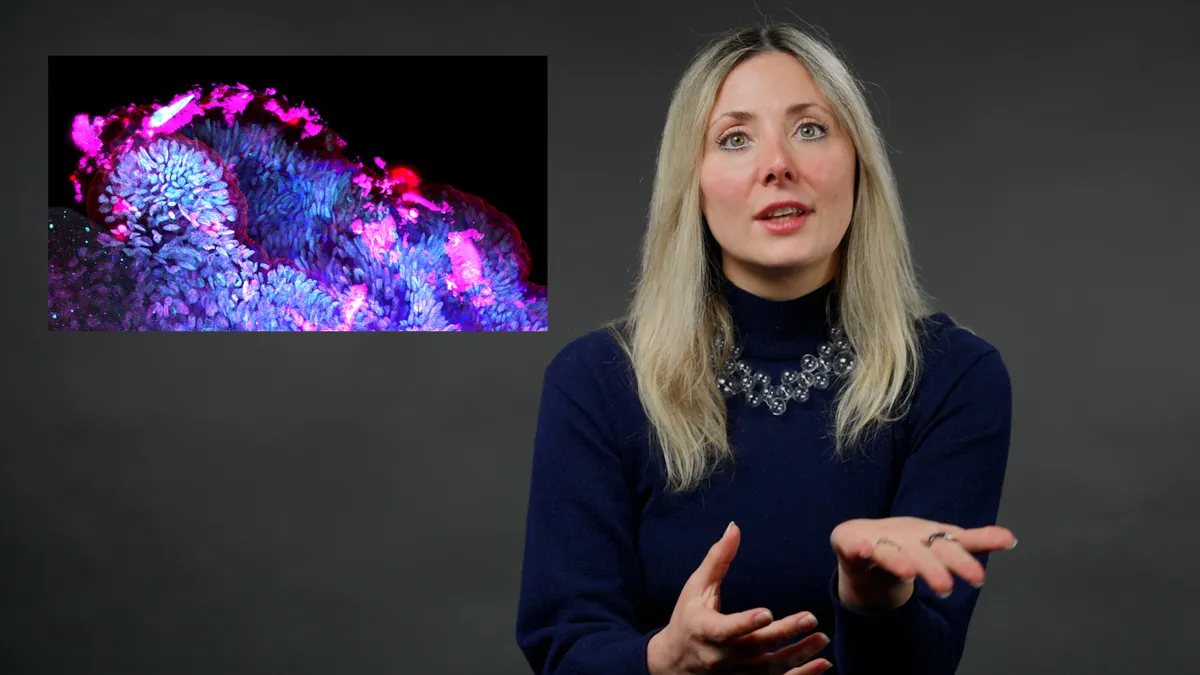
Researchers led by Sahand Jamal Rahi at EPFL's Laboratory of the Physics of Biological Systems redesigned the game entirely. Instead of selecting proteins based on constant activity, they used light to create a test that rewards proper timing.
We're a new kind of news feed.
Regular news is designed to drain you. We're a non-profit built to restore you. Every story we publish is scored for impact, progress, and hope.
Start Your News DetoxThey worked with budding yeast, the same organism that ferments beer. The team engineered yeast so that cell division depended entirely on whether the test protein switched at exactly the right moment. A protein that stayed on too long would stall the cell cycle. One that stayed off too long would kill it. Only cells with proteins that switched cleanly at the correct time could keep dividing.
Light became the control dial. Using optogenetics—a technique that activates genes with precisely timed light pulses—the researchers forced the protein to alternate between states. Each yeast cell cycle takes about 90 minutes. In that window, the cell runs a rapid pass-or-fail test. Proteins that switch properly survive and multiply. Variants with worse timing die out. No manual screening needed. Evolution does the work, but guided by light instead of random chance.
What they actually created
The results went beyond what the team expected. They evolved 19 new variants of a common light-controlled protein, some more responsive to light, others darker when light was off. Several could respond to green light instead of only blue—a feat researchers had considered nearly impossible because of how these molecules absorb different wavelengths.
They also discovered something unexpected: by accident, evolution disabled a normal yeast transport protein, which let the system use light-sensitive molecules the cell already contained. The system became simpler, not more complex.
Most striking: optovolution evolved a protein that works like a single-cell computer, activating genes only when two separate signals arrived simultaneously—one from light, one from a chemical. This is a genuine logic gate, the kind of building block that could underpin more sophisticated cellular circuits.
Why this matters beyond the lab
Dynamic protein behavior is foundational to how cells actually work. They sense signals, make decisions, divide, and respond to stress—all through proteins that switch states. Until now, engineers could design static proteins easily but struggled with dynamic ones. This technique changes that.
The implications ripple outward. Researchers could build optogenetic systems that respond to different colors of light independently. Therapeutic cells could be engineered to respond to multiple signals before acting. Industrial biotech could create more precise cellular factories. As medicine moves toward engineering cells for treatment, the ability to create proteins that compute on demand becomes not just useful—essential.
The next question isn't whether this works. It's how far it can go.