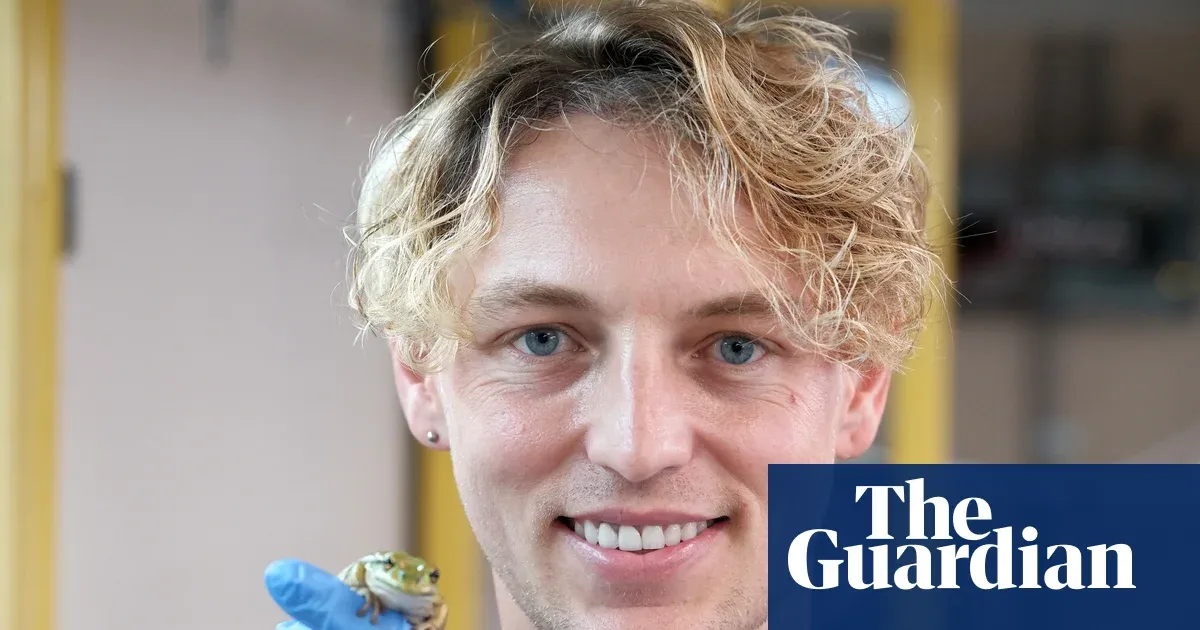
Anthony Waddle was mesmerized by tadpoles as a child—the whole transformation from water to land. Now 35, he's racing against a fungus that's already erased 90 frog species and is circling 500 more.
The chytrid fungus doesn't sound like a planetary emergency until you remember what frogs actually do. They eat the insects that carry human diseases. Their skin produces compounds that might become painkillers less addictive than opiates, less likely to breed antibiotic resistance. Losing frogs means losing that. It means losing a piece of how ecosystems regulate themselves.
During the pandemic, working from his lab in Australia, Waddle had a deceptively simple idea: what if frogs could just get warm during winter, when the fungus thrives most. He and a colleague built small shelters from masonry bricks—frog-sized saunas. The Australian green and golden bell frogs that sheltered inside over winter stayed healthier. The fungus, it turned out, is temperature-sensitive. When the frogs warmed up, they survived.
We're a new kind of news feed.
Regular news is designed to drain you. We're a non-profit built to restore you. Every story we publish is scored for impact, progress, and hope.
Start Your News Detox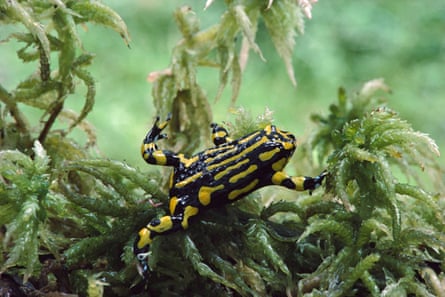
But saunas only help frogs that can physically access them. Waddle wanted something bigger.
From heat to genes
He moved into synthetic biology—the deliberate editing of organisms by adding or removing genetic material. For some species, the plan is straightforward: vaccinate hundreds of green and golden bell frogs, then release them back into the wild with immunity. For others, like the southern corroboree frog (which no longer breeds in the wild), the team is experimenting with gene replacement to help them survive reintroduction.
"Yesterday we were making transgenic frogs together, the first ever experiment to make a transgenic frog in Australia," Waddle said recently, the excitement audible. "We want to test it in as many Australian species as we can, with the idea that if it works in a lot of species in Australia that are at different conservation levels, different ecologies, it could be the solution, and we could share it around the world."
Synthetic biology is innovative and controversial. Advocates point to its potential to restore genetic diversity in bottlenecked populations or engineer disease resistance. Critics raise legitimate questions about unintended consequences and what it means to deliberately alter a species. The International Union for the Conservation of Nature only approved its use for conservation in 2025, after significant debate.
Waddle's position is measured: "We can't just be willy-nilly slapping genes into frogs, but at the research level we should be investigating synthetic biology. We're going to start using these methods in the wild for conservation."
Dr Jodi Rowley, an Australian herpetologist, calls the work "a ray of hope in amphibian conservation." With over 40% of all amphibian species threatened with extinction globally, incremental solutions aren't enough. The scale of the crisis demands exactly this kind of experimental thinking.
Waddle's insomnia these days is the good kind—the kind where your mind won't stop spinning through tomorrow's experiments, the next possibility, the frog that might survive because of what you're building today.