For years, blind basketball fans could hear the crowd roar but not follow the ball. Deaf hockey enthusiasts watched games with no commentary in their language. Players with disabilities sat in the stands instead of on the field. Now, across basketball courts, football stadiums, and baseball diamonds, that's changing.
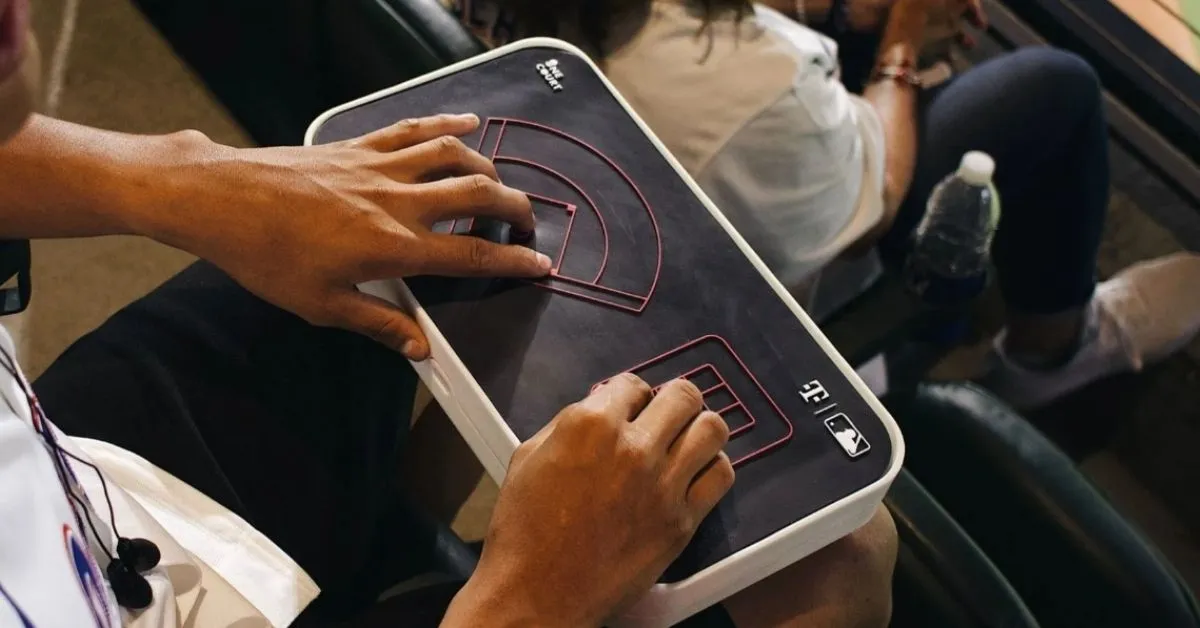
The shift started small. OneCourt, a startup founded by Jerred Mace, built tablet-sized devices that translate real-time game data into haptic feedback — unique buzzing patterns that let blind and low-vision fans track ball movement and possession through their fingertips. This year, Sacramento Kings and Portland Trail Blazers games offered the devices free to rent. Ferraro, a blind TikTok creator, tried one at a Trail Blazers game and described it simply: "I can't explain how life-changing this is as a blind spectator."
The innovation matters because it treats access as a design problem, not an afterthought. Same logic drove the Philadelphia Eagles and Children's Hospital of Philadelphia to build a mobile sensory-friendly unit at Lincoln Financial Field — a space with plush bean bags, soft lighting, and touchable wall art. Kylie Kelce, wife of retired Eagles star Jason Kelce and a weekly podcaster, helped develop it after recognizing that stadium noise and overstimulation exclude fans with autism, PTSD, and anxiety. "You have all of these distractions," Kelce said, "and you can just sort of send your brain somewhere else for a little bit."
We're a new kind of news feed.
Regular news is designed to drain you. We're a non-profit built to restore you. Every story we publish is scored for impact, progress, and hope.
Start Your News DetoxAccess spreading across leagues
On June 5, 2024, the NHL made history by broadcasting the Stanley Cup Final in American Sign Language. Deaf ESPN broadcasters Jason Altmann and Noah Blankenship delivered live play-by-play and color commentary in ASL, while a "crowd intensity meter" showed viewers the arena's noise level. Jerry Trayner, a deaf hockey fan, watched and signed to ABC News Detroit: "I am so happy the NHL did this." Since then, Altmann and Blankenship have continued ASL coverage throughout the season. "This is about the Deaf community being validated, being seen," Altmann said.
Meanwhile, the Miracle League in Michigan took inclusion a step further by redesigning baseball itself. When the league started in 2004 with just four teams and 40 players, it introduced synthetic rubber turf so wheelchair users and athletes with mobility challenges could find their footing. Today, it serves 400 players across four leagues. The league's biggest adaptive policy: every player bats and runs the bases, no matter their pace. Coach Mason Kaiser, who uses a wheelchair and has played in Miracle League for over 20 years, now mentors other disabled athletes. "I know that I can help these kids and these parents through some of their toughest times."
What ties these efforts together isn't charity — it's the recognition that sports belong to everyone. When stadiums and leagues invest in haptic devices, sensory-friendly spaces, and ASL broadcasts, they're not adding features for the margins. They're admitting the margins were always there, and the sport was incomplete without them. As more teams adopt these approaches, the question shifts from "How do we include people with disabilities?" to "Why did it take us this long?"