In western São Paulo, Brazil, where an entire forest once stood, there's now mostly just sugarcane. The Inland Atlantic Forest, famous for its dry-season leaf-shedding trees, got swapped out for single-crop farming. But a serious glow-up is underway, and it involves a whole lot of saplings.
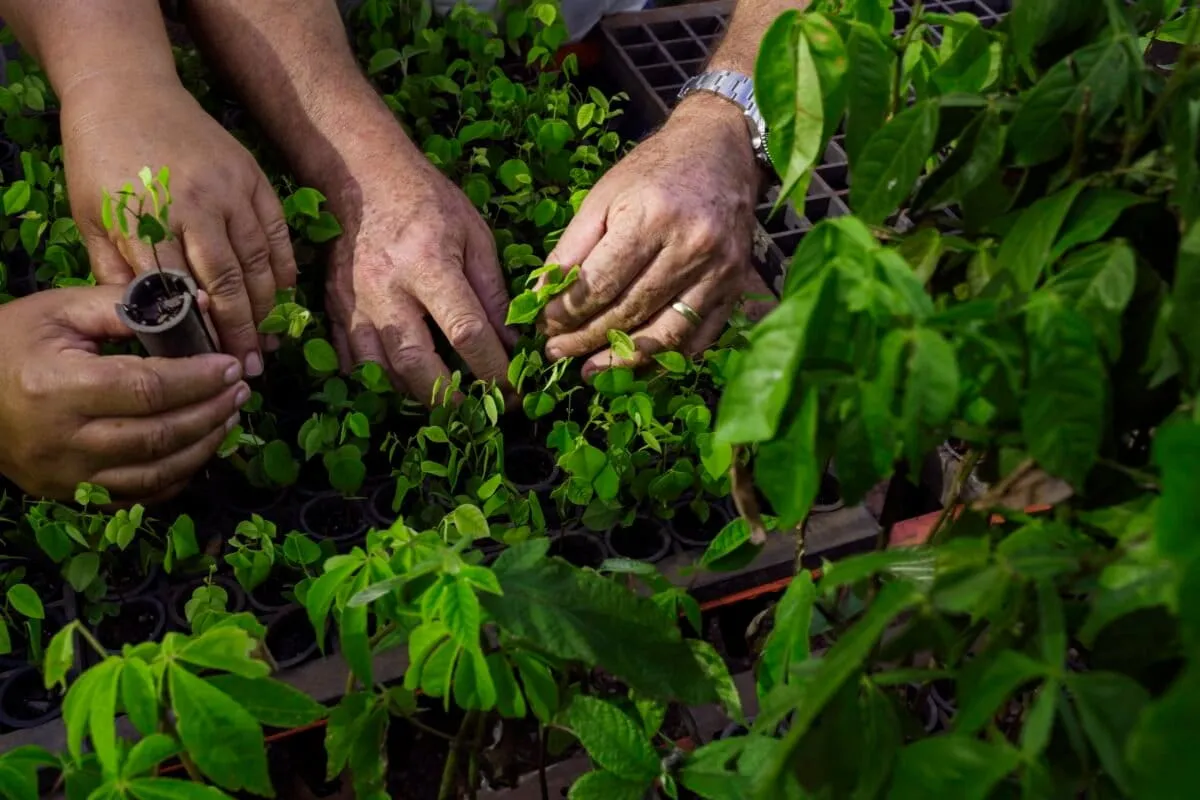
Biologist Haroldo Gomes is basically a mobile tree nursery. His pickup truck is packed with young ipês, aroeiras, and guarantãs — nearly 70 different Atlantic Forest species, all ready for their new homes.

Here’s the kicker: Haroldo’s family were land reform settlers. He remembers being 11, living in a tent, and ducking gunfire during land disputes. Fast forward, and he’s now the field coordinator for the Corridors of Life project at the Institute for Ecological Research (IPÊ). Talk about a plot twist.
We're a new kind of news feed.
Regular news is designed to drain you. We're a non-profit built to restore you. Every story we publish is scored for impact, progress, and hope.
Start Your News DetoxSince 2002, the very families who once sought land are now leading the charge to restore it. They’ve already planted 10 million trees, bringing back over 6,000 hectares (that’s 14,800 acres, if you’re counting). Their ambition? A cool 75,000 hectares (185,000 acres) by 2041. Which, if you think about it, is both impressive and a seriously long game. Sugarcane, meet your leafy, resilient ancestors.