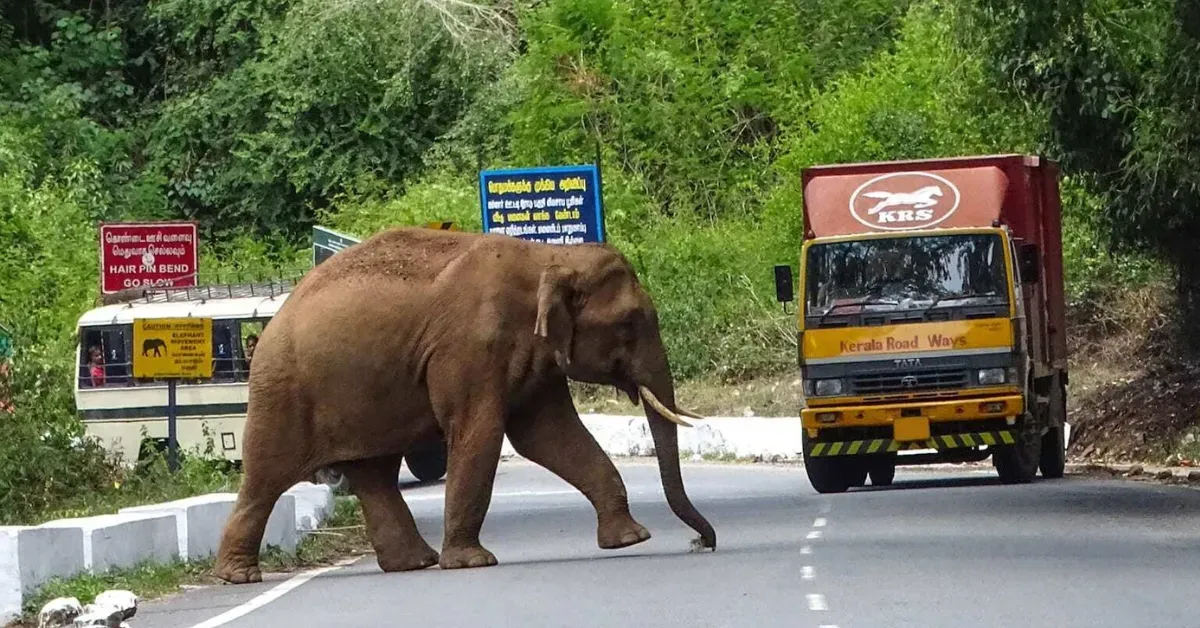
Karnataka's forests are thriving — which is creating a new problem. With more than 6,300 elephants and over 560 tigers now roaming the state, wildlife encounters in villages and farmland have become routine. Sometimes they turn deadly.
The state government has responded by building something that sounds like science fiction but works like a well-oiled dispatch center. The Integrated Command and Control Centre (ICCC) in Bengaluru uses AI cameras, satellite imagery, and GPS data from patrol teams to track animal movements in real time. When a villager spots a tiger near their crops, they call 1926 — the forest department helpline — and that alert reaches the nearest response team within minutes.
How it actually works
The system is designed around a simple insight: you can't protect people or animals if you don't know where either one is. Officers use GPS collars on key animals to predict movement patterns and position teams before conflicts happen. Drones provide aerial surveillance. The AI cameras flag unusual activity automatically, cutting the time between detection and response from hours to minutes.
We're a new kind of news feed.
Regular news is designed to drain you. We're a non-profit built to restore you. Every story we publish is scored for impact, progress, and hope.
Start Your News DetoxForest Minister Eshwar Khandre framed it plainly: technology fills a gap that humans alone cannot. Karnataka has over 43,000 square kilometers of forest. Relying only on field patrols to cover that territory would be impossible.
The backdrop here matters. Stricter enforcement of wildlife protection laws over the past two decades has worked — populations of endangered species have recovered dramatically. But success creates friction. More elephants means more crop raids. More tigers means more fear in villages that border protected areas. The state wasn't choosing between wildlife and people; it was learning to manage both.
Rapid response squads now deploy based on ICCC alerts, equipped to tranquilize animals safely or guide them away from settlements. Early data suggests the system is reducing both human injuries and unnecessary animal deaths. It's not perfect — real-world forests are messier than any algorithm — but it's measurably better than the previous approach of reacting after incidents occurred.
What makes this noteworthy isn't the technology itself. It's that Karnataka recognized a specific problem — managing wildlife across vast, dense terrain — and built a solution that actually fits. Not every conservation challenge needs AI. This one did.
The ICCC is still relatively new, but the model is already drawing interest from other states with similar wildlife-human boundaries. If it holds up, it could reshape how India's most biodiverse regions balance growth in both human and animal populations.