For years, researchers have wanted to use ultraviolet light for things like microscopy and wireless communication, but they've been stuck on a basic problem: they couldn't reliably create the light or detect it once it existed. Now a team from the University of Nottingham and Imperial College London has solved both sides of that problem at once.
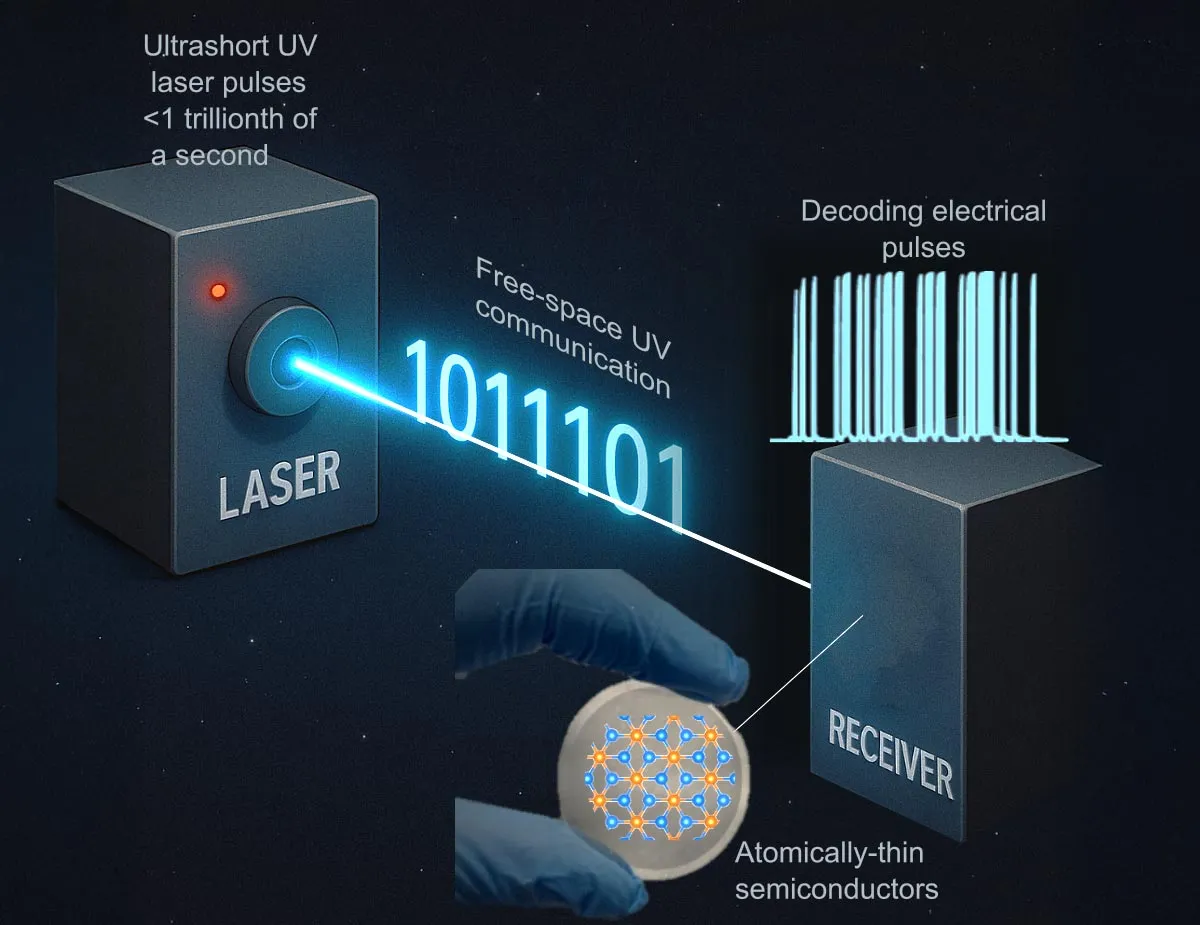
They've built a system that generates and detects ultraviolet pulses so brief they last only femtoseconds — less than a trillionth of a second. The breakthrough combines an ultrafast UV laser with sensors made from atomically-thin materials, and the whole thing works at room temperature using materials that can actually be manufactured at scale.
How it works
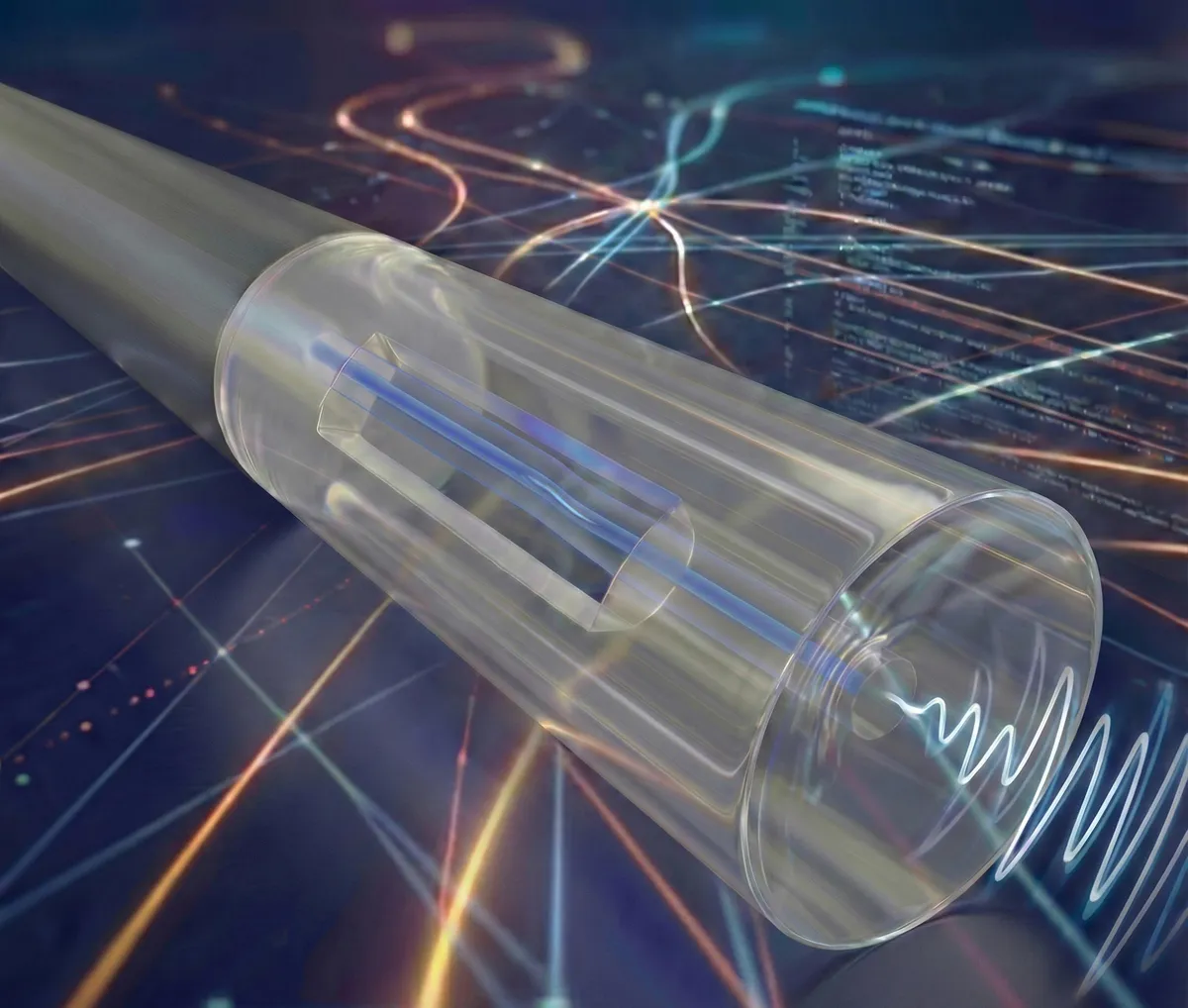
The laser part uses a technique called cascaded second-harmonic generation inside nonlinear crystals. Essentially, the researchers bounce light around inside special crystals in a way that shifts it into the ultraviolet range they need (UV-C, between 100 and 280 nanometers). The result is pulses of UV light that last femtoseconds — so fast that traditional detectors can't even register them.
We're a new kind of news feed.
Regular news is designed to drain you. We're a non-profit built to restore you. Every story we publish is scored for impact, progress, and hope.
Start Your News DetoxThat's where the second breakthrough matters. The team built detectors from a two-dimensional semiconductor called gallium selenide, paired with an oxide layer. These sensors don't just detect the light — they respond in a way that scales predictably across a wide range of pulse energies. That's the kind of linear, reliable behavior that engineers need to actually build something useful.
"This work combines for the first time the generation of femtosecond UV-C laser pulses with their fast detection by 2D semiconductors," says Professor Amalia Patané, who led the sensor development. "Unexpectedly, the new sensors exhibit a linear to super-linear photocurrent response to pulse energy, a highly desirable property."
What makes this genuinely significant is that everything here is compatible with standard manufacturing methods. These aren't lab-only tricks that fall apart when you try to scale them up. The efficiency of the laser conversion is high enough that researchers think they can make it even better, and the whole system could eventually shrink into something compact and practical.
Why this matters
UV-C light has always been interesting to scientists because it scatters in the atmosphere — a property that sounds like a limitation but actually makes it perfect for certain kinds of communication that don't require a direct line of sight. Autonomous systems and robots could eventually use UV-C for wireless communication in ways that visible light can't. The same technology could enable new forms of imaging and ultrafast spectroscopy, all operating on timescales that let you essentially watch chemical reactions happen.
Because these components can be integrated onto a single photonic chip, the path from lab curiosity to actual device feels shorter than it usually does in this field. The researchers are essentially handing the next generation of engineers a toolkit that's been missing for years.
The work appears in Light: Science & Applications and represents the kind of incremental-but-essential progress that rarely makes headlines but makes everything that comes next possible.