
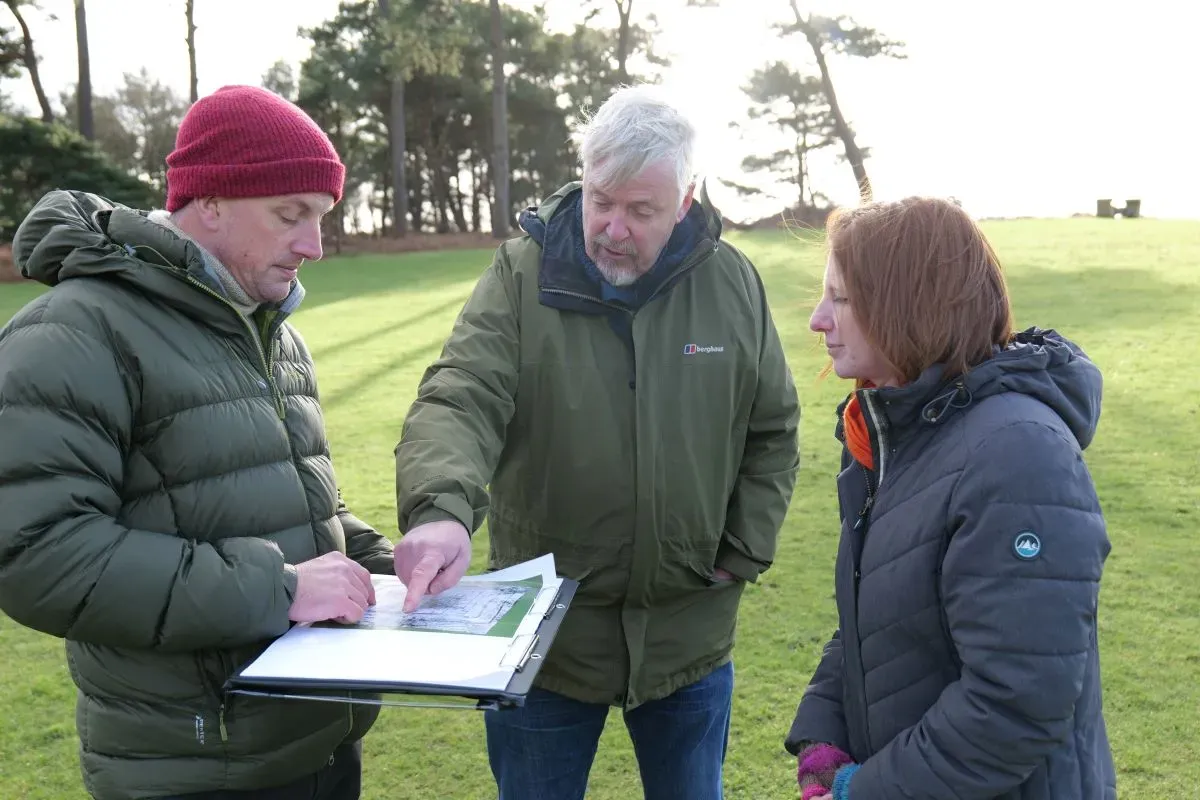
Three feet underground in a deer park, archaeologists have found the outline of what may be the most significant Roman structure ever discovered in Wales. The villa spans over 6,000 square feet, buried so shallow and so protected by centuries of undisturbed earth that experts are comparing the preservation potential to Pompeii—though with a crucial difference. No volcanic ash froze this site in time. Instead, the land simply stayed quiet.
"My eyes nearly popped out of my skull," said Alex Langlands, project lead and co-director of Swansea University's Centre for Heritage Research and Training, when ground-penetrating radar first revealed the structure beneath Margam Country Park in South Wales. The villa measures roughly 140 feet long, with a corridor design flanked by two wings and a veranda—the kind of layout that signals serious wealth and status in the Roman world.
What makes this discovery reshape our understanding of Roman Wales is simpler than it sounds: this wasn't a military fort or a frontier outpost. This was a home. A prestigious one. The building likely housed a major local dignitary who controlled a substantial agricultural estate, with as many as six rooms at the front and eight at the rear. For the first time, archaeologists have concrete evidence that South Wales during the first through fifth centuries CE wasn't the rough edge of empire—it was sophisticated, prosperous, and home to the kind of elite residences you'd find in the agricultural heartlands of southern England.
We're a new kind of news feed.
Regular news is designed to drain you. We're a non-profit built to restore you. Every story we publish is scored for impact, progress, and hope.
Start Your News Detox"This part of Wales isn't some sort of borderland, the edge of empire," Langlands told the BBC. "In fact there were buildings here just as sophisticated and as high status as those we get in the agricultural heartlands of southern England."
Most Roman villas discovered in Wales have been military installations. Finding a residential villa of this scale and grandeur is rare enough to rewrite assumptions about the region's place in the Roman world. The site sits within Margam Country Park, an 850-acre estate that already holds a 12th-century Cistercian monastery, a 19th-century castle, and an 18th-century orangery—layers of history stacked one atop another.
The research team, drawn from Swansea University, Neath Port Talbot council, and Margam Abbey Church, is keeping the exact location confidential for now to protect the site from looters. More details will be shared publicly at Margam Abbey on January 17. For now, what matters is that the ground beneath a Welsh deer park has given up a secret that changes how we see what Roman Wales actually was.