Winter survival in the animal kingdom looks nothing like our heated homes and layered clothing. While humans retreat indoors when temperatures drop, thousands of species have evolved strategies so specific, so strange, that they read like nature's survival hacks.
Take wood frogs. Across New England, the Mid-Atlantic, and the Midwest, these frogs don't just slow down for winter—they freeze completely solid. For months, they burrow under leaf litter with no heartbeat, no breathing, no brain activity. Then, as soon as the ground thaws in spring, they thaw too and hop away. This strategy gives them a competitive edge: they wake up earlier than frogs hibernating in mud-bottomed lakes, so they can mate and lay eggs in small ponds first.
Dormancy and Adaptation
Most reptiles and amphibians take a different approach called brumation—a lighter version of hibernation. "During the winter, brumation is like taking a long nap, getting up when it gets a little warmer, going to the bathroom, drinking some water, and then going back to sleep," explains Karen McDonald, the STEM program coordinator at the Smithsonian Environmental Research Center in Maryland. Unlike hibernating bears that sleep through winter on stored fat, brumating animals wake periodically to drink water and stay hydrated.
We're a new kind of news feed.
Regular news is designed to drain you. We're a non-profit built to restore you. Every story we publish is scored for impact, progress, and hope.
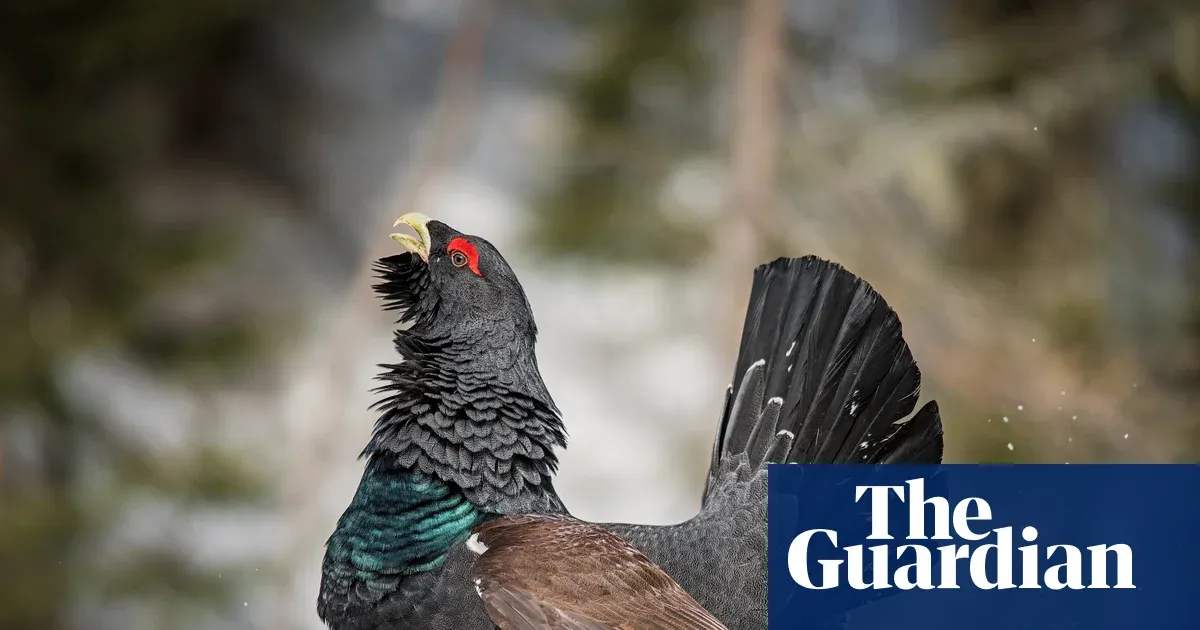
Start Your News DetoxBirds that stay north for winter—cardinals, chickadees, blue jays—rely on meticulous feather maintenance. Some grow entirely new plumage for the season. Others fluff their feathers to trap pockets of warm air against their skin, or spread oil from a gland near their tails to waterproof their feathers. They also huddle together with their own species and hunt for winterberries and other fruits that still produce food when insects disappear.
 Image: Haley Jackson / Smithsonian Environmental Research Center
In the Chesapeake Bay, blue crabs burrow into mud in the deepest parts of the water and enter dormancy. Their metabolism slows dramatically, though unlike mammals, they don't lower their body temperature. They stay put until water reaches around 50 degrees Fahrenheit. Oysters, living in the same ecosystem, employ a different strategy: they feed frantically all summer, storing glycogen—a form of sugar—then close their shells and live off those reserves through the lean winter months.
Perhaps the strangest adaptation belongs to turtles. Snapping turtles and painted turtles spend winter underwater, frozen beneath the ice, and breathe through their cloaca—essentially their butt. This process, called cloacal respiration, lets them exchange gases through the tissues lining their digestive tract. It sounds absurd until you realize it lets them stay submerged and dormant for months without surfacing for air.
Image: Smithsonian Environmental Research Center Fisheries Conservation Lab
Each of these strategies—freezing solid, slowing metabolism, growing new feathers, breathing through unconventional routes—represents millions of years of adaptation to the same seasonal challenge we solve with thermostats. The diversity of solutions suggests that winter, for most animals, isn't something to escape. It's something to become.