
You're trying to get something done. Maybe it's that looming report, or finally tackling the laundry Everest. Your brain, however, has other plans, like deep-diving into the history of competitive thumb wrestling. Enter body doubling, the productivity hack that sounds like a sci-fi movie but is actually just… working alongside someone else.
Basically, you find a buddy (or a screen full of them, cameras on, mics off), declare your intentions, and then silently get to work. It’s a concept that's been around, but it absolutely exploded during the pandemic when everyone suddenly missed the low hum of office productivity – or just seeing another human face that wasn't their cat's.

It's particularly popular in neurodivergent communities, especially for folks with ADHD, who often find a silent co-worker to be the secret sauce for tackling tasks they'd rather avoid. Because apparently, the mere presence of another person is enough to trick your brain into focus mode.
We're a new kind of news feed.
Regular news is designed to drain you. We're a non-profit built to restore you. Every story we publish is scored for impact, progress, and hope.
Start Your News DetoxSo, Does This Voodoo Work?
Will Canu, a psychologist who studies attention-deficit disorders (and helped create a program for college students with executive functioning challenges), says it's not a magic bullet. Some people do find it helpful, and there are good psychological reasons why. But it's not a universal cure for every brain that wanders.
In fact, some people with ADHD might actually focus better alone, in glorious, distraction-free solitude. Go figure. The definition itself is a bit squishy, too. Canu sees it as a non-distracting partner who's just there. Russell Ramsay, another clinical psychologist specializing in adult ADHD, has a broader view: study groups, walking partners, even trading favors like cleaning a closet for cleaning a garage. The common thread? Shared presence, shared purpose.
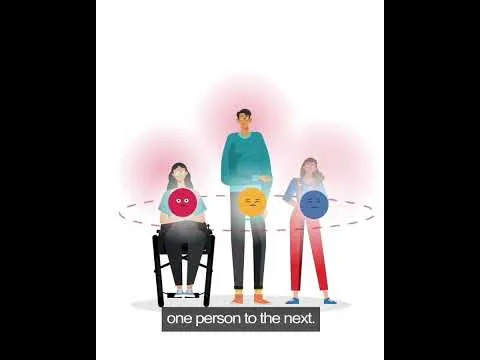
And yes, the internet has jumped all over this. There are apps like Focusmate and Focus Space, and even live streamers who offer themselves up as your silent, virtual work companion. Because apparently that's where we are now.
The Science (Sort Of)
Here's the kicker: there aren't many large-scale, scientific studies proving body doubling works. Mostly, it's anecdotal evidence – people saying, "Hey, this actually helped me finally clean out my fridge!" This led Canu to dig a little deeper.
He and his team surveyed 1,600 college students, about 10% with ADHD, from 2022 to 2023. They found that some students with ADHD did prefer working with others, but the performance boost wasn't huge, and they weren't seeking it out significantly more than students without ADHD. The reasons differed, though: ADHD students wanted accountability, while others wanted help or just a more fun study session. Let that satisfying number sink in: 8.4% of children and 2.5% of adults have ADHD.

So, why might it work? Ramsay points to our inherently social nature. Body doubling essentially externalizes motivation. Your private goal becomes a shared plan, creating a "dopamine wave" from the social commitment. A little face time, a social contract – sometimes that's all it takes to get the gears grinding.
Want to Try It? (No Guarantees, Obviously)
If you're intrigued by the idea of silently judging someone else's work ethic (or letting them silently judge yours), here are a few tips:
- Pick your partner wisely: Find someone who's actually going to work, not chat. Someone doing similar tasks is a bonus – they'll get it when you hit a wall.
- Keep it structured: A quick check-in to state goals, a set period of quiet work (an hour is a popular sweet spot), and then a debrief. Clear limits make the task less daunting.
- Be honest with yourself: Try it a few times. Did you focus better? Get more done? Or did you just resent the silent person on your screen? It's not a failure if it doesn't work for you.
Canu worries about the hype, especially for those with ADHD who might see it as a miracle cure and skip out on other, more proven strategies. He emphasizes that there are many ways to be effective – breaking tasks into smaller parts, working during your peak hours, even just a simple timer. Sometimes, you just need to step away from the screen and take a walk. And that, too, is perfectly fine. The point is to find what works for your brain, not someone else's.