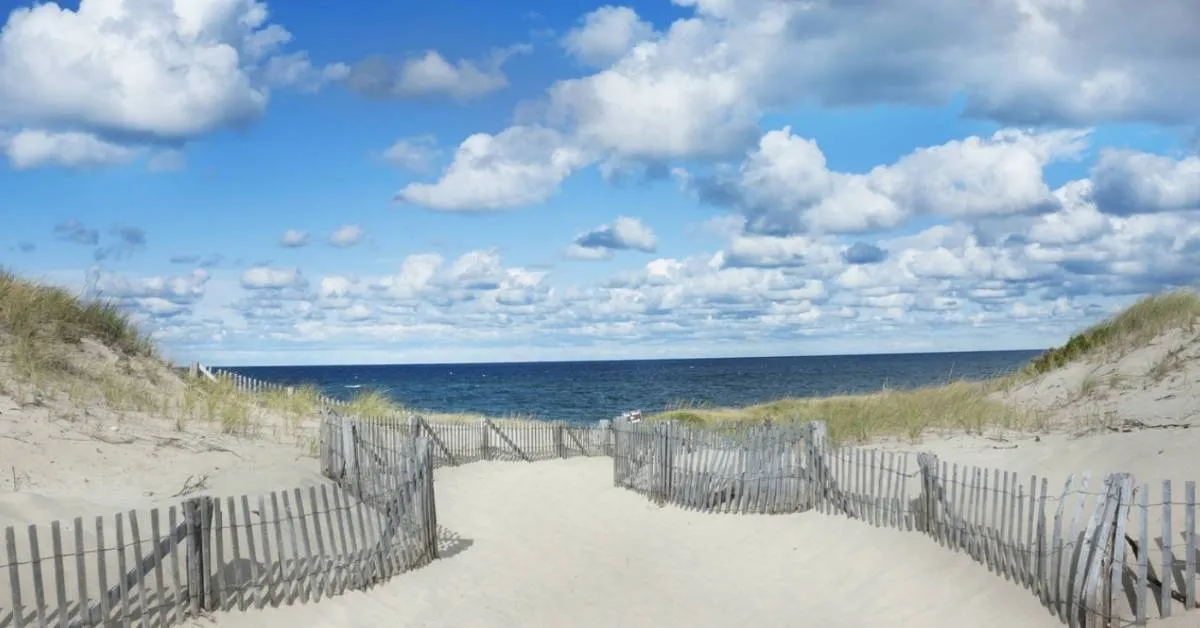
For 150 years, horseshoe crabs vanished from Cape Cod National Seashore. A simple fix—reopening a sealed lagoon—brought them roaring back in the thousands.
They're not actually crabs, despite the name. Horseshoe crabs are arthropods that have existed for 445 million years, surviving five of Earth's mass extinctions. On the Atlantic Coast, they're the backbone of the food chain—turtles, birds, and fish depend on their eggs. Yet their population has crashed in recent decades, hammered by overharvesting and pharmaceutical companies that drain their bright-blue blood to test drugs and vaccines for toxins.
East Harbor, part of Cape Cod National Seashore, tells a different story now. For a century and a half, the area had been sealed off for industrial use. The lagoon sat disconnected from the ocean, hostile to the creatures that once thrived there. In 2008, the park made a request to the town of Orleans. Could they reopen the seawall and let seawater flow back in?
We're a new kind of news feed.
Regular news is designed to drain you. We're a non-profit built to restore you. Every story we publish is scored for impact, progress, and hope.
Start Your News DetoxThey did. What happened next was straightforward ecology: the habitat returned, and the species followed.
A habitat comes alive again
Today, horseshoe crabs breed there by the thousands. Clams, oysters, and quahogs have returned too. Sophia Fox, an aquatic ecologist at the park, has been tracking the recovery. She's noticed something particularly telling: many of the horseshoe crabs breeding in East Harbor today hatched right there, over 12 years ago. They've built a stable, reproducing population in a place where they'd been absent for generations. It's a true habitat again—not a temporary refuge, but a home.
"This is what we call our happy story in the world of doom and gloom that we live in," Fox said.
Lawrence Niles, who co-founded the Horseshoe Crab Recovery Coalition, frames it differently. "They look like trouble, but they're not." The coalition has spent years pushing back against the perception that these creatures are anything but essential. They're living fossils—survivors of a kind we rarely see in real time.
What makes East Harbor's recovery remarkable isn't the drama of a last-minute rescue. It's the simplicity of it. No captive breeding program. No expensive intervention. Just seawater and time. The horseshoe crabs were waiting. They returned the moment the door opened.