Photis Gaitanos has fished the waters off Larnaca for 40 years. Two years ago, he stopped catching red mullet altogether.
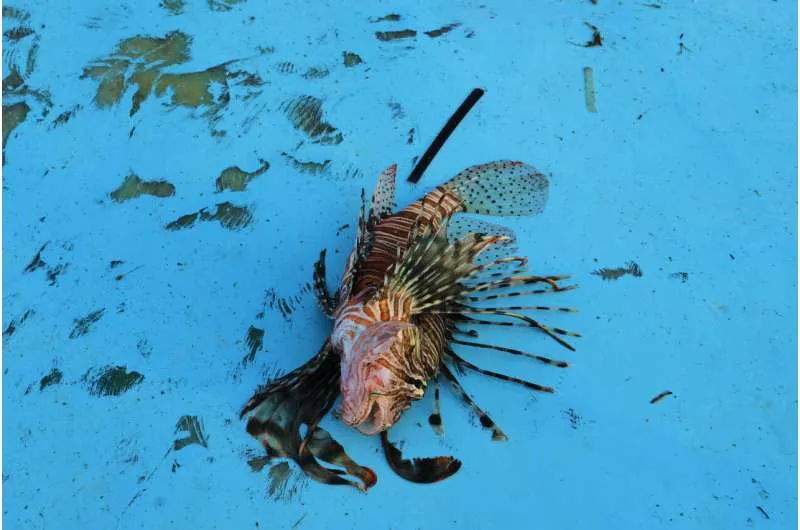
Instead, his nets now fill with lionfish — exotic-looking invaders with red and orange stripes and venomous spines, swept into the Mediterranean from the Red Sea as waters warm. They're not alone. Silver-cheeked toadfish, with jaws powerful enough to shred nets, have also colonized the eastern Mediterranean over the past decade. Together, these species are dismantling the local fishing economy. "Our income has become worse every year," Gaitanos says. "It is now a major problem affecting the future of fishing."
The culprit is temperature. The Mediterranean is warming roughly 20% faster than the global average, creating ideal conditions for tropical and subtropical species to survive in European waters. Climate models suggest lionfish could swarm the entire Mediterranean by century's end. The expanded Suez Canal has accelerated the process, opening a direct corridor for Indo-Pacific species to enter the sea.
We're a new kind of news feed.
Regular news is designed to drain you. We're a non-profit built to restore you. Every story we publish is scored for impact, progress, and hope.
Start Your News DetoxFrom Problem to Plate
The EU has tried compensation schemes — paying fishermen to catch toadfish, funding scuba divers to cull lionfish around reefs and wrecks. But Cyprus's Fisheries Department acknowledges these are temporary measures, not solutions. So local fishermen are betting on something more palatable: turning the invaders into dinner.
After the venomous spines are carefully removed, lionfish becomes edible. Renowned Cypriot chef Stavris Georgiou has developed recipes. In 2021, the EU launched #TasteTheOcean, a social media campaign enlisting top European chefs and food influencers to promote invasive species as alternatives to traditional catches. The message: eat the problem.
It's an elegant idea — use market demand to control an ecological threat while supporting struggling fishermen. Whether it scales beyond taverns and social media posts remains unclear. But for Gaitanos and others watching their livelihoods shrink, it's one of the few levers within reach.