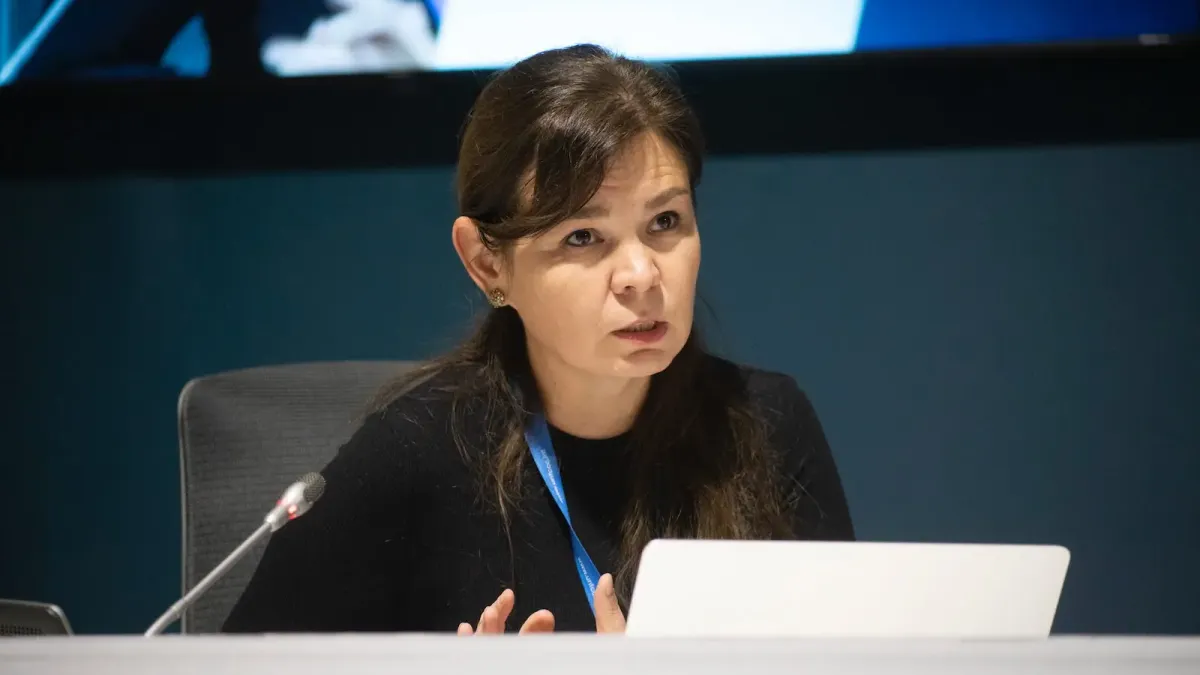
Daria Egereva, a Selkup woman from western Siberia, spent years speaking for Indigenous peoples at the United Nations. In December, Russian authorities arrested her at home, confiscated her devices, and accused her of ties to a terrorist organization. International observers say it's retaliation for her climate advocacy.
Egerev's work was straightforward but consequential. As co-chair of the International Indigenous Peoples Forum on Climate Change since 2023, she helped ensure Indigenous voices shaped global climate policy. During COP30 in Brazil last November, she pushed for women's inclusion in climate negotiations, arguing that protecting Indigenous women was essential to any viable climate future. She also researched how the green energy transition—solar farms, wind turbines, mining for battery materials—was displacing Indigenous communities without their consent or compensation.
"The transition to a green economy without an appropriate framework or with disregard for the rights of Indigenous peoples will continue to result in historical injustices, marginalization, discrimination, and dispossession of their lands and resources," she wrote in a 2024 report. It was careful, evidence-based work. It was also, apparently, dangerous.
We're a new kind of news feed.
Regular news is designed to drain you. We're a non-profit built to restore you. Every story we publish is scored for impact, progress, and hope.
Start Your News DetoxThe Pattern Behind One Arrest
Egerev's detention isn't isolated. A 2023 UN report found that advocates from multiple countries have withdrawn from UN processes out of fear of reprisals. In 2024, the UN Office of the High Commissioner for Human Rights documented an increase in such cases. Between 2012 and 2024, more than 2,000 environmental and land defenders were killed or disappeared—nearly a third of them Indigenous, according to Global Witness.
Russia has been particularly aggressive. In July 2024, the government designated the Aborigen Forum network—a coalition of Indigenous advocates working on Arctic protection—as an extremist organization. Egereva was affiliated with the group. The same month, Russian authorities shut down the Centre for Support of Indigenous Peoples of the North, where she was also a member. When she was arrested in December, it followed a pattern: home search, device seizure, arrest on extremism charges.
The timing matters. Just weeks after her arrest, another Saami advocate and UN Permanent Forum member, Valentina Vyacheslavovna Sovkina, was also searched by Russian authorities. "They seized technical equipment and searched the premises, folders, books, and boxes for four hours," Sovkina said through an interpreter. "They compiled a report without leaving a copy and without allowing me to call a lawyer."
Egerev is expected to remain detained until her court hearing on February 17. She could face up to 20 years in prison. Her arrest has drawn condemnation from Cultural Survival, the International Indian Treaty Council, and other Indigenous organizations, who see it as intimidation aimed at silencing voices at the UN climate table.
What happens next matters beyond one person's case. If governments can arrest their own citizens for speaking at international forums, the entire system of global climate negotiation—which depends on broad participation—becomes fragile. Indigenous peoples manage roughly 80 percent of the world's remaining biodiversity. Excluding their voices from climate decisions doesn't just silence advocates. It weakens the solutions we need.