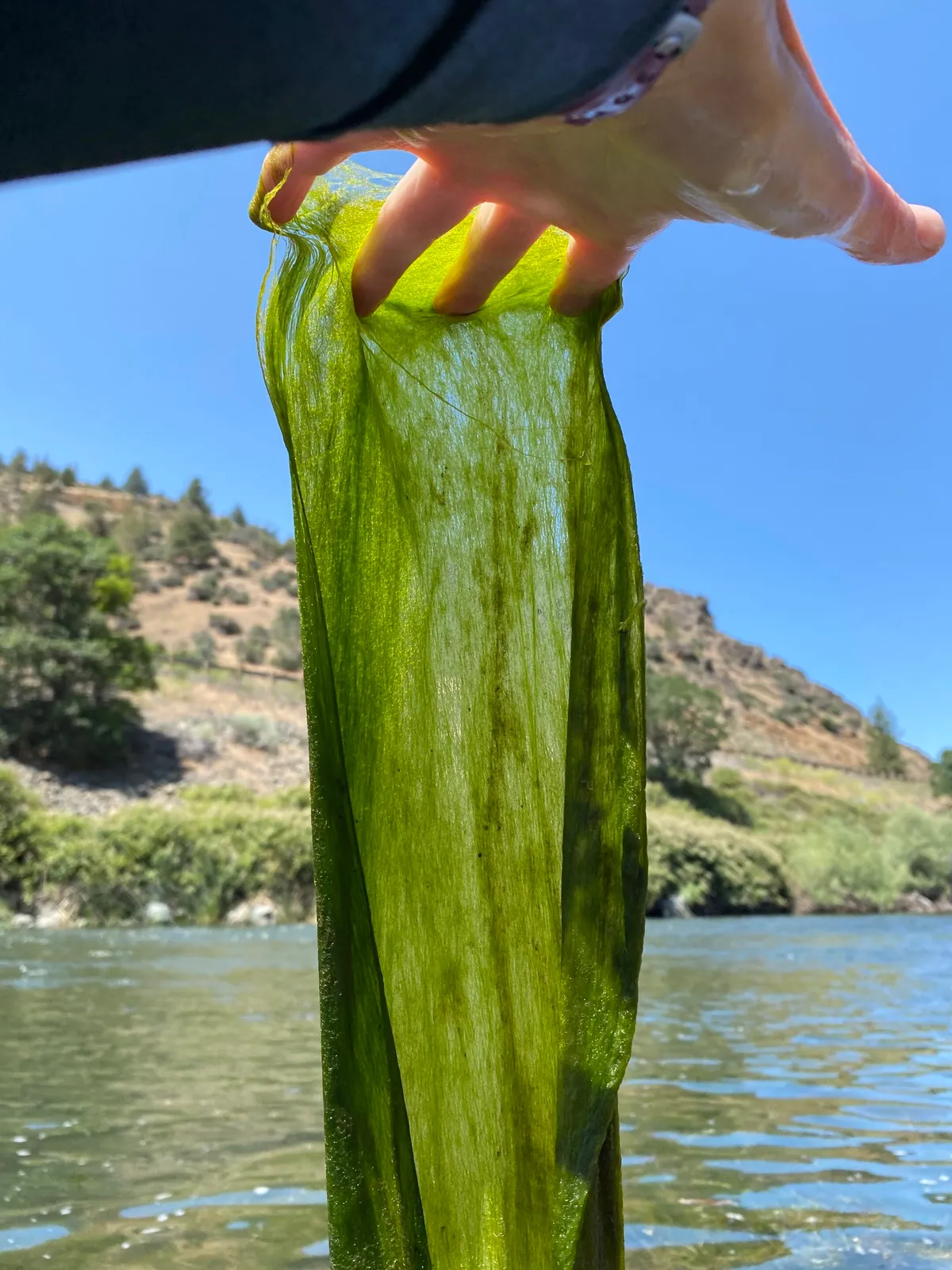
Massive filamentous algae blooms are spreading through Western rivers — the Upper Clark Fork in Montana, Utah's Provo and Jordan Rivers — growing in strands several meters long and clogging waterways so thick that kayakers can barely paddle through. They're not toxic, but they're relentless, and they look like a problem.
Yet researchers from Utah State University, the University of Montana, and Woods Hole Oceanographic Institution have discovered something unexpected: the rivers don't seem to care.
The Paradox
When ecologist Alice Carter's team studied these filamentous algae blooms (FABs) in detail, they found that while the blooms are creating "a significant shift in ecosystem structure," the rivers' actual function — their ability to cycle carbon, support food webs, and sustain life — barely budged. The filamentous algae produce roughly the same amount of carbon as the thin, slimy epilithic algae that clings to rocks in much smaller quantities. The big, dramatic plants aren't doing the heavy lifting. The invisible workers are.
We're a new kind of news feed.
Regular news is designed to drain you. We're a non-profit built to restore you. Every story we publish is scored for impact, progress, and hope.
Start Your News DetoxThis breaks one of ecology's most reliable rules. In forests and grasslands, structure and function move together: a dense forest is productive; sparse vegetation is less so. But rivers, it turns out, might be playing by different rules entirely.
"In terrestrial ecosystems, if you have a dense forest with tons of trees and biomass, it's also a productive forest," Carter explains. "In rivers, structure and function seem decoupled." The massive visible change isn't translating into massive functional change.
The findings, published in Ecology in December 2025, matter because they suggest a path forward that doesn't require draining nutrient-heavy water or undertaking expensive ecosystem overhauls. If the real work of keeping a river healthy is being done by smaller, fast-cycling algae regardless of whether FABs are present, then managers might find that the actual inputs needed — the nutrients, the water quality — stay similar whether the waterways are choked with filamentous blooms or clear.
"We might discover an easier-than-expected management solution," Carter says. "That might be overly optimistic, but it would be exciting to find out."
The next step is understanding what triggered these blooms in the first place. Finding that tipping point could help managers nudge rivers back to a state where recreational use isn't compromised — without needing to fundamentally restructure the entire system.