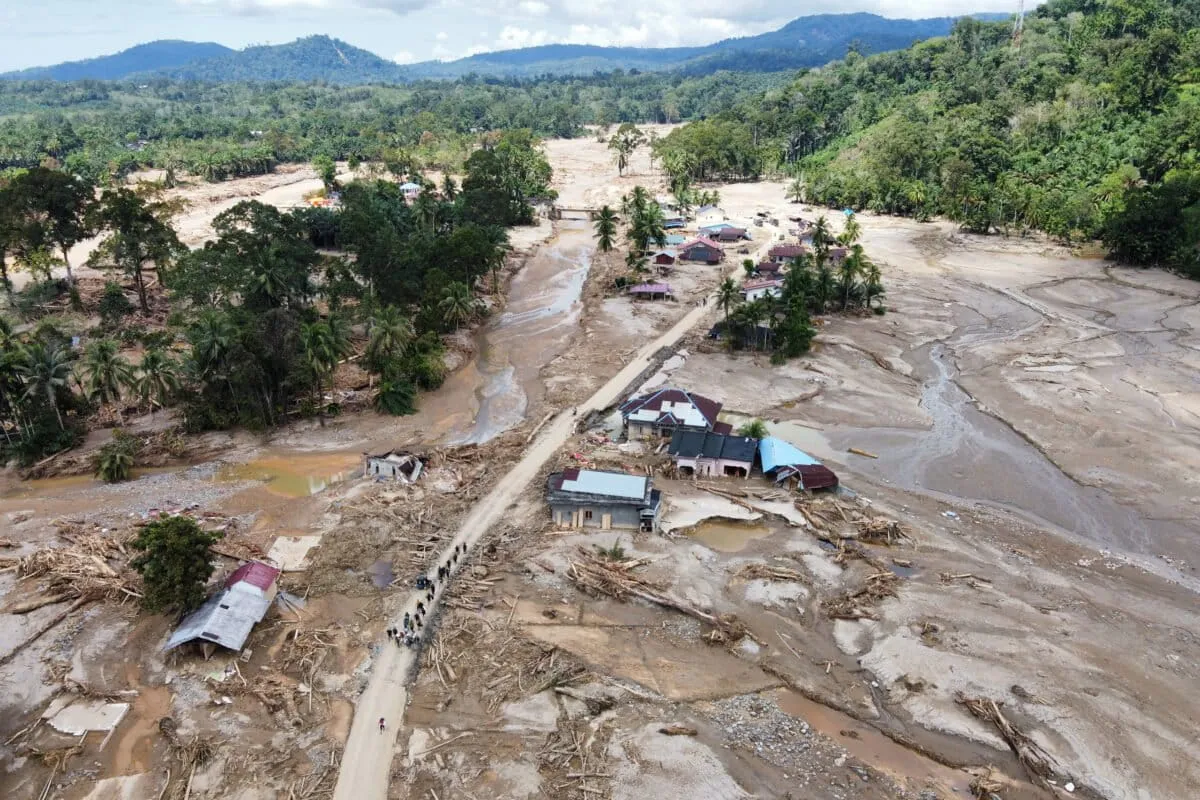
Late 2025 brought a rare tropical cyclone to northern Sumatra. Cyclone Senyar itself was the immediate trigger—but it killed at least 1,178 people and displaced around 1 million others. What made it one of Indonesia's deadliest natural disasters in recent history wasn't just the storm. It was what the storm found when it arrived.
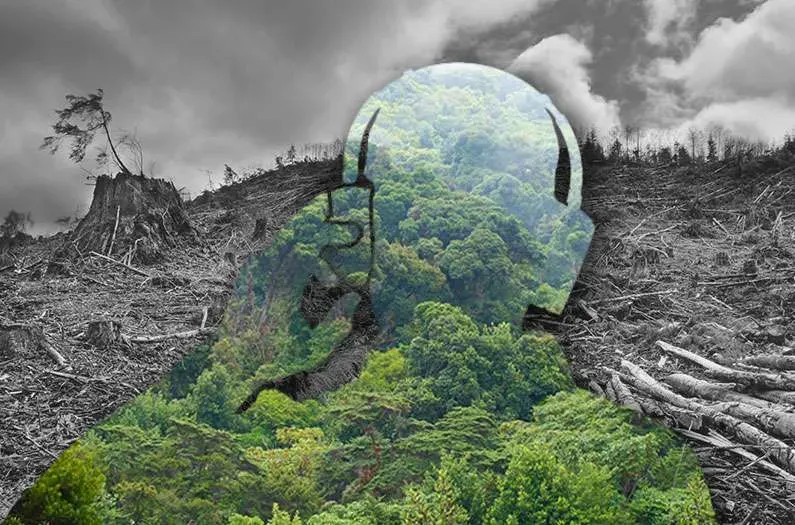
The Batang Toru forest, a mountainous region on Sumatra known for its rare great ape population, sits at the center of that story. Decades of deforestation and land clearing had stripped away the natural buffers that once absorbed heavy rainfall and stabilized slopes. When Cyclone Senyar hit, there was nothing left to slow it down.
"Extreme weather was only the initial trigger," said Erma Yulihastin, a climate researcher at Indonesia's National Research and Innovation Agency (BRIN). "The destructive impact was shaped by weakened environmental buffers upstream." The flash floods and landslides that followed weren't inevitable consequences of the cyclone—they were consequences of a landscape that had been systematically dismantled.
We're a new kind of news feed.
Regular news is designed to drain you. We're a non-profit built to restore you. Every story we publish is scored for impact, progress, and hope.
Start Your News DetoxWhat's significant is what happened next. The Indonesian government didn't treat this as a natural disaster and move on. Environment Minister Hanif Faisol Nurofiq announced an investigation into eight companies operating in the Batang Toru watershed to assess whether their activities contributed to the floods and landslides. The ministry ordered all eight companies to cease operations immediately.
This marks a shift. For years, the connection between deforestation and disaster has been documented by researchers but largely ignored by policymakers. The Batang Toru case suggests that connection is becoming harder to deny—especially when the human cost is this visible. The forest's rare ape population had already made it a conservation focal point. Now it's become a test case for whether Indonesia can actually enforce its environmental laws when the stakes are this high.
The investigation is ongoing, but the precedent matters. Companies operating in sensitive watersheds can no longer assume that deforestation is simply a business cost. When a cyclone comes, the bill gets paid in displaced families and lost lives. That's a calculation Indonesia's government is finally forced to reckon with.