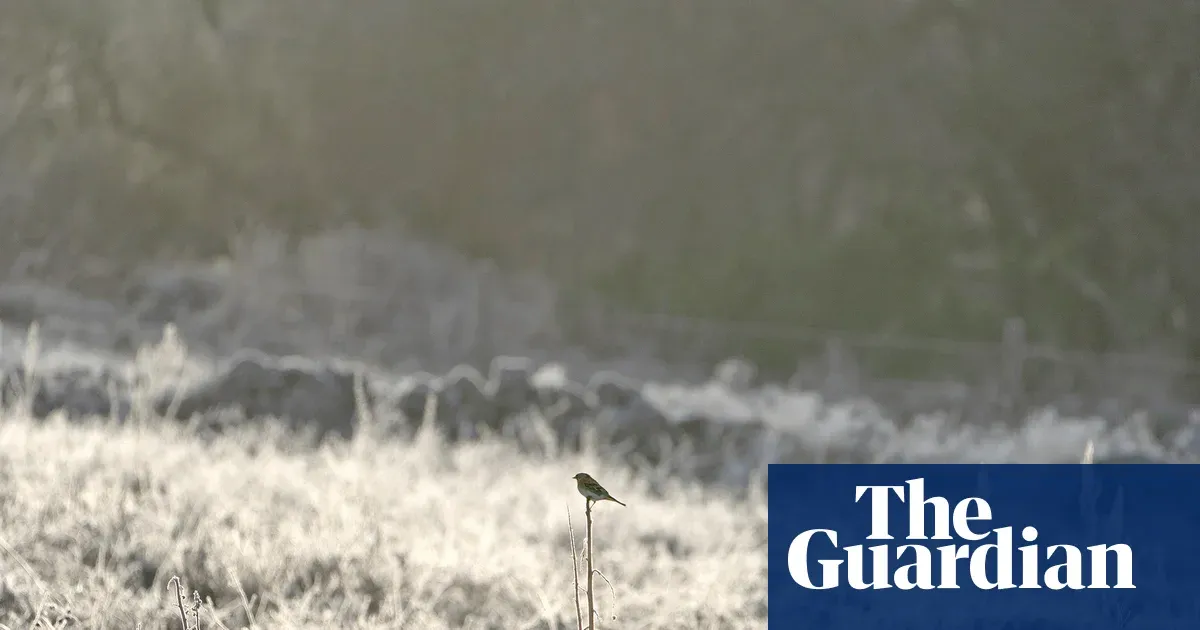
It's -6°C and the ground crunches underfoot. A single chaffinch pecks at the crown of a millet head, then suddenly the air fills with movement — finches pouring down from the birches in waves of 20, 30, sometimes a hundred at a time.
This is a seed field in the Scottish Highlands, planted deliberately for winter wildlife. Speyside Fields for Wildlife, a community charity working with local farmers, takes over spare land and grows crops that birds actually need when food gets scarce. Black oat, barley, fodder radish — plants that hold their seeds through the frost, their stalks thick with hoarfrost and glinting pale gold in the low sun.

What makes this field remarkable isn't the concept — it's the scale of what shows up. A neighbor estimates flocks of a thousand birds or more have moved through this winter. Chaffinches dominate, but there are greenfinches, goldfinches, and bramblings too. Then, as if on cue, a hundred linnets sweep across the field. They move like a single organism, splitting into squads and platoons, regrouping on rowan branches, then lifting off again. It's the kind of thing you'd normally see in a nature documentary, except you're standing in it, feet going numb.
We're a new kind of news feed.
Regular news is designed to drain you. We're a non-profit built to restore you. Every story we publish is scored for impact, progress, and hope.
Start Your News DetoxThese aren't rare birds or exotic visitors. Finches are the kind of thing most people walk past without thinking. But in numbers like this — wheeling through a winter landscape — they become something else entirely. There's a reason the 19th-century Scottish lexicographer John Jamieson had a word for them: "havoc-burds," those large flocks of small birds that fly about the fields after harvest, moving together like a single pulse through the landscape.
Why this matters
The seed fields represent something quietly powerful: the recognition that wildlife doesn't need wilderness to thrive. It needs someone to ask a simple question — what if we planted this field with what birds actually eat? — and then act on it. The model is spreading across Scotland and beyond. It works because it's simple, it's local, and it turns ordinary farmland into something that keeps birds alive through the hardest months.
There's no drama in that. No rescue story, no endangered species pulling back from the brink. Just finches, frost, and a field that was planted with them in mind. But that's where most real change starts — not with grand gestures, but with someone deciding that a spare field could be something more.