Every January, London's streets fill with abandoned Christmas trees. Most end up in landfills. But a growing network of schemes is catching them before that happens—turning holiday waste into construction materials, living trees that come home each year, and unexpected proof that small circular systems can actually work.
From trees to timber
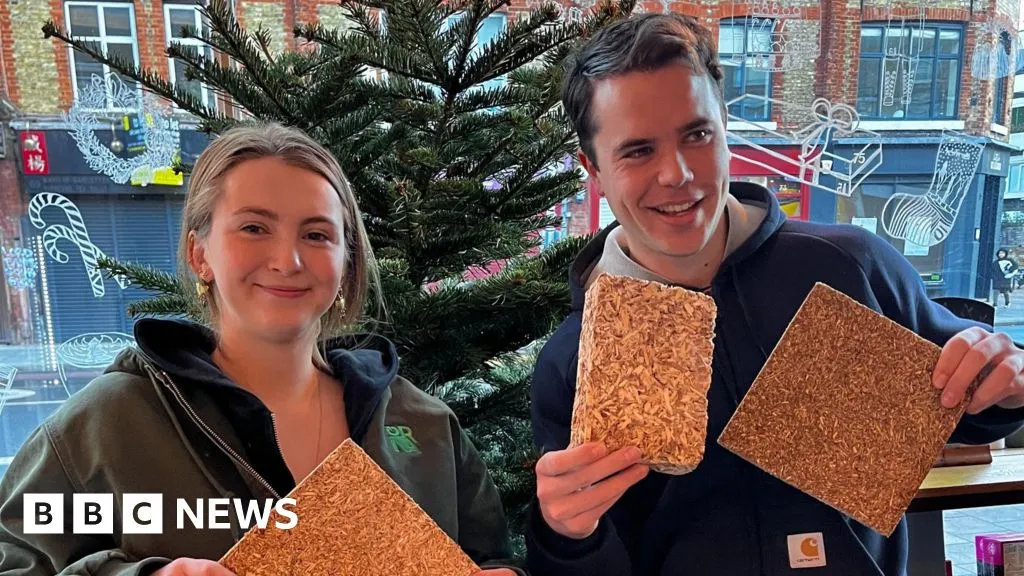
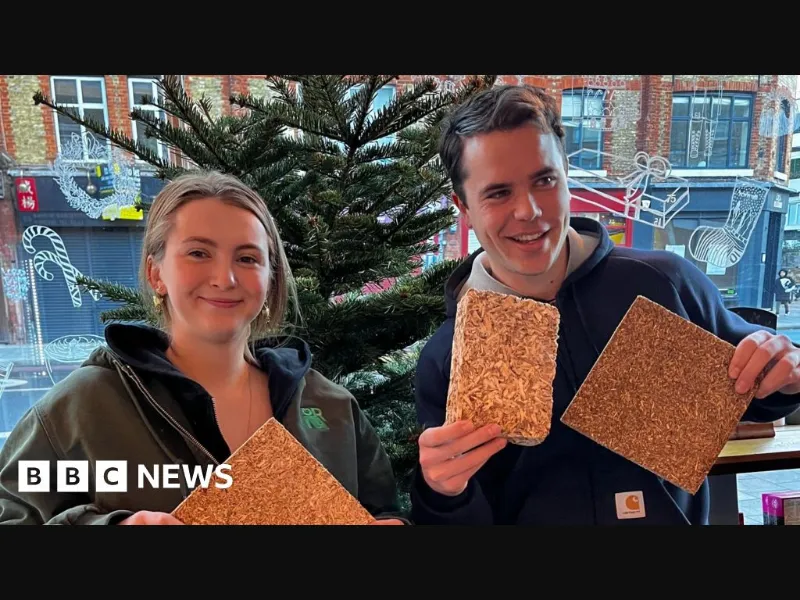
In Peckham, south-east London, the ORNA Group has built a workshop where discarded Christmas trees become something useful again. The process is straightforward: trees arrive chipped, get combined with natural binders, and transform into new building material through a process that involves cooking and modifying the ingredients into a homogenous wet substance.
The idea started casually. Hugo Knox, one of the co-founders, was working in tree sales in November 2019 when he decided to try something different. "I rang up one of my close friends, Max," he recalls. "I said, look, 'it's Christmas, Christmas trees, shall we give it a go?'" They started door-to-door in Camberwell, offering trees and installations. What began as a seasonal side project evolved into something bigger: a way to intercept trees heading for waste and give them new purpose.
We're a new kind of news feed.
Regular news is designed to drain you. We're a non-profit built to restore you. Every story we publish is scored for impact, progress, and hope.
Start Your News DetoxCaelo Dineen Vanstone, a material scientist and co-founder, oversees the technical side. "When it arrives here, it's mostly unprocessed," she explains. Trees come straight from homes and businesses in different states, get chipped to the right consistency, then move through a process that transforms them into usable material.
The rental alternative
Another approach sidesteps the waste problem entirely. London Christmas Tree Rental offers an alternative: rent a living, potted tree for the season, then return it to be grown on for next year. Some customers have had the same tree for years. "Just simply, rent, water, return," is how founder Jonathan Mearns describes it. It's a model that keeps trees out of the waste stream altogether.
What makes these schemes interesting isn't just the environmental math—though that matters. It's that they're built on a different assumption about what waste is. Instead of treating discarded trees as a problem to be managed, they treat them as a resource to be redirected. ORNA works with young people to demonstrate this principle: that small actions compound, that your street corner can be a little nicer, that you don't have to accept the default path of something becoming landfill.
As more London households face the January question of what to do with their tree, these alternatives are quietly proving that the answer doesn't have to be "throw it away."