Arizona contains almost every ecosystem North America has to offer. In one state you'll find tundra, forest, woodland, scrub, grassland, and desert—five of the six distinct biomes that exist on the continent. The Sonoran Desert alone is what ecologists call a "lush desert," receiving rain twice yearly, which means it blooms with deep green vegetation alongside sepia-toned rock. Add four other deserts, over 210 named mountain ranges, a monsoon season that arrives with biblical force, and the Grand Canyon, and you start to understand why Arizona has become a pilgrimage site for people seeking to see what the American landscape can actually do.
The state's cultural richness mirrors this ecological diversity. Twenty-two federally recognized Native American tribes call Arizona home, including the Diné (Navajo Nation) and the Tohono O'odham Nation. Mexican cultural heritage runs deep through the region's bones. Together, these influences have shaped a place where ancient ways and contemporary life coexist.
Northern Arizona: Where Stars and Stone Meet
Flagstaff sits at 7,000 feet elevation in the high country, where winters bring snow and the air carries the kind of clarity that makes the night sky almost unbearably bright. The town became the first International Dark Sky City in 2001, a recognition rooted in over a century of astronomical obsession. Percival Lowell, a financier with means and a fixation on whether life existed on Mars, established Lowell Observatory here in the late 1800s. He chose the location precisely for its elevation and dark skies. The observatory discovered Pluto and continues operating today, drawing stargazers to the iconic Clark Refractor telescope on Mars Hill, a dome structure that has watched the heavens since the 1800s.
We're a new kind of news feed.
Regular news is designed to drain you. We're a non-profit built to restore you. Every story we publish is scored for impact, progress, and hope.
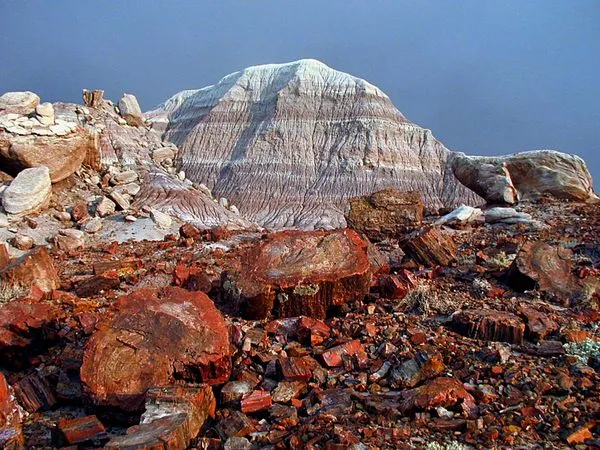
Start Your News DetoxSoutheast of Flagstaff, Anderson Mesa hosts Anderson Mesa Station, another dark-sky observatory perched on a flattop plateau. But the region's geological story runs far deeper than the night sky. Petrified Forest National Park, about 90 minutes away, preserves hundreds of millions of years of transformation. Trees from the Triassic period—when dinosaurs first emerged—have turned to stone through permineralization, creating a landscape that looks like a psychedelic desert painted in impossible colors. Within the park, Rainbow Forest displays rocks in deep reds, yellows, blues, and purples, their vivid hues derived from minerals like manganese and iron oxide. The Painted Desert nearby shows badlands with visible stratification, each layer of shale, mudstone, and siltstone carrying its own distinctive pigment.

Central Arizona: Copper, Canyons, and Cliff Dwellings
Moving south, the Verde Canyon Railroad offers a 20-mile journey through landscape carved by the Verde River. The vintage diesel locomotive carries riders over metal trestles that span steep gorges—when you cross the Perkinsville Trestle, the tracks disappear beneath your car, creating the momentary sensation of flight. Bald eagles frequent these canyons, and the open-air viewing cars put you close enough to watch them hunt.
Copper has shaped this region for centuries. Native peoples mined ore here to craft tools and jewelry. Industrial mining transformed the landscape from the early 1900s onward. The former mining town of Clarkdale now houses the Arizona Copper Art Museum, where elaborate copper vessel systems used in winemaking sit alongside other creative uses of the mineral. In Jerome, a town of 464 people perched on a mountainside, visitors come to see the Sliding Jail—a small structure from the early 1900s that literally slid down the hill when dynamite from nearby mines destabilized the ground. It came to rest on the main street, where it remains as a relic of the Wild West era.
At Montezuma Castle National Monument in Camp Verde, a 20-room cliff dwelling built by the Sinagua people sits carved into a limestone cliff, one of the best-preserved examples of pre-contact Indigenous architecture in North America. Nearby, Montezuma Well is a naturally occurring limestone sinkhole nearly 400 feet across, fed by underground springs. The carbonated, arsenic-laden water supports five species of fauna found nowhere else on Earth, including the water scorpion.
Southern Arizona: Desert Bloom and Cultural Fusion
The southern reaches of Arizona embrace the Sonoran Desert fully, with hundreds of miles of Saguaro cacti standing like sentinels across the landscape. This region stretches to the U.S.-Mexico border and includes Tucson, a UNESCO City of Gastronomy recognized for its culinary significance. The desert here supports Gila monsters, roadrunners, and western diamondback rattlesnakes alongside prickly pear cactus.

Bisbee, a former mining town, has become an arts hub where the original Bisbee Breakfast Club serves regional Mexican classics like huevos rancheros alongside the Copper Queen Skillet—a breakfast plate that piles eggs, potatoes, bacon, ham, sausage, and spicy gravy into one ambitious dish. The Old Bisbee Brewing Co. brews experimental beers on-site, including a Mayan Stout made with heritage Mesoamerican beans.
Tubac sits nestled between the Tumacácori and Santa Rita mountains, blending arts and leisure. Four galleries, a performance space, and an arts library share the grounds with a 27-hole golf course and spa, connected by a trail system that links to the Juan Bautista de Anza National Historic Trail. Near the border town of Sasabe, Buenos Aires National Wildlife Refuge protects 117,000 acres of grassland desert. Habitat restoration has made it a sanctuary for over 50 mammal species, including the endangered masked bobwhite quail. The refuge offers open-access trails, guided hikes, and free campsites.
Arizona's ecological and cultural diversity exists not as separate attractions but as interwoven layers of the same landscape—ancient stone, living desert, human ingenuity, and the night sky all occupying the same space.