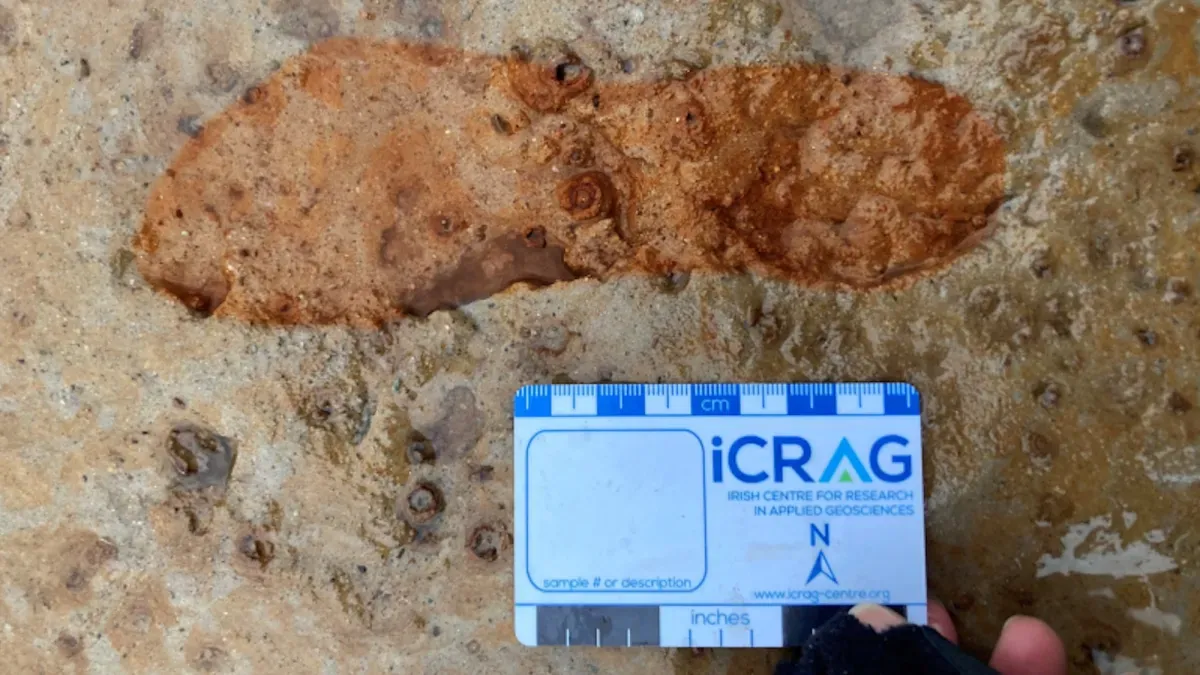
A routine dog walk along the Angus coast turned into an archaeological race against time when Ivor Campbell and Jenny Snedden spotted something unexpected in the exposed clay: human and animal footprints, preserved for two millennia.
Wind had stripped away the sand dunes, revealing a layer of hardened clay marked with the impressions of people and deer from around 2,000 years ago—the late Iron Age, when Roman forces were probing Scotland's borders and the Pictish culture was beginning to emerge. The pair contacted a local archaeologist, and within hours, researchers from the University of Aberdeen were on site with an improvised toolkit and a deadline.
"We had to work fast in the worst conditions I've ever encountered," said Kate Britton, one of the lead archaeologists. The sea was advancing with each tide, the wind was actively sand-blasting both the site and the team, and every hour meant more damage. They had maybe 48 hours before the site would be completely destroyed. Using plaster molds and digital mapping, the team documented what they could—a snapshot of ordinary life from nearly two thousand years ago, captured in footsteps that took minutes to create and hours to erase.
We're a new kind of news feed.
Regular news is designed to drain you. We're a non-profit built to restore you. Every story we publish is scored for impact, progress, and hope.
Start Your News DetoxWhat makes this find unusual is how rare it is. Only a handful of similar sites exist across the entire UK, and most no longer survive. These footprints are fragile records—one high tide away from vanishing entirely. Yet that fragility is also what makes them valuable. They're not artifacts that have been curated or moved; they're the actual ground someone walked on, preserved by chance in the right conditions for two thousand years, then exposed by the right wind at the right moment.
The researchers say the wider Montrose basin area shows promise for more discoveries like this. As climate change intensifies coastal erosion and shifts wind patterns, more ancient layers may be exposed—though the window to study them will remain narrow. For now, the plaster casts and digital records from this site offer a rare glimpse into who moved through this Scottish landscape when the Roman Empire was at its height, and what animals shared that world with them.