Joanna Wakefield-Scurr had a simple problem: her breasts hurt when she ran. As a biomechanics professor, she figured she'd find the science-backed answer in a few weeks. Twenty years later, she's still researching.
Today, Wakefield-Scurr leads an 18-person team at the University of Portsmouth studying breast biomechanics—a field that barely existed before she started. The reason it matters is both practical and revealing: physical discomfort from poorly fitting sports bras is one of the biggest reasons women avoid exercise altogether. Get the engineering right, and suddenly more women feel comfortable training.
Why this was invisible until now
Breasts are anatomically unusual. Unlike most body structures, they're largely unsupported by bone, cartilage, or muscle—meaning there was almost no historical research to build on. When Wakefield-Scurr's lab began measuring what actually happens during running, they discovered breasts move in three dimensions simultaneously: side to side, up and down, and forward and backward. In one hour of slow jogging, that's roughly 10,000 bounces.
We're a new kind of news feed.
Regular news is designed to drain you. We're a non-profit built to restore you. Every story we publish is scored for impact, progress, and hope.
Start Your News DetoxThe physics creates real problems. Too-tight bras restrict breathing. Too-loose ones cause back, shoulder, and neck pain. There's also "breast slap"—the lag between torso and breast movement—which creates its own discomfort. The emotional weight matters too: embarrassment about visible movement keeps some women from exercising at all.
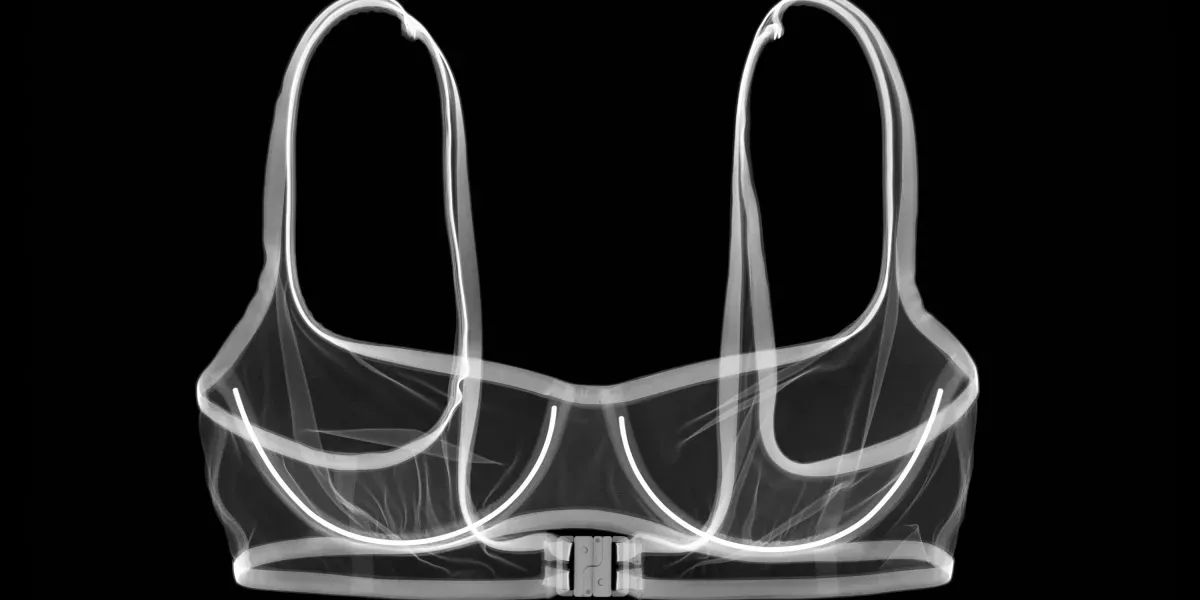
Wakefield-Scurr's research has shown that high-impact sports bras with underwires, padded cups, adjustable bands, and hook-and-eye closures reduce breast movement by up to 74% compared with no support. But the team discovered something more interesting: scientists still don't know whether reducing movement is what actually matters most, or if reducing speed matters more, or if eliminating breast slap is the key variable.
Different bra designs make different trade-offs. Some compress breasts entirely. Others encapsulate and support each breast individually. Neither approach is obviously superior—just different compromises between comfort and support.
Wakefield-Scurr is now testing new smart fabrics that tighten or stretch depending on how your body moves, working with manufacturers to bring them to market. As more women participate in high-impact sports—running, basketball, CrossFit—the demand for this research is outpacing her lab's capacity. What started as one person's search for pain relief has become a field with real momentum.